When most people picture an American farmer, cultural mainstays from bygone eras still dominate the imagination. We think of Old MacDonald in his overalls or the Marlboro Man riding the range with a Stetson hat. University of Idaho Extension is launching a series of events across northern Idaho this November to challenge those traditional icons, highlighting the vital contributions of female agricultural producers as part of the United Nations’ declaration of 2026 as the International Year of the Woman Farmer.
The upcoming gatherings in Sandpoint and Moscow will feature free documentary screenings, panel discussions with local women in agriculture, and a regional food summit, uidaho.edu reported. These sessions are open to everyone, aiming to reshape how communities view food production, land stewardship, and rural leadership.
Sandpoint Screenings and the Selkirk-Pend Oreille Food Summit
The northern Idaho schedule kicks off on Thursday, November 5, with a free screening of the 56-minute documentary Women’s Work: The Untold Story of America’s Female Farmers. The event runs from 7 to 9 p.m. at the Panida Theater, located at 300 N. First Ave. in Sandpoint. The film examines how agricultural history has largely overlooked women’s roles in food production and rural communities.
Following the screening, five area women farmers will take the stage for a panel discussion to share their personal stories. Comprising the panel are Whitney Beck hailing from Post Falls, Leigh Bercaw of Sandpoint, Julie Newcomb representing Bonners Ferry, Trew Rice out of Bonners Ferry, and Liz Wood based in Naples.
The following morning, Friday, November 6, the fifth annual Selkirk-Pend Oreille Food Summit takes place from 9 a.m. to 1 p.m. at the University of Idaho’s Sandpoint Organic Agriculture Center at 10881 N. Boyer Road. Focused on harvest celebration and relationship building, the summit carries the theme “Celebrating Idaho Women in Ag and the International Year of the Woman Farmer.” Admission is $35, with a registration deadline of Sunday, November 1, according to uidaho.edu.
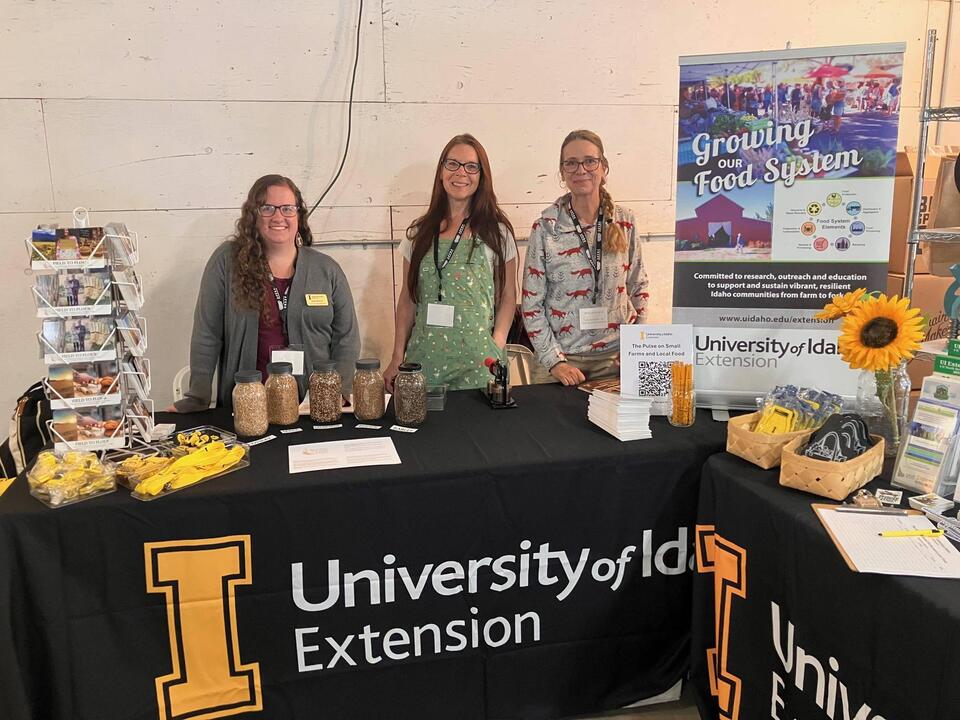
The summit features at least a dozen five-minute presentations from women farmers and agricultural professionals, alongside a catered lunch made with locally sourced ingredients.
Moscow Community Gathering
A second free screening of Women’s Work is scheduled for Friday, November 20, from 7 to 9 p.m. at the Kenworthy Performing Arts Centre, located at 508 S. Main St. in Moscow. Taking part in the subsequent panel discussion will be Jenny Parker of Moscow, Sheila Hasselstrom of Winchester, Suzanne Johnson Dittmer from Princeton, and Sheryl Zakarison of Pullman, Washington.
Colette DePhelps, an area Extension educator in community food systems who helped plan the events, emphasized the importance of updating public perception.
“Picture a farmer and who do you picture? We have these cultural icons that come to mind. When we were kids we sang about Old MacDonald, a classic older, male farmer in overalls,” DePhelps said.
DePhelps added that recognizing women’s contributions is critical as more participants take on leadership roles not just on farms, but within agricultural research and commodity commissions.
Data Collection and Economic Realities in Idaho Agriculture
Official data collection methods have historically masked the true extent of female involvement in the industry. Prior to 1978, the U.S. Census of Agriculture permitted only a single farmer to be listed as the operator of each farm. Modern guidelines allow up to four operators per property, drastically improving visibility.
According to the 2022 Census of Agriculture, women account for 39% of Idaho farmers, and 68% of Idaho farms list at least one woman as an operator. These producers manage everything from small hobby properties to some of the state’s largest agricultural enterprises.
Despite high participation rates, economic disparities persist. A University of Idaho research team calculated that male-run farms earn $2.50 for every dollar earned by female-run operations. Researchers attribute this earnings gap to historical inequities in access to capital, land, education, and other essential resources.
To combat lingering biases, DePhelps incorporates images of both women and men running agricultural businesses during farm succession planning workshops, working to ensure sex-based assumptions do not dictate who inherits family operations.
Related reading

BVU Student Kaylee Nachtigal Dies in Storm Lake Car Crash
Tragedy Strikes Buena Vista University as Freshman Student-Athlete Dies in Storm Lake Crash A Buena Vista University freshman...

IU Indianapolis opens Ray Bradbury Museum and research facility
A Permanent Home for Fahrenheit 451's Creator in Indianapolis A rapt audience stood in the heart of the...
Jacob Morley: Stolen truck found in Illinois after prison escape
“He has vanished.” That is how Marion Police Chief David Fitts described the current state of a multi-state...
Job Corps enrollment recovers after failed push to shut centers
After a year of legal battles and severe budget uncertainty, the federal Job Corps program has rebounded to...