
The U.S. Army detonated its entire stockpile of degraded lead azide — nearly five tons — at the Iowa Army Ammunition Plant in Middletown on Wednesday morning, a controlled blast that federal and state agencies called the safest option to prevent an uncontrolled explosion as temperatures dropped.
The controlled detonation of degraded crystallized lead azide was scheduled for approximately 10:00 a.m. ET/9:00 a.m. CT.
Environmental Protection Agency personnel collected more than 1,200 baseline samples of air, soil, dust and water before the detonation, the agency said. EPA deployed 300 staff and contractors to the region and began reporting air monitoring data every five minutes during the event. Pre-detonation sampling detected no airborne lead, EPA said. Pre-detonation sampling is detecting no lead currently in the air.
“Tom Croci, EPA associate administrator for national security and operations coordination”
The Army reinforced bunkers with sand-filled barriers and earthen berms, readied water misting to suppress particulates, and directed the blast effect downwind toward unoccupied land on the installation. U.S. FEMA offered transportation, food and short-term lodging through Friday for residents in a five-mile evacuation zone southwest of the plant.
The White House directed agencies to “spare no expense to ensure that Americans are kept safe,” FEMA Administrator Cameron Hamilton said. Hamilton said it has been “made clear” to communities southwest of the detonation site that “if they choose to relocate, we will offer services.”
Brent Williams, a professor at the University of Minnesota in the Department of Soil, Water and Climate, drove a mobile lab to the area to sample soil, water and air before and after the blast. He told MPR News the delay from the original Friday schedule likely reduced the plume. “I think it was actually smaller than it would’ve been had they done it on Friday,” Williams said.
“It certainly could’ve been a lot worse.” Williams also criticized the timeline that left detonation as the only option. “There’s clear negligence in terms of letting this material sit for so long to the point where the only solution was to explode it into the environment,” he told MPR News. “I think there’s a lot to be concerned about.”
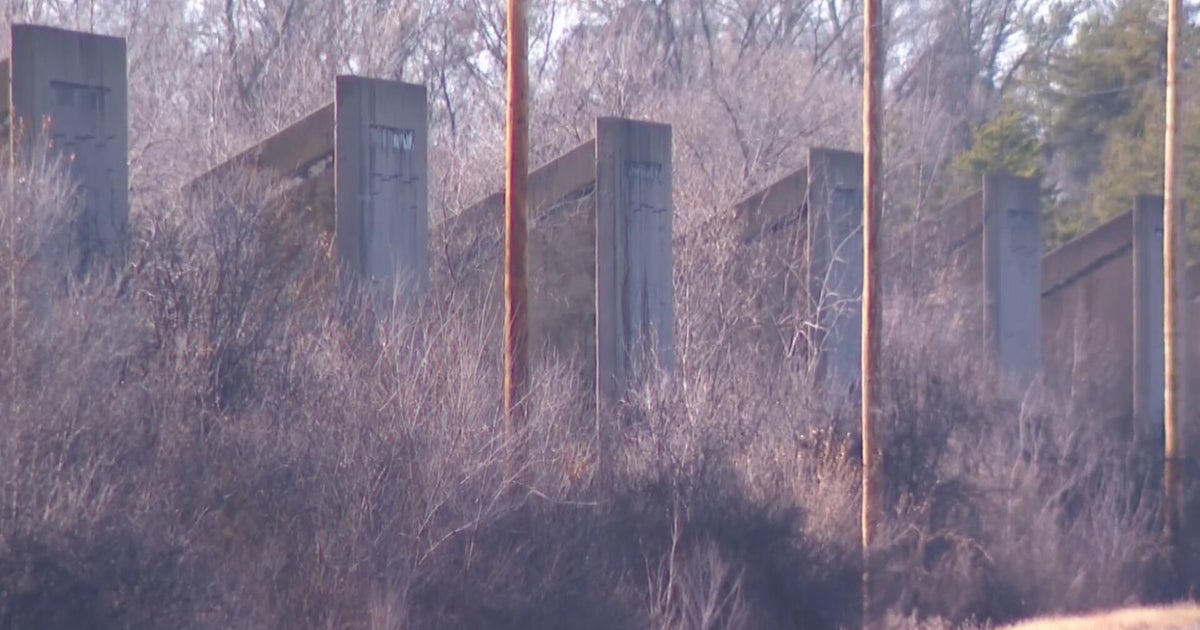
The Minnesota Pollution Control Agency said the wind carried the plume south, posing no threat to Minnesota, but scheduled additional lead testing this week at monitors in Rosemount and West St. Paul as a precaution. “Lead is very dense and it will fall out relatively quickly,” said Matt Taraldsen. “It’s not going to go too far in the atmosphere.”
Lead concentrations at the former Gopher Ordnance Works in Rosemount reached 40,000 parts per million in the 1980s, according to federal records posted by the MPCA; the site was removed from the Superfund list after cleanup in the 1990s, and a 2022 EPA review found existing remedies protective of human health, CBS News reported.
The property was eventually removed from the federal Superfund list. A 2022 Environmental Protection Agency review concluded the existing remedies are “protective of human health” as of the report. “Every time you see it, it’s really good to look it up and remind people what happened there,” said Erin Brown of Lakeville, who regularly passes the site.
EPA said post-detonation sampling and any needed remediation will begin immediately. Residents in affected areas are advised to wipe down outdoor surfaces children touch — play sets, railings, windowsills — with a wet cloth.
I have put state agencies on alert to prepare for any potential impacts of the US Army’s planned detonation in Iowa. Illinoisans can now head to the below link for updates and safety guidance. I will keep pressing officials to be fully transparent. https://t.co/OP1ZwdNO1T
Federal coordination and health warnings
Gov. Hamilton said that the maps shared by the Army represent “some of the worst case scenarios” of the lead dispersion. “We care deeply about the American people,” Hamilton said. This is the very best of the American’s team.”
More on Iowa Army Ammunition Plant
To farmers and livestock producers in southeast Iowa and northeast Missouri: USDA is on the ground to help ahead of the U. S. Army’s planned detonation in Middletown, Iowa. Under @SecRollins’ leadership, USDA is coordinating with @IAGovernor, @MikeNaigIA and Missouri agriculture…
Related reading

Two Fuel Tankers Collide Head-On in Edgefield County, Killing One Driver and Injuring Another
Two fuel tankers collided head-on Wednesday before 6 a.m. on Sweetwater Road near the Murrah Road Extension in...

Venables Backs Backups for QB Job but Portal Path Seen as Likely
Oklahoma faces a quarterback transition after John Mateer exhausts his eligibility this season, and the Sooners' internal options...
Connecticut Crews Clear Drains Ahead of Thanksgiving Storm
Crews across Connecticut cleared storm drains and tree limbs Tuesday ahead of a Thanksgiving storm forecast to bring...

Maryland Fishing Report: Stripers Chase Bait into Main Bay as Water Temps Drop
Striped bass are moving out of Chesapeake Bay tributaries into the main stem chasing peanut bunker and silversides,...