The U.S. Army detonated nearly five tons of degraded lead azide at 9 a.m. Wednesday at the Iowa Army Ammunition Plant in Middletown, Iowa, after multiple delays from public pushback and court intervention.
FEMA Administrator Cameron Hamilton told an 11 a.m. Army livestream that preliminary EPA monitoring showed a “0.0 detection level of lead in the atmosphere,” and Major General Eric Shirley confirmed all barrels were destroyed with no infrastructure damage, ABC17News reported.
Robert Ceckada, director of the Bureau of Alcohol, Tobacco, Firearms and Explosives, said the blast followed proper channels into the ground, reducing lead exposure.
Governor Mike Kehoe posted on X at 9:15 a.m. that initial analysis from federal partners and Iowa Homeland Security indicated mitigation measures appeared successful and the explosion was well-contained, adding that state agencies would continue monitoring.
Airborne model shifts northeast
A 7 a.m. Army deposition map showed airborne lead concentrations expected primarily in Missouri’s Knox, Scotland and Clark counties, with portions of Macon and Adair counties also potentially affected, ABC17News reported.
That map reduced the projected impact in Macon County compared with Tuesday’s model, which had extended farther toward Bloomington. Tuesday dispersion map showing where airborne lead could reach. A second modeled area appeared over Chariton County and the Chariton-Randolph line about nine hours post-blast.
At our State Emergency Operations Center this morning. Based on the data we have, we continue to believe this event does not pose a serious threat to Missouri’s environment or public health. Our state agencies are in constant contact with federal partners to take the necessary… pic.twitter.com/TzdBVdeLp6
Health guidance issued for downwind areas
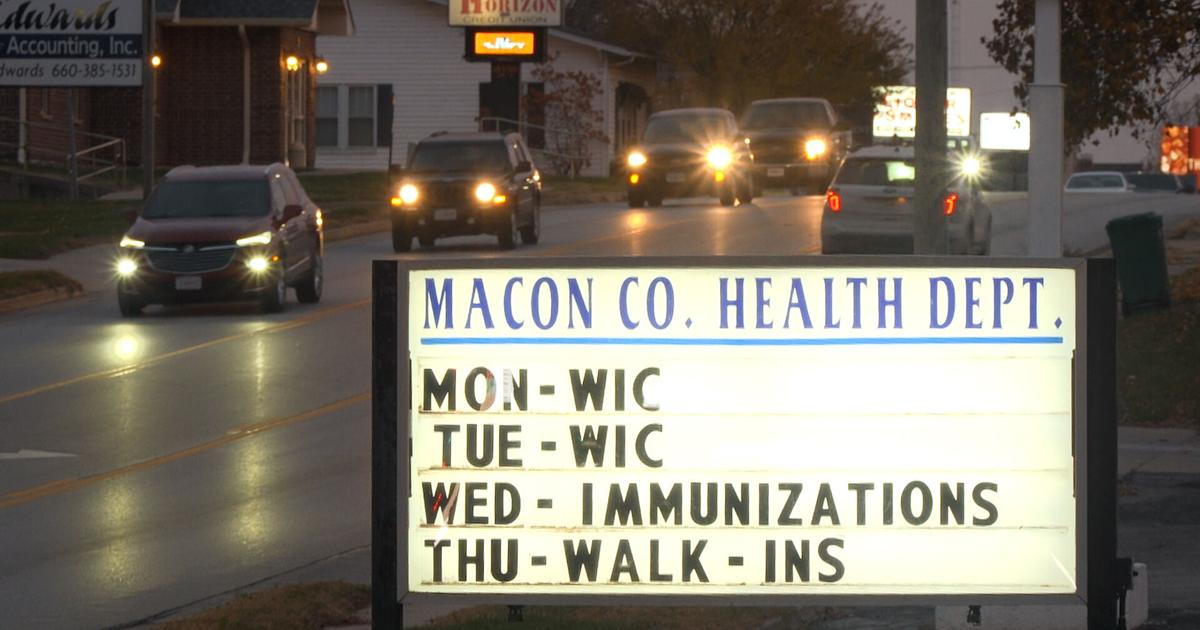
Macon County Health Department emergency planner Scott Burdin told KOMU that if wind carries material into the county, breathing it in or touching it can introduce lead into the body. “There has not been a safe level (of lead) in humans determined,” Burdin said. “So, any amount is bad … young children and women are the most at risk here.”
Burdin advised residents to stay indoors for 24 hours after the detonation, keep windows closed, bring in outdoor items, and afterward wash everything that stayed outside with soapy water. “Don’t take your leaf blower outside and try blowing everything off because then you’ll just put it all right back in the air,” he said.
Missouri Department of Health and Senior Services guidance echoed those steps for potentially affected communities: remain indoors with windows and doors closed and fresh-air intakes shut for 24 to 48 hours; bring in toys, pet bowls, cushions and vehicles if possible; cover sandboxes, playground equipment, edible gardens and rainwater containers; use HEPA filters and indoor air recirculation if HVAC must run; wet-clean frequently touched outdoor surfaces with soap or detergent; avoid dry sweeping and leaf blowers; wash children’s hands and pets’ paws after outdoor contact.
The state said well-constructed private water wells are not expected to be affected and that blood lead testing is the only recommended way to evaluate exposure.
The U.S. Department of Agriculture advised farmers in northern Missouri and Iowa to keep livestock sheltered and test hay samples if concerned about contamination, ABC17News reported.
Over 300 EPA personnel were on site monitoring the blast, and the Army said it used more than 100,000 gallons of water in a water wall, earth berms, sand-filled blocks, gel and water tank linings in the bunker, and over 3,600 gallons of foam to capture airborne particles.
More on Iowa Army Ammunition Plant
The controlled, mitigated detonation of the lead azide stored at the Iowa Army Ammunition Plant has taken place. Initial analysis shared with us by federal partners and Iowa Homeland Security and Emergency Management indicates that the mitigation measures appear to have been…
U. S. Army personnel are on site in Middletown, Iowa, and have worked around the clock to mitigate the impacts of the planned controlled detonation later this morning. This includes a water wall filled with more than 100,000 gallons of water, earth berms, sand filled blocks,… pic.twitter.com/eQa3erwlXj
Assistant Secretary of the Army Jordan Gillis explains the decision behind the operation at the Iowa Army Ammunition Plant and the measures the Army is taking to protect surrounding communities and minimize environmental impacts. pic.twitter.com/wNM7M7A5CX

Indianapolis Holiday Week Opens With Family Theater, Live Music, Comedy Shows
Indianapolis venues open a week of holiday programming Thursday with family theater, live music recordings and comedy shows....

Virginia Beach Town Center Grand Illumination, Snow Globe Spectacular Kick Off Saturday
Virginia Beach Town Center lights up Saturday with a free Grand Illumination and the first Snow Globe Spectacular...
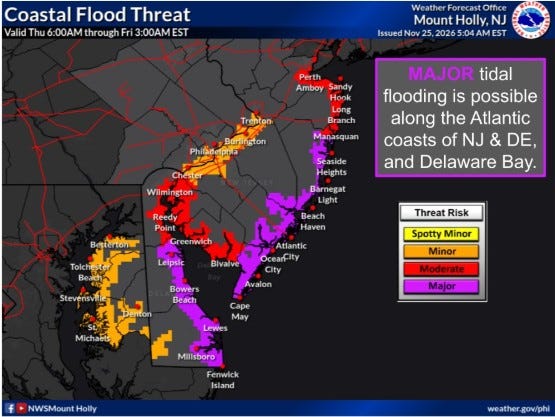
Thanksgiving Nor’easter Threatens Delaware With 70 MPH Winds, Major Coastal Flooding
A powerful nor'easter is forecast to strike Delaware on Thanksgiving, bringing winds up to 70 mph, up to...

Year’s Highest Tide Closes 27 Charleston Roads, Overwhelms $200M Drainage System
Widespread flooding from the year's highest tide closed 27 Charleston roads on Thanksgiving eve, overwhelming a $200 million...