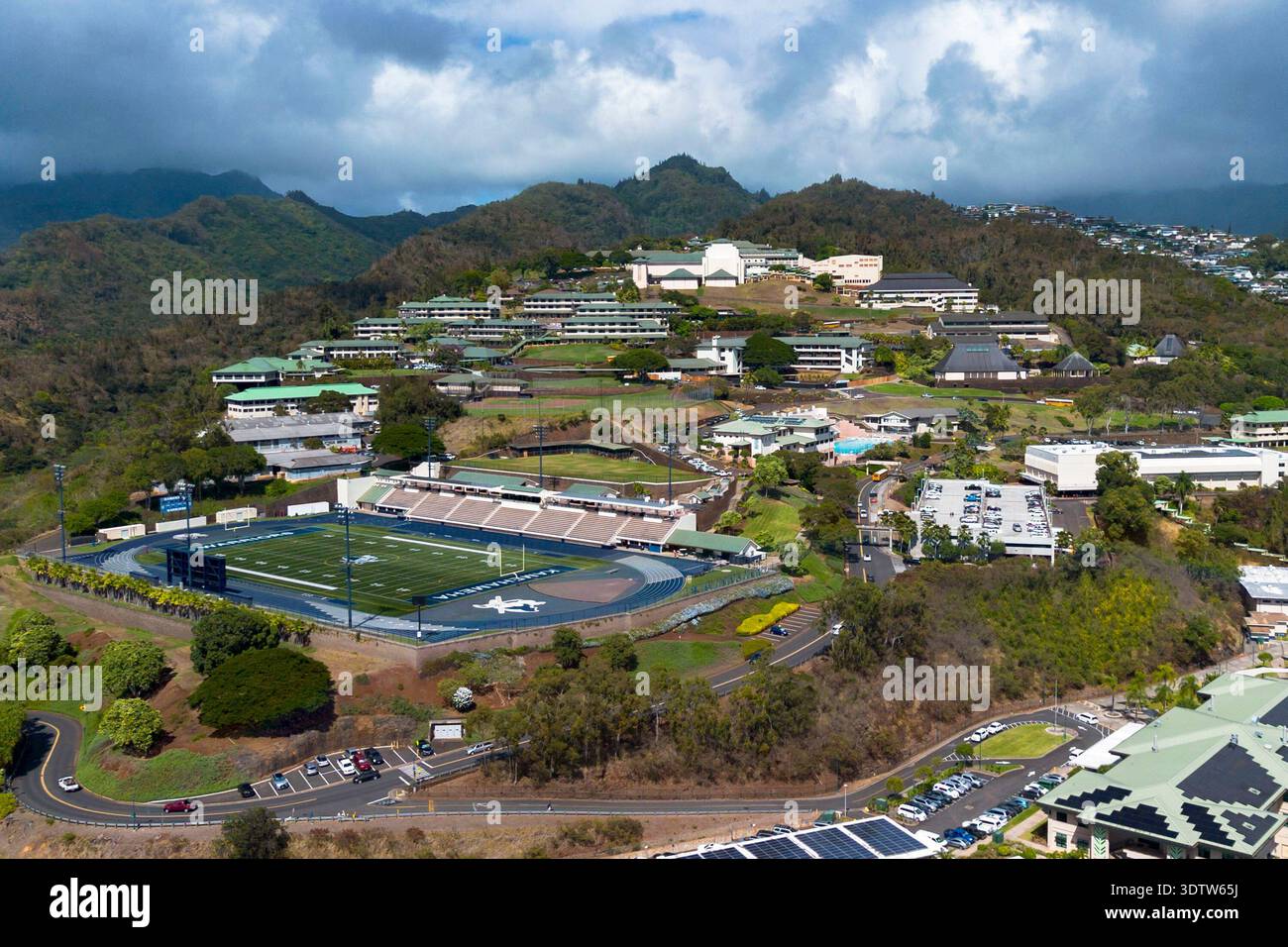
“Kamehameha Schools is a great school system, but its admissions policy expressly prefers students with Native Hawaiian ancestry over non-Native Hawaiian students,” the Virginia-based organization said.
A motion to dismiss a legal complaint brought by an anti-affirmative action group against a private K-12 institution established to support educationally disadvantaged Hawaiian Natives is currently being evaluated by a federal court in Honolulu.
U.S. District Judge Micah Smith heard oral arguments on Nov. 17 in the litigation brought by Students for Fair Admissions against Kamehameha Schools in 2025. The lawsuit claims that the school’s admissions policies breach federal civil rights statutes by giving preference to students of Hawaiian heritage regarding tuition assistance.
“In fact, that preference is so strong that it is essentially impossible for a non-Native Hawaiian student to be admitted to Kamehameha,” the legal group stated when it filed the action.
The school system was founded in 1887 by Hawaiian princess Bernice Pauahi Bishop to provide quality education to Native children excluded from white schools. Throughout the proceedings, school leadership has insisted that the directives outlined in the princess’ will compel the organization to uphold that purpose.
Kamehameha added another argument for dismissing the lawsuit by eliminating tuition for the 2026-2027 school year. A state probate judge affirmed trustees’ right to make the move for all three campuses on Jan. 30.
The Honolulu Star-Advertiser noted that during the federal court session, school attorney John Bash stated that the probate decision solidifies the tuition adjustment as permanent and makes it highly improbable that the institution would ever attempt to roll it back. Returning to paid tuition after the lawsuit is dismissed would expose Kamehameha to further litigation.
As reported by the Hawaii Tribune Herald, Bash also contended that U.S. law has historically safeguarded preferences for Native Hawaiians, pointing to legislation that allows Kamehameha to concentrate on Native candidates, a point previously emphasized by Hawaii’s congressional delegation in an October amicus brief advocating for the dismissal of the suit.
Kamehameha Schools asked a federal judge to dismiss a lawsuit challenging its Native Hawaiian admissions preference as school supporters gathered outside.https://t.co/ZUKpgquPkW
“For decades, Congress has affirmed these legal and moral obligations through more than 150 enactments recognizing and protecting the rights of Native Hawaiians as an indigenous people of the United States,” the lawmakers wrote in the filing.
“This lawsuit is a direct attack on Kamehameha Schools and its mission to educate Native Hawaiian children in accordance with the vision of Princess Bernice Pauahi Bishop. The court must respect Congress’ clear intent and should dismiss this case,” the congressional delegation added.
Kamehameha is a Christian school with a historic relationship with the United Church of Christ. Having once faced suppression by American and European religious, agricultural, and corporate leaders, the institution now stands as a prominent pioneer in safeguarding and reviving the Hawaiian language and heritage.
The founder of Students for Fair Admissions is conservative legal activist Edward Blum. His legal foundation has additionally pursued discrimination claims targeting the University of North Carolina, the University of Texas, and the U.S. Military Academy.
The Students for Fair Admissions lawsuit against Harvard University culminated in a 2023 U.S. Supreme Court ruling striking down affirmative action in higher education.
“The relief Blum seeks is narrowly focused on what has always been his objective: a prohibition on any awareness of race in college admissions,” the American Civil Liberties Union said. “If Blum gets his wish, statistical projections show that white applicants will be the primary beneficiaries.”
The plaintiffs in the action against Kamehameha are not identified by name. They appear in court documents only as families “A” and “B,” each with some members of non-Hawaiian ancestry.
Worth a look

Lincoln Village Streetlight Outage Leaves Residents in Dark for Weeks, Raising Safety Fears
Residents in Milwaukee's Lincoln Village neighborhood face a weeks-long streetlight outage near 10th and Rogers, leaving streets in...

Winterfest Hartford Returns for 16th Season with Free Ice Skating, Holiday Trolley
Winterfest Hartford returns to Bushnell Park for its 16th season starting Friday, bringing free ice skating, skate rentals,...

Arizona Projected for Las Vegas Bowl vs. Missouri After OT Win at Kansas State
Climbing to No. 16 in the AP Poll after an 8-3 start, the Arizona Wildcats head toward a...

South Carolina Opens as 3.5-Point Road Favorite Over Clemson
South Carolina football hits the road as a 3.5-point favorite for the upcoming rivalry clash against Clemson, according...