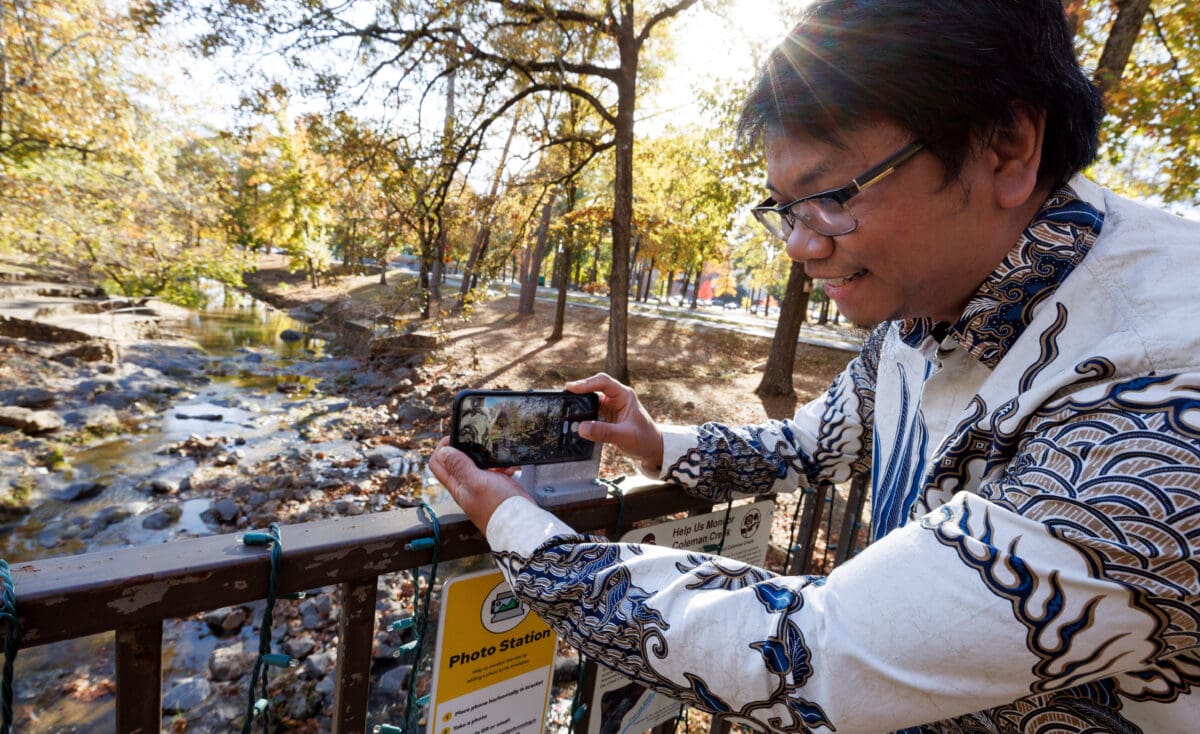
Dr. Bari Hanafi installed three Chronolog monitoring stations along Coleman Creek at the University of Arkansas at Little Rock in September 2026 to track environmental changes through crowdsourced time-lapse photography.
The project was funded by a Sustainability Committee Grant after Hanafi noticed the campus waterway running brown. “One day I noticed the creek was brown, which must have meant there was heavy erosion upstream,” he said.
Each station features a fixed bracket where passersby can place their mobile phones to take standardized photographs. These images upload to a Chronolog server to form a continuous visual record of water levels, creek banks, vegetation, and fish populations over time.
The monitoring points sit at three specific locations on campus. The first stands on a bridge overlooking the Coleman Creek Amphitheater facing south toward West 32nd Street, while the remaining two occupy the West 32nd Street bridge facing north and south.
According to Hanafi, the university serves as one of just three Arkansas locations featuring Chronolog technology, integrating the campus into an international framework comprising more than 100,000 participants spread across 300 groups.
The initiative has already gathered about 70 contributions. Hanafi said that the effort is “a project that everyone can be involved in,” and expressed a desire to explore partnerships with city or state parks.
Beyond community engagement, the images serve a direct scientific purpose by letting researchers “monitor how the creekbed and banks erode in real time,” Hanafi said. He intends for hydrologists and biologists to utilize the visual archive alongside weather and water data for ongoing studies.
The main objective remains “to increase awareness of how important the creek is to the local community and to the campus,” Hanafi explained. The visual data also highlights how water flows from the campus downstream into the Fourche Creek Preserve and onward to the Arkansas River.
Grants of up to $2,500 are awarded through the university’s Sustainability Committee Grant program to support projects that enhance campus sustainability. Managing the selection procedures alongside a panel of faculty and staff evaluators is Kyungsun Lee, who acts as chair of the Sustainability Grant Committee and holds the title of assistant professor of geography within the History Department.

“We hope that many different ideas come to life, so that our campus becomes a more sustainable place and more people on campus take an interest in sustainability,” Lee said. She added, “This matters because campus is where many of us work and study, and where we spend so much of our time.”
The committee evaluates proposals based on sustainability impact, feasibility, community engagement, and creativity. Lee highlighted that the Chronolog installation met these criteria effectively because it expands upon an existing infrastructure with a modest budget.
“The committee especially valued that anyone on campus, even someone just walking by, can take part, so the benefits reach the whole campus community,” Lee said. Faculty, staff, and students can submit individual or team applications every fall.
Highlighting watershed connections, Volunteers collect nearly 400 pounds of trash from Coleman Creek details how Coleman Creek flows from the campus downstream into the Fourche Creek Preserve. Ecologically, the waterway is part of the 112-square mile Fourche Creek watershed, which drains nearly 75 percent of runoff from within the Little Rock city limits.
Prospective applicants can reach out to Lee to discuss project proposals prior to the application window. Project details and contribution uploads remain accessible to the public online.
Worth a look

Contemporary Austin Unveils Spring 2027 Exhibitions
The Contemporary Austin has announced its spring 2027 season, which will explore the body, the natural world, and...

Family Sues Yale New Haven Health After 26-Year-Old Dies With No Bedside Physician in Tele-ICU
The family of a 26-year-old man who died after receiving treatment in a tele-ICU is suing Yale New...

Daniel Dubois to Defend WBO Heavyweight Title Against Joseph Parker on Jan. 30 in Manchester
Daniel Dubois will defend his WBO heavyweight world championship against Joseph Parker on January 30 at Manchester's Co-op...
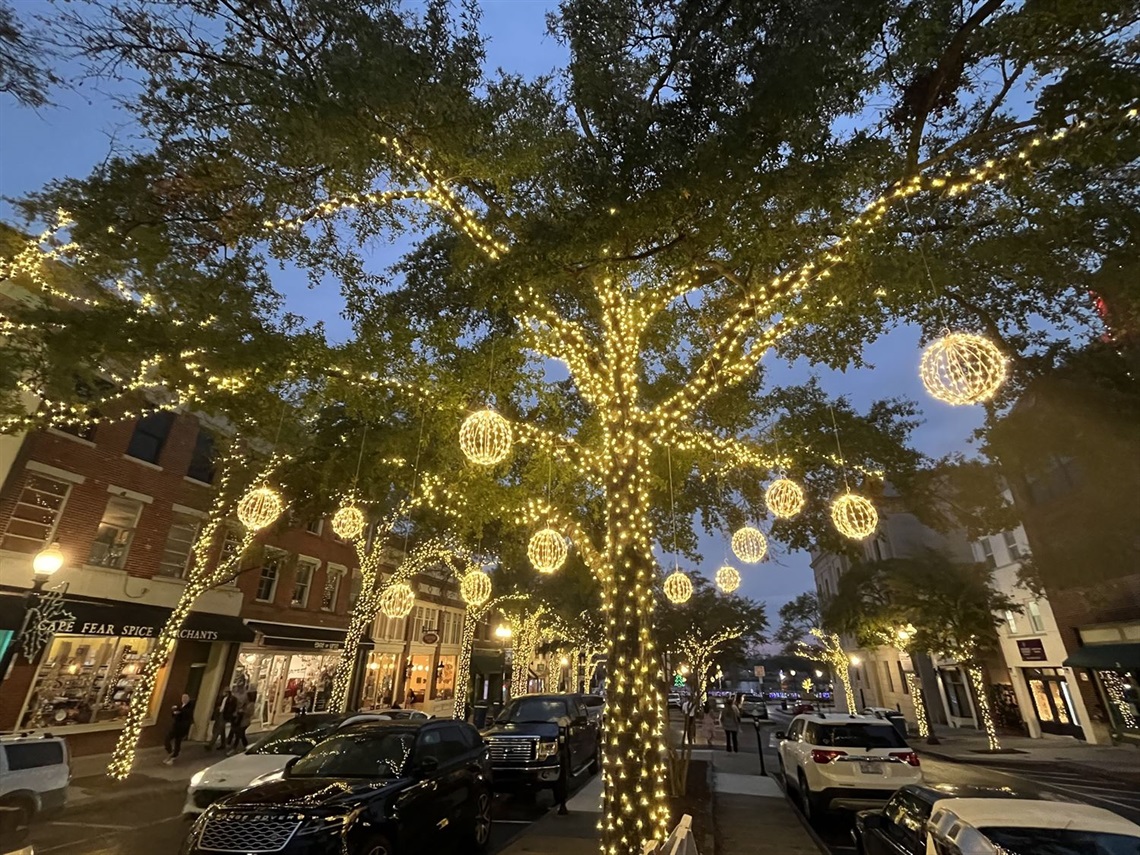
Magic on Market Closes Market Street; Drone Shows on Water Street Saturdays
Market Street will close to vehicles on the first three Saturdays in December as the City of Wilmington...