
NASA’s Nancy Grace Roman Space Telescope launched Aug. 30 aboard a SpaceX Falcon Heavy from Kennedy Space Center, carrying coronagraph technology and detector software developed by the University of Alabama in Huntsville’s Center for Applied Optics. The observatory has since completed internal alignment to a fraction of a hair’s breadth, NASA Science reported Nov. 13.
Dr. Kevin Ludwick, a principal research scientist at UAH, traveled to Florida with his family to watch the launch. “It was a wonderful experience to see the fruits of all our labor culminate in a successful launch!” Ludwick told UAH homepage.
The CAO’s contributions include calibration software for the Coronagraph Instrument’s electron-multiplying CCD detectors, a detector simulator, per-pixel noise maps, cosmic-ray flagging, charge-trap locating with subpixel accuracy, and a calculator that optimizes detector settings and frame counts for maximum signal-to-noise ratio.
Coronagraph demonstrates starlight suppression
Roman’s Coronagraph Instrument uses deformable mirrors — continuous glass sheets actuated by piston grids — to cancel a star’s brightness through destructive interference, enabling direct imaging of faint orbiting planets. “Roman’s CGI will serve as a technology demonstrator for a complex method of light suppression which has not been used on a space telescope before,” Ludwick said.
Ground-in-the-loop control sends repeated mirror-shape calculations to the instrument. The team overcame piston cross-talk — where one piston’s motion tugs neighboring glass — and modeled starlight amplitude variations through the coronagraph’s many optical elements.
Wide Field Instrument activated and aligned
Since activation in September, the Wide Field Instrument has passed detector, electronics, element-wheel, calibration-LED, alignment-mechanism and thermal-system tests, NASA Science reported Oct. 14. “Calibrating an instrument is like tuning a piano or guitar before a concert,” said Maxime Rizzo, a Wide Field Instrument systems engineer at NASA Goddard.
The secondary mirror was moved by about one-sixteenth the diameter of a human hair — equivalent to stacking a penny atop the Empire State Building — bringing both instruments to predicted or better performance.
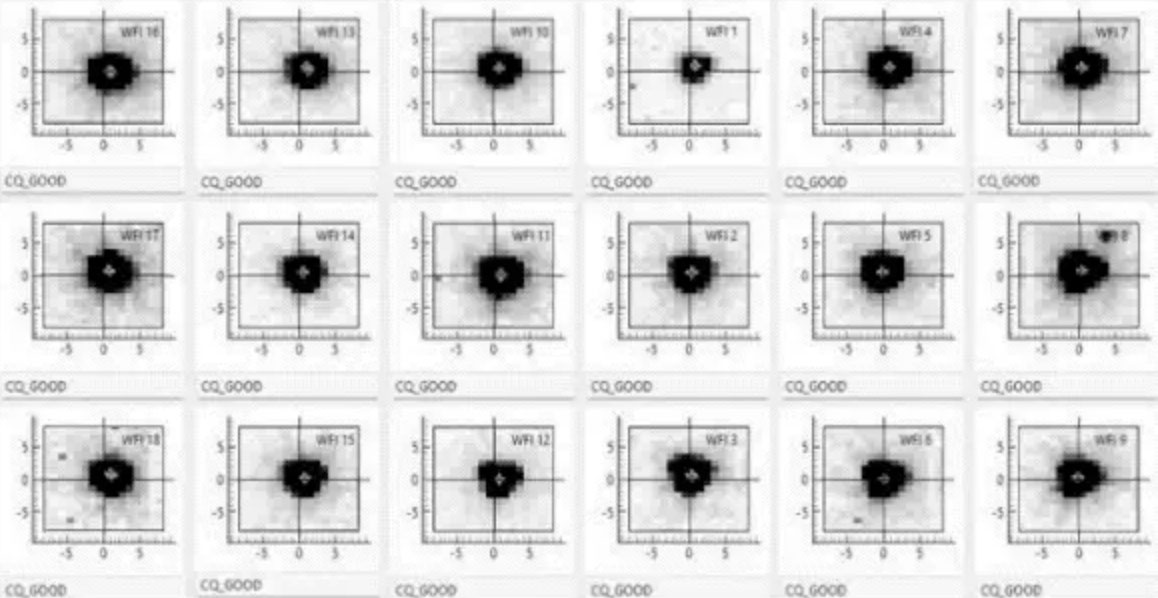
Internal alignment completed
As of Nov. 13, Roman is “internally aligned to within a tiny fraction of a hair’s breadth of perfection,” said Tony Sohn, an astronomer at the Space Telescope Science Institute. The 18 Wide Field Instrument detectors must work together as the telescope’s guider; precise star positions on each detector are essential for pointing and drift correction.
The coronagraph’s masks and optics were also adjusted to block starlight to unprecedented levels. “The wave nature of light makes starlight spill… A coronagraph uses carefully chosen masks to absorb and redirect that spilled starlight,” said Brian Kern, an optical engineer at NASA’s Jet Propulsion Laboratory.
NASA’s Nancy Grace Roman Space Telescope launched Aug. 30 aboard a SpaceX Falcon Heavy from Kennedy Space Center, which has served as NASA’s primary launch center for American spaceflight, research, and technology since 1968. Launch operations for the Apollo, Skylab, Space Shuttle and Artemis programs were carried out from Kennedy Space Center Launch Complex 39 and managed by KSC, establishing the site as the departure point for the agency’s flagship observatories.
Pathfinder for Habitable Worlds Observatory
Roman’s coronagraph contrast demonstration — between one part in 100 million and one part in 1 billion — is a stepping stone for NASA’s proposed Habitable Worlds Observatory, which will require a raw optical contrast of one part in 10 billion.
“The modeling and analysis work being done for CGI is the foundational stepping stone for the HWO,” Ludwick said. Roman’s post-processing algorithms will serve as HWO’s starting point, and its deformable-mirror control solves core scaling problems HWO will face with higher actuator density.
Former CAO staff continue mission support through Tellus1
Former CAO employees Bijan Nemati, Guillermo Gonzalez and Sam Miller also contributed; Nemati and Gonzalez continue support through Nemati’s company Tellus1 with UAH physics graduate student Peter Williams. “Roman’s launch is a big step forward in regional prestige and career opportunities,” Ludwick said. The mission is designed to last five-plus years, and its technology will help define astrophysics for the next two decades. “Students starting their education today may be the senior engineers designing the mirrors and processing algorithms for HWO tomorrow,” Ludwick concluded.
Keep reading

Georgia Strengthens Hold on No. 1; UCLA, Indiana Tumble in Coaches Poll
Georgia strengthened its hold on the No. 1 spot in the US LBM Coaches Poll on Sunday after...

Indigenous Women’s Club Expands Cultural Programs at Eddie Warrior Correctional Center
"We aren't the Native Club; we are the Indigenous Women's Club," said Stacie Jones of the Seminole Nation....
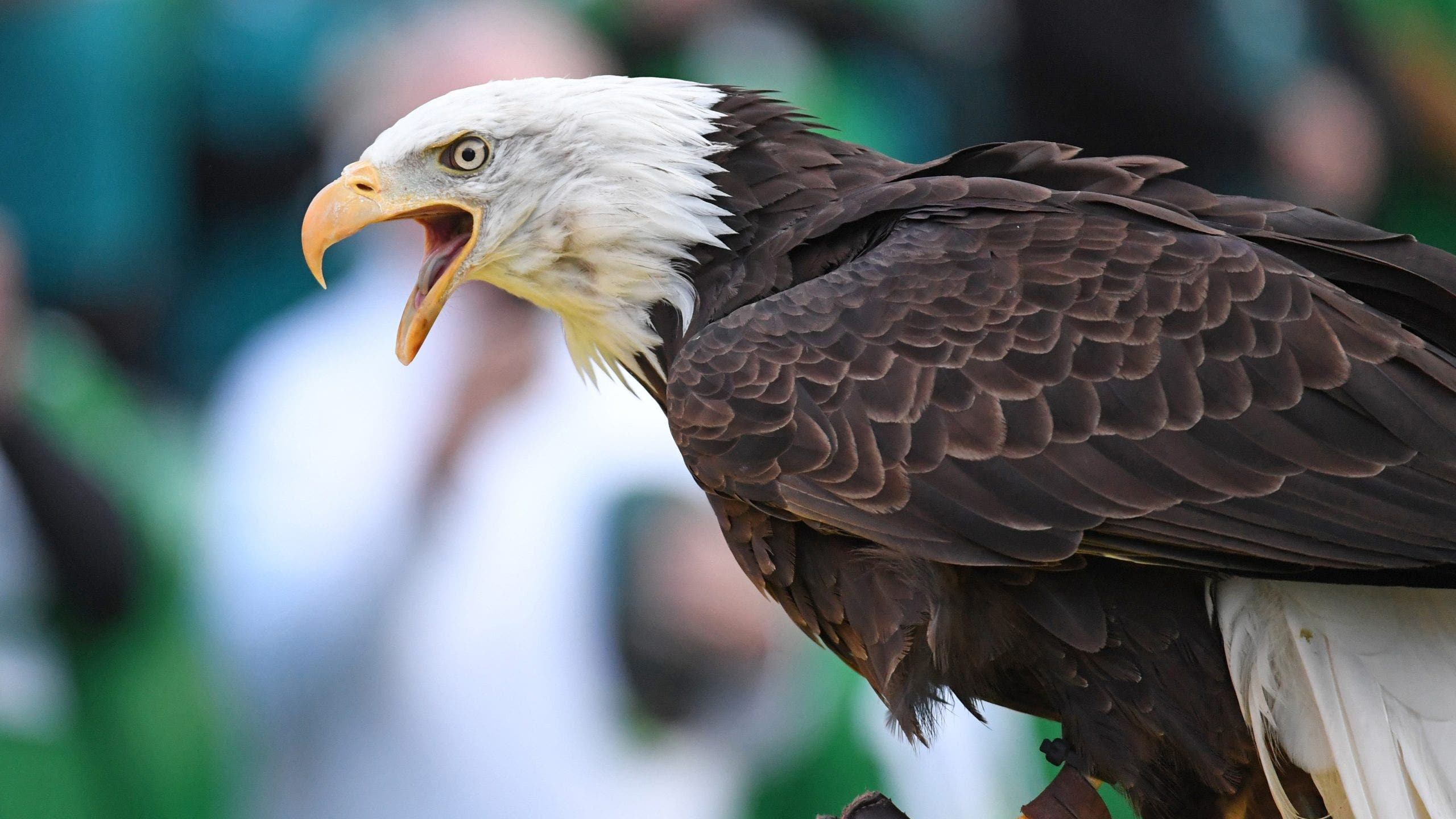
Eagle Lincoln Delays Return Three Minutes Before Steelers Game
Philadelphia Eagles bald eagle Lincoln took an unscheduled three-minute flight around Lincoln Financial Field before Sunday's game against...

Ithaca to Play for Sixth Title; Greater Lansing Champions Since 2000 Listed
Ithaca will play for its sixth MHSAA football state championship since 2010 when it faces Ottawa Lake Whiteford...