The University of Hawaii Board of Regents voted 7-2 on Nov. 19 to approve a four-year tuition schedule that freezes rates for two years before raising them at every campus, Hawaii Tribune-Herald reported.
The increases begin in the 2029-30 academic year. UH Manoa undergraduates face 5% annual hikes, pushing resident tuition from $11,760 to $12,984 by 2030-31. UH Hilo and UH West Oahu will rise 3% annually to $8,112. Community colleges will see their first per-credit increase in at least five years, climbing from $131 to $139 per credit. The Daniel K. Inouye College of Pharmacy at UH Hilo is the lone exception: its 5% annual increases start next fall, 2027-28.
“I just don’t know how we can ask students to pay more in tuition, meanwhile students like me are applying for food assistance and working two or three jobs,” said Kalehua Kalili, a junior at UH Manoa, speaking to Civil Beat.
Two regents vote no on tuition plan
Regent Eric Gee, the student member, and former Gov. Neil Abercrombie cast the only no votes. Abercrombie argued the board should have gone to the Legislature for more funding instead of shifting costs to students, according to Civil Beat. Board Chair Lauren Akitake supported the plan, citing the university’s long-term financial needs and the quality of education.
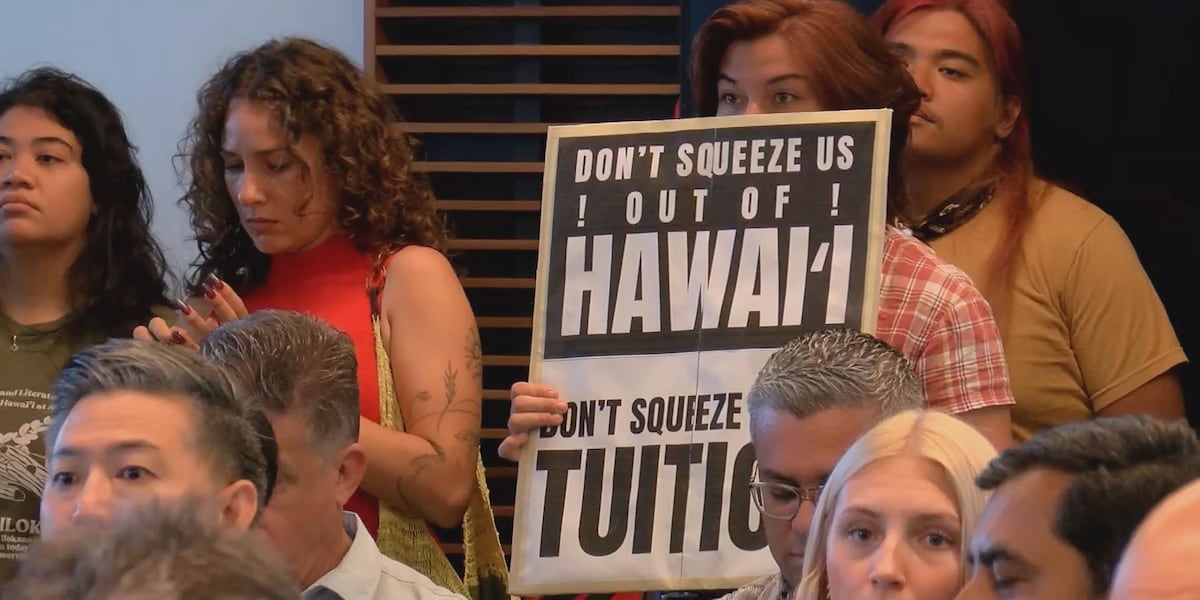
President Wendy Hensel said the Legislature has been generous but faces many competing demands. The university estimates the hikes will generate roughly $45 million over four years. Tuition currently covers just under 30% of the system’s budget.
Opposition across the system
About 35 people testified at the meeting, all in opposition, Hawaii Tribune-Herald reported. During the public review period, 126 people submitted written comments or testified at four public meetings; close to 80% were students. A report to the regents showed public comments generally opposed tuition increases.
“The fight isn’t over, right? We have a really large turnout. We have a lot of students who are demonstrating that they are dissatisfied and they don’t want this,” UH Manoa student Ligaia Meyer told Hawaii News Now. Another student, Ifit Hchoppe-Cruz, said the university failed to meaningfully consider student concerns.

Pharmacy students face yearly 5% tuition increases
Pharmacy students at UH Hilo will see tuition climb 5% every year starting fall 2027, reaching over $29,200 by 2030-31, Civil Beat reported. The university said the revenue supports accreditation requirements, faculty, research resources, technology and facilities. Graduate and graduate nursing tuition at UH Hilo remains flat for all four years.
What the numbers mean for families
| Campus | Current Resident Tuition | AY 2029-30 | AY 2030-31 |
|---|---|---|---|
| UH Manoa | $11,760 | $12,360 | $12,984 |
| UH Hilo | $7,632 | $7,872 | $8,112 |
| UH West Oahu | $7,632 | $7,872 | $8,112 |
| Community Colleges (per credit) | $131 | $135 | $139 |
Nonresident undergraduates will pay $37,248 at Manoa and $21,864 at Hilo and West Oahu by 2030-31. Resident students make up nearly 80% of enrollment this fall. Roughly a third of Hawaii public school graduates attend a UH campus immediately after graduation.
President Wendy Hensel, who earned a B.A. from Michigan State University in 1992 and a J.D. cum laude from Harvard Law School in 1995, was a Harry S. Truman Scholar in 1991 and named one of the Top Ten College Women in the United States by Conde Nast that year.
She clerked for U.S. District Judge Orinda Dale Evans before practicing labor and employment law at Alston & Bird in Atlanta, then built her academic career at Georgia State University, rising from instructor to dean of the College of Law and later provost.
She served as executive vice chancellor and university provost at the City University of New York before being selected in October 2024 to lead the University of Hawaiʻi’s 10-campus system.
Context: a decade of flat tuition
Adjusted for inflation, tuition is lower today than it was ten years ago, the university said in a memo cited by Maui Now. Hensel said that 90% of community college students and nearly 70% of four-year graduates finish with no debt. The schedule runs through 2030-31, when leaders must submit a new proposal.
Related reading
Topeka North Outreach Hosts Weekly Senior Luncheon for Five Years
For five years running, the Topeka Church of the Brethren has opened its doors every Wednesday for the...

NYC Bans Horse-Drawn Carriages, Ending 160-Year Central Park Tradition
New York City has officially outlawed its horse-drawn carriage industry, ending a 160-year tradition in Central Park when...

Nebraska DC Calls Ohio State’s Smith ‘LeBron James of Receivers’ Ahead of Saturday Game
Nebraska defensive coordinator Rob Aurich called Ohio State receiver Jeremiah Smith "the LeBron James of college football receivers"...

Mother Directs 10-Year-old Son to Shoot, Kill Teen Neighbor
Halloween afternoon in an Albuquerque apartment complex turned lethal when a 10-year-old boy, directed by his mother, shot...