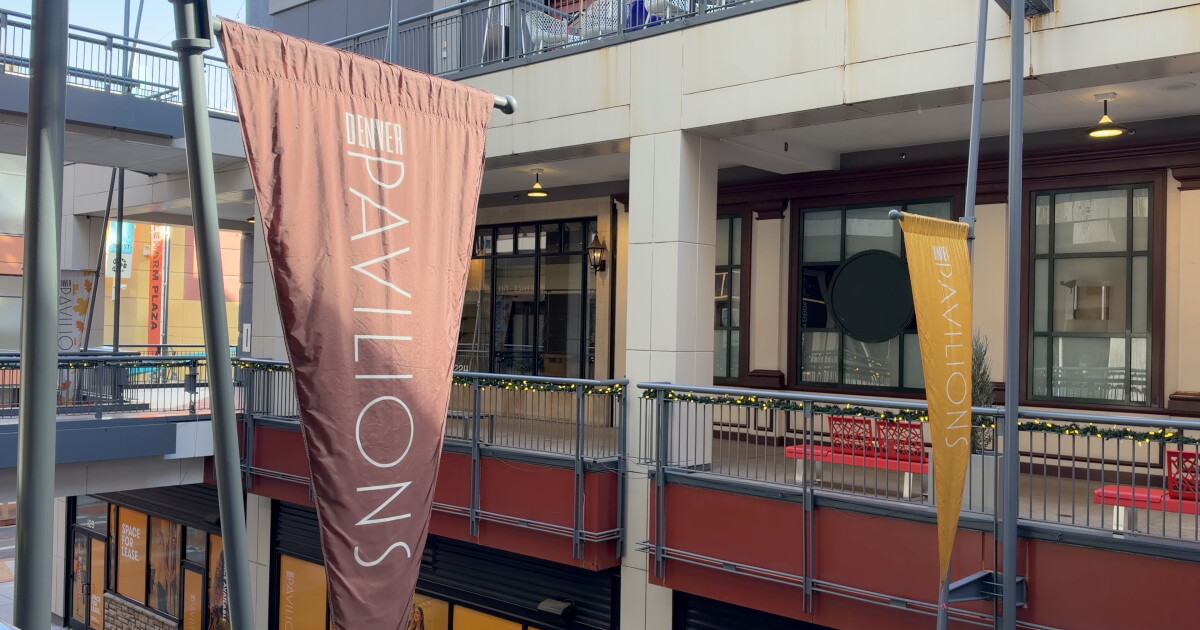
“An exterior three-story shopping mall is not exactly where the world’s going today,” Bill Mosher, a top adviser to Mayor Mike Johnston, told Denverite.
A $100,000 study by the Urban Land Institute now recommends tearing down most of the Denver Pavilions to make room for housing, a park and a convention hotel.
The Downtown Development Authority commissioned the report after buying the mall for $45 million and adjacent parking lots for $23 million last year. The ULI panel argues the property’s inward-facing, multi-level format and a structural decline in retail, food and entertainment tenants foreclose a conventional retail strategy, Denverite reported.
Citywide office vacancy hit 38.9% at the start of this year, while Upper Downtown reached 43.5% — among the highest of any downtown submarket in the country, according to the report cited by Denver7.
Pavilions occupancy has fallen from 95% to 61% as of April even as 16th Street Mall visitor numbers nearly return to pre-pandemic levels, the DDA told Denver 7 Colorado News (KMGH). The study blames the pandemic, years of 16th Street construction, lost tenants and fewer office workers downtown. The panel characterizes the site as the “missing link” in 16th Street’s network of public spaces connecting Union Station, Skyline Park and Civic Center Park.
“Re-tenanting the Pavilions in its current form is unlikely to revitalize Upper Downtown. The property’s inward-facing and multi-level format, combined with a broad-based and structural decline across retail, food and beverage, and entertainment tenants foreclose a conventional retail strategy,” the ULI report says, according to Denverite.
The panel’s vision would preserve only the building housing the Regal movie theater. In its place: two residential towers on the 15th Street parking lots — potentially 1,200 units — a large public space possibly anchored by the rooftop "Denver Pavilions" sign, and a convention hotel benefiting from proximity to the Colorado Convention Center. Estimated cost: $498 million to $615 million.
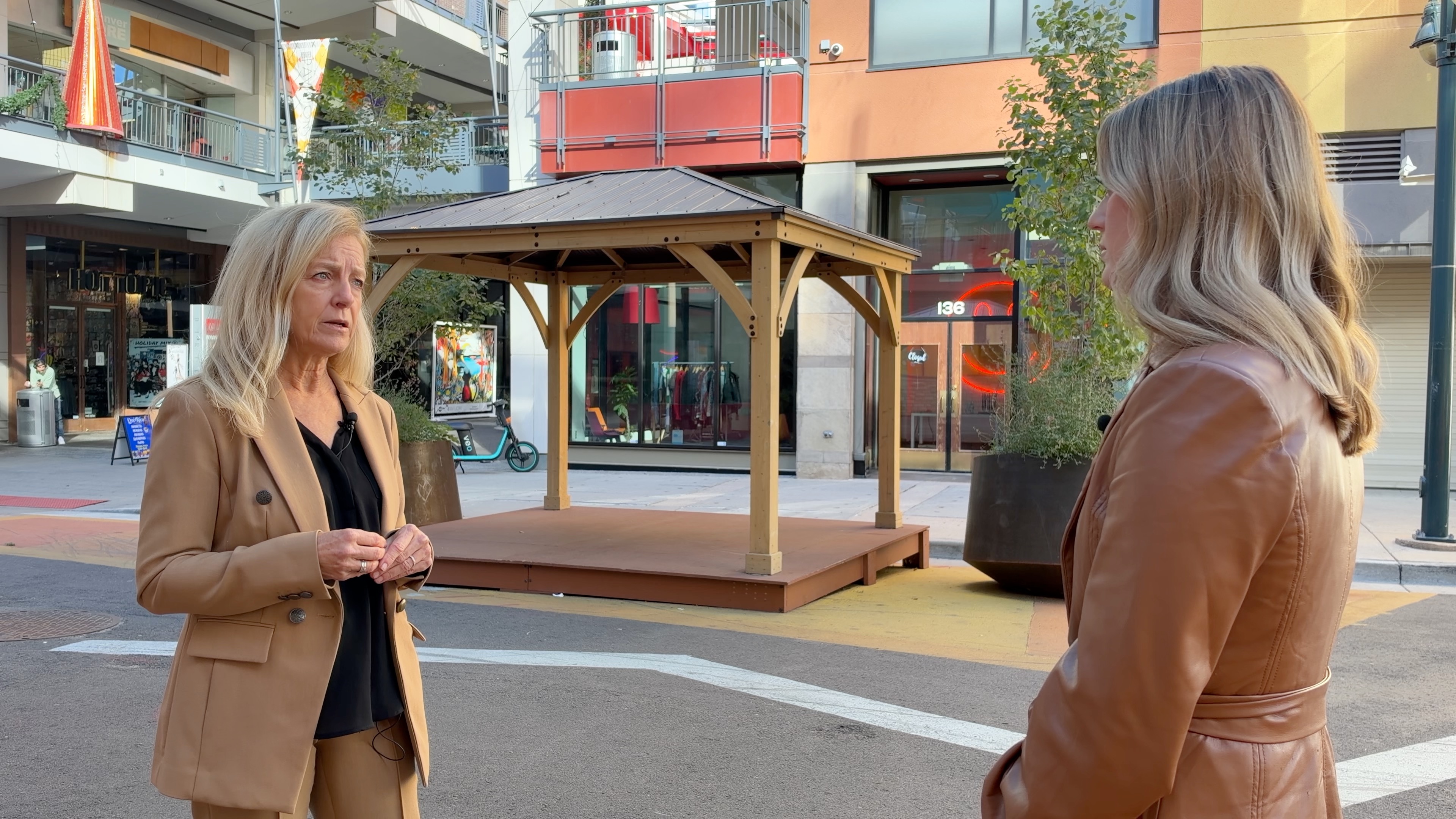
“Demolition would only occur as a part of a large redevelopment in the future,” Kim Sperry, the property’s asset manager, told Denver 7 Colorado News (KMGH). “We are really focused on how we can continue to operate, but improve the Pavilions so it does become, you know, that anchor and activity generator for the future.”
Sperry said parking revenue — about $4.4 million annually from the underground garage and surface lots — is bankrolling $3 million in near-term improvements. The DDA is in talks with several “big restaurants” and local concepts for second locations, she added.
The ULI panel recommended the authority hold the property rather than sell it to a developer, Denverite reported. Mosher cautioned the city is far from a confirmed plan — much less knocking down Coyote Ugly — and said high interest rates and economic uncertainty will likely delay any construction start three to five years after a developer is selected.
“We’re not just going to tear down buildings to tear down buildings without having a redevelopment strategy,” he told Denverite.
The Urban Land Institute, founded in 1936 as the National Real Estate Foundation for Practical Research and Education, has grown to more than 48,000 members worldwide. Its advisory services program, which began with a 1947 panel for Louisville, Kentucky, now deploys expert volunteers to help cities tackle complex land-use challenges — the same model that produced the Denver Pavilions recommendations.
For visitors like Kayla Selk, change can’t come soon enough. “We would come down to this area like 10 years ago when I was 16, and every place was kind of more lit up,” she told Denver 7 Colorado News (KMGH).
“Then we come here and we’re on the second round and everything is closed.” A steering committee will now study the report before deciding next steps, a process Sperry said will likely take a few years to play out.
Worth a look
- Federal Inspection Finds 11 Deficiencies at Diamondback Correctional Facility
- Deputy Fire Marshal Roberts: Three Minutes Before Smoke Overtakes; Albany Blaze
- CDC Recommends Annual Flu Shots in September or October (newsarchyuk.com)
- What Trump's Housing Order Means for a $360,000 Loan at 7.32% (daybreakwire.com)

Federal Inspection Finds 11 Deficiencies at Diamondback Correctional Facility
A federal inspection of the Diamondback Correctional Facility in Watonga uncovered 11 deficiencies across seven standards in September,...
Deputy Fire Marshal Roberts: Three Minutes Before Smoke Overtakes; Albany Blaze
"During a house fire, we only have about three minutes before smoke can overtake us," said Deputy Fire...

Bishop Koenig Announces Dec. 12-13 Retirement Fund for Religious Collection
Parishes across the Diocese of Wilmington will take up the annual Retirement Fund for Religious collection on the...

Wheels for Warmth Raises $126,000, Expected to Help 166 Vermont Households
Vermont drivers and donors pushed Wheels for Warmth past $126,000 this fall, a total expected to help 166...