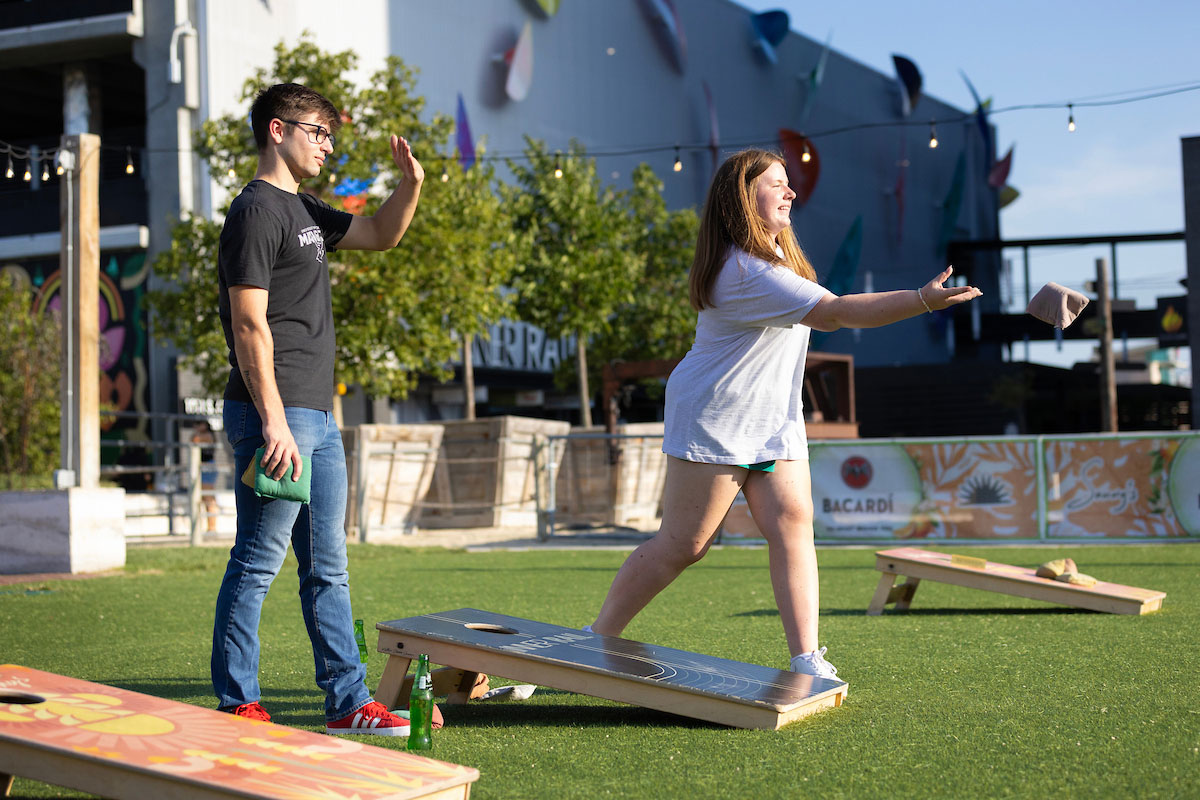
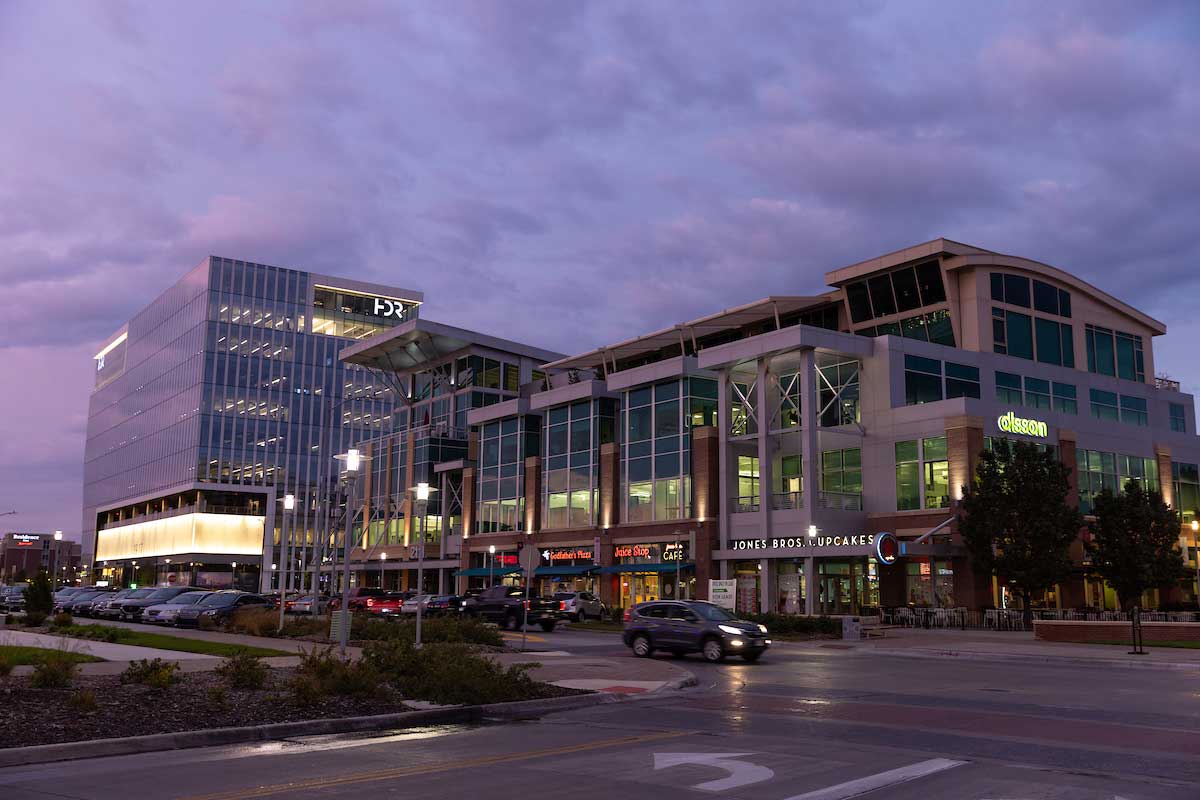
University of Nebraska at Omaha students live steps from Aksarben Village, a mixed-use district on the Scott Campus border that blends dining, events, history and trail access, the university reported.
The centerpiece for nightlife is Sonny’s, a seasonal venue in the heart of the village that hosts live music Friday and Saturday nights, karaoke on Thursdays and yoga on the lawn Saturday mornings through the summer. “Sonny’s is a shining star located in the heart of Aksarben Village and is the number one hangout spot when the sun is out,” the university said.
Year-round dining clusters around the Inner Rail Food Hall, which offers indoor and outdoor seating with vendors serving subs, pizza, burgers, Mediterranean dishes, dumplings and Mexican food. Nearby, Herbe Sainte serves soul food, DJ’s Dugout offers wings and Mavericks game viewing, and Ponzu Sushi provides Japanese rolls.
From early May to mid-October, a Sunday Farmers Market brings dozens of locally owned businesses selling produce, fresh-squeezed lemonade, jewelry and baked goods. “It’s a one-stop shop, where you can grab fresh produce for the week, cool down with a giant fresh-squeezed lemonade, get the perfect one-of-a-kind jewelry piece for that special someone, or indulge in a delicious baked sweet treat,” the university said.
Stinson Park anchors public events with a summer concert series every Saturday, the American Foundation for Suicide Prevention “Walk Out of Darkness” walk, the Midwest Chingona Festival, and holiday programming including a tree lighting, “Lights of Aksarben” events and a Holiday Market with Santa visits. When the amphitheater is dark, the lawn serves for picnics, outdoor studying and social-media breaks.
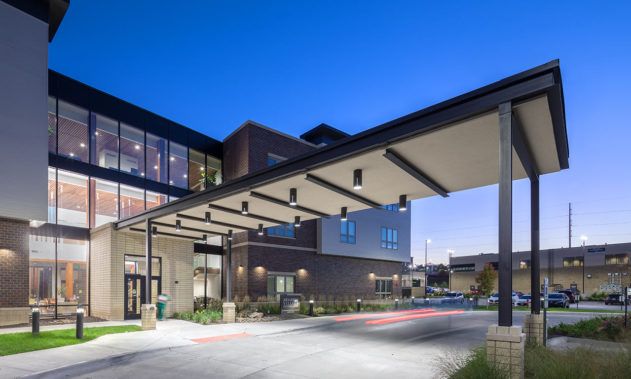
Behind the Scott Technology Center along Ak-Sar-Ben Drive, the Keystone Trail follows the Little Papillion Creek for 20 paved miles, connecting to Omaha’s wider trail network for walking, rollerblading and cycling without crossing busy streets.
Aksarben Village occupies the former Ak‑Sar‑Ben coliseum and horse‑track site, a property measured at over one million square feet (93,000 m2) after the track and coliseum were demolished in 2005.
Construction on the pedestrian‑friendly mixed‑use development began in 2006, and the first businesses opened in 2008, establishing more than 750,000 sq ft (70,000 m2) of research and office space, 250,000 sq ft (23,000 m2) of retail and entertainment, over five hundred housing units and a 135‑room hotel.
A 4.5‑acre (1.8 ha) park with a 90‑foot (27 m) obelisk anchors the district, while the University of Nebraska Omaha’s south campus — Aksarben Campus — borders the north end and includes the ten‑building Scott Village dormitory complex that opened in 2003 with 480 units.
The district traces to the 1890s, when local business leaders formed it to counter growth in Lincoln, Kansas City and St. Louis. The Aksarben Ball, Stockshow and Rodeo, and the Racetrack and Coliseum drew thousands for decades before the track and coliseum were demolished in 2005. Plaques and statues around the village mark that history.
“A timeline of the district’s history from the Aksarben Foundation details its importance to Omaha’s economic and social development, and how it came to be the ever-thriving hub that it is today, after the demolition of the racetrack and coliseum in 2005,” the university said.
Related reading
Wyoming Leads Nation in Study-Abroad Growth at 14.14%, UW Sole Contributor
Wyoming posted a 14.14 percent increase in study-abroad participation to lead the nation for growth, the Institute of...

Sacramento Man Convicted of Murder and Arson in Killing of Roommate
A Sacramento County jury convicted Harold Dean Fowler of second-degree murder and arson on November 19 for the...

FEMA Approves Over $51 Million in Disaster Aid for Mississippi Across Three Programs
FEMA approved more than $51 million in federal disaster aid for Mississippi on Monday, the agency announced from...
West Albany Reaches State Final Since 2013, Beats Thurston 42-32
West Albany earned its first state championship appearance since 2013 on Friday, holding off second-seeded Thurston 42-32 in...