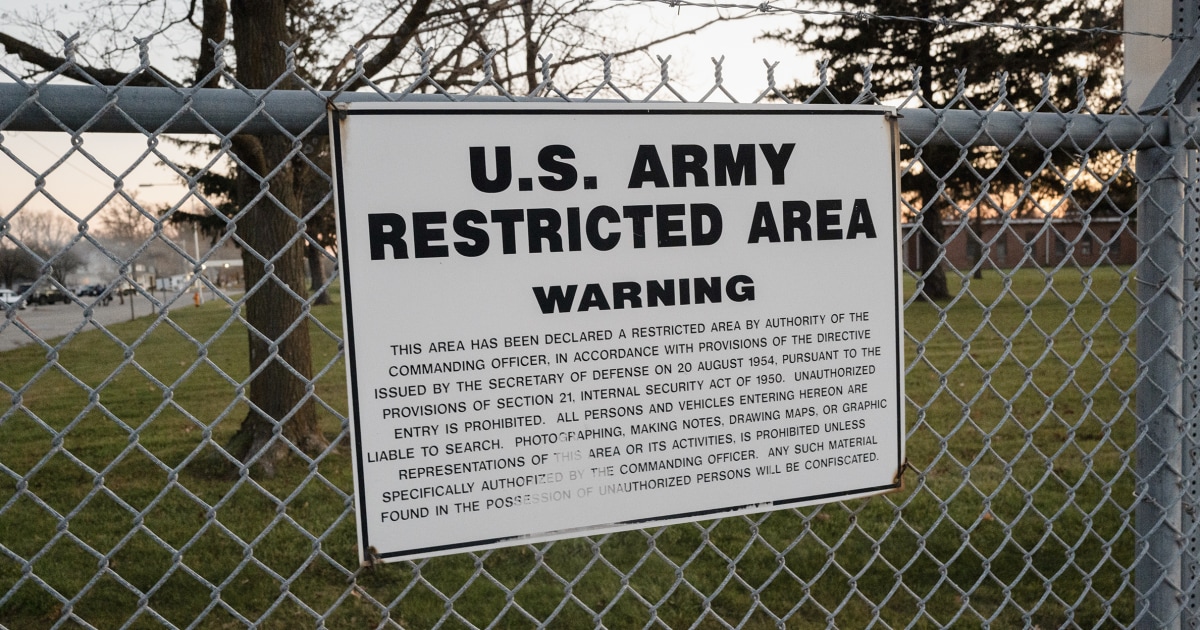
The U.S. Army plans to detonate nearly five tons of degraded lead azide at the Iowa Army Ammunition Plant in Middletown on Wednesday, defying a federal appeals court order that paused the operation indefinitely.
Government lawyers argue an emergency exclusion allows the military to bypass the Environmental Protection Agency permit process because the unstable explosives pose an immediate threat to public safety.
Court halts demolition, Army reschedules
The 8th U.S. Circuit Court of Appeals granted an emergency motion Friday to halt the demolition after the Iowa Environmental Council and Sierra Club sued, citing risks of a lead dust plume spreading across Iowa and into Illinois.
The Army had originally scheduled the controlled explosions for Friday, then delayed them to Monday and Tuesday before the court intervened. On Sunday, the Army announced a further delay to Wednesday “to allow for optimal weather conditions and all mitigation measures to be emplaced,” according to a social media post cited by CBS News.
Emergency authority cited to bypass pause
In a court filing Saturday, the Department of the Army said it intends to use an emergency munitions and explosives exclusion to the EPA’s hazardous waste permit. Government lawyers wrote that the Resource Conservation and Recovery Act standards do not apply when an explosive or munitions emergency response specialist determines an immediate threat to health, safety, or the environment exists.
“The real choice, in other words, is not between a detonation and no detonation. It is between a planned and mitigated detonation and an unplanned and unmitigated explosion,” the filing said, according to CNN reporting via KQ2.
The controlled detonation at Iowa Army Ammunition Plant is now scheduled on Wednesday, November 25, 2026 to allow for optimal weather conditions and all mitigation measures to be emplaced. The Army and our interagency partners have been working around the clock to safeguard all…
The Justice Department asked the appeals court Sunday to lift the pause, arguing the court’s order “does not enjoin or otherwise prohibit the Army from acting under a separate legal authority.” The Army said it would follow mitigation measures outlined in the emergency permit even if the permit itself is not in effect, including steps to minimize lead dust dispersal.
Unstable chemicals, dropping temperatures drive timeline
Plant staff discovered several dozen barrels of degraded lead azide — a primary explosive used in munitions detonators — during routine stockpile surveillance in March, Acting Army Secretary Adam Telle said. Crystallization has made the material “extremely unstable and sensitive to even slight friction or movement,” according to an Army FAQ distributed last month. Officials contend handling or transporting the drums would increase the probability of an accidental, fatal detonation.
Public safety is the Army’s top priority, and I have directed Army Materiel Command to postpone tomorrow’s controlled detonation at the Iowa Army Ammunition Plant in Middletown, Iowa until Monday, November 23. This will delay the detonation until the latest possible moment prior…
The government warned Saturday it must conduct the controlled explosion before temperatures drop below 30 degrees Fahrenheit, which is forecast in the coming days. Cold weather could cause crystals in the waste to fracture, raising the risk of an uncontrolled explosion. The Army did not immediately explain if the forecast or other factors changed to make Wednesday safer than Tuesday, CBS News noted.
Controlled detonation planned with evacuations and lead plume warning
The controlled detonation will involve nearly 70 drums stored inside concrete structures surrounded by sand-filled Hesco barriers reaching two stories high, The Guardian reported. Two blasts are planned. Vibrations could break old windows in Middletown, a town of nearly 400 people, prompting officials to recommend certain residents evacuate between 8 a.m. and 2 p.m. local time.
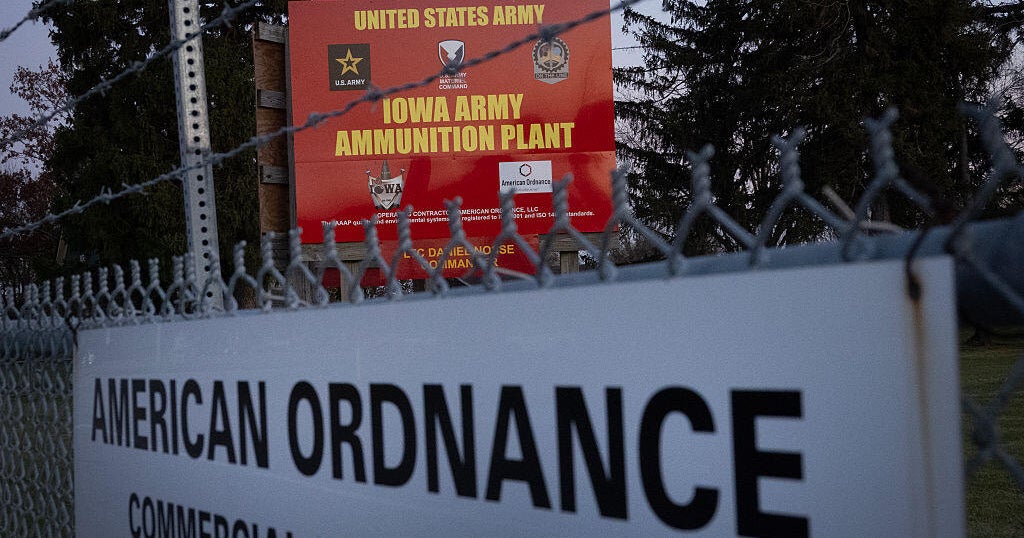
An Army advisory states the detonation “will result in an air plume with some lead-containing particles which will disperse in the air and deposit on the ground.” Lead is toxic to humans and animals at any exposure level, health officials emphasize.
Updated plume maps show the dust drifting north toward the Mississippi River and parts of Illinois. Some schools in the projected path have canceled classes. The Federal Aviation Administration has restricted flights around Middletown through Wednesday.
Residents in the region were told to stay inside, keep windows and doors closed, bring pets and livestock indoors, and clean cars, windowsills, and outdoor surfaces afterward. Iowa Gov. Kim Reynolds activated a state emergency operations center Friday. Illinois officials warned residents about potential dust crossing the state line.
Environmental groups challenge risk assessment and transparency
The Iowa Environmental Council, Sierra Club, and Earthjustice filed a motion Sunday supplementing their emergency request to block the detonation. The filing includes three expert and local government declarations challenging the Army’s assessment that delaying the detonation increases risk, as well as concerns about public notice and health impacts.
“This emergency is of the Army’s own making,” the groups said in a joint statement Sunday. “The Army seemed more concerned over the weekend with finding a way to sidestep the judicial process than on meeting the public’s demands for greater transparency, notice to affected communities, and far stronger protection of people, property, and the environment from serious harm,” Earthjustice senior attorney Thien Chau said.
Environmental groups argued in their petition that alternatives such as chemical neutralization were not fully considered. They also criticized officials for not sharing more information with the public. The Army held a public meeting in Middletown in October, but a public advisory a week ago was the first time communities up to 100 miles away became aware of the potential impact, NBC News reported.
Rob Sand, Iowa’s governor-elect, wrote on X Thursday: “An unacceptable lack of communication and clarity has made Iowans understandably concerned and angry about this situation. The public deserves to know, if this is the safest option, why other options were worse.”
The safety of Iowans now and in the future should be government’s top concern. An unacceptable lack of communication and clarity has made Iowans understandably concerned and angry about this situation. The public deserves to know, if this is the safest option, why other options…
Telle acknowledged the criticism Thursday on X: “Public communication is essential to public trust,” adding he was engaging state officials. The appeals court has not yet ruled on the Justice Department’s motion to lift the pause.
More on Sierra Club
In Iowa, a federal appeals court is blocking the U. S. Army from detonating several tons of bomb-making chemicals amid concerns over environmental and health risks. pic.twitter.com/x1pXBjYfsR
Related reading

Eagles Snap 7‑Game Losing Streak, Beat Steelers 19‑16
The Philadelphia Eagles snapped a seven‑game losing streak Sunday with a 19‑16 win over the Pittsburgh Steelers, improving...

Tanzania Launches Probe After New Mwanza Ferry Hits Bismarck Rock
Tanzania's flagship ferry, the 3,500-gross-ton New Mwanza, struck Bismarck Rock at the entrance to Mwanza harbour on Wednesday,...

Scarlet and Game: Ohio State Faces Likely Transfer Exodus at 7-4
Ohio State entered November ranked No. 1 with championship expectations; the Buckeyes sit 7–4 after a loss to...

Man Arrested on Suspicion of DUI After St. Paul Crash; Building Demolished
“A man had entered their yard and stated he was uninjured,” a resident told officers, according to CBS...