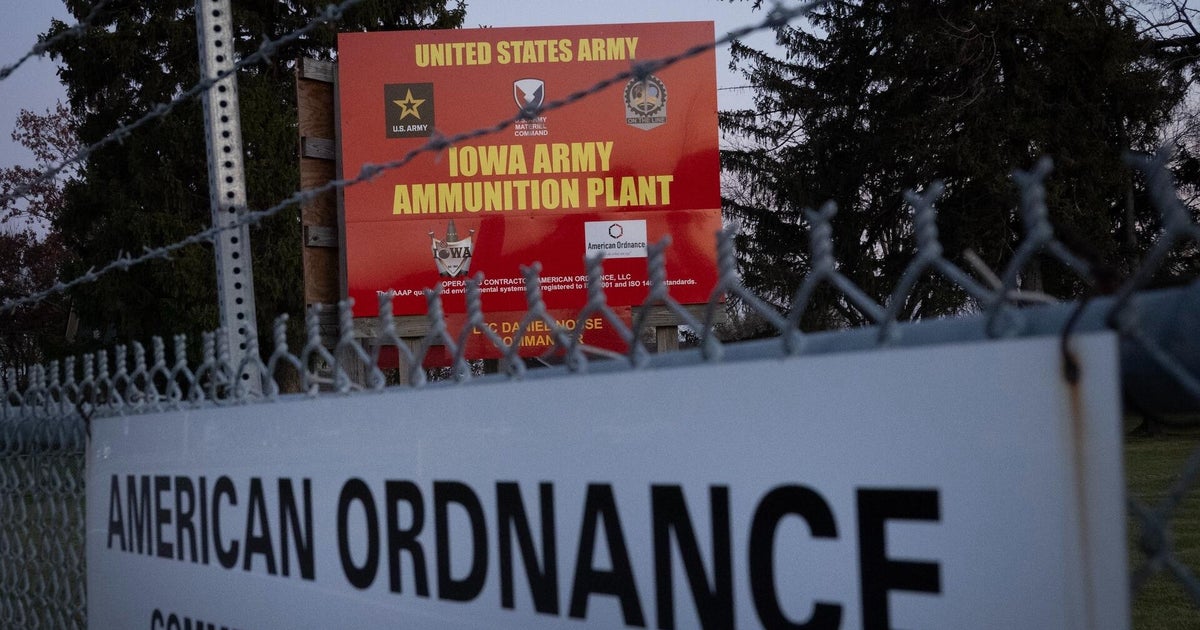
The U.S. Army plans to detonate degraded lead azide at the Iowa Army Ammunition Plant by Tuesday despite a federal court order pausing the operation, saying freezing temperatures could trigger an uncontrolled explosion, the BBC reported.
The 8th U.S. Circuit Court of Appeals halted the original Friday blast after environmental groups sued, arguing the Army failed to consider safer alternatives. The Justice Department notified the court Saturday that the Army intends to act by Nov. 24 under an EPA emergency permit, saying removal of the bunker doors has made the material more vulnerable to a forecast drop below 30 degrees Fahrenheit.
Unstable explosives force the decision
Routine inspections in March found 68 drums of lead azide — a primary initiating explosive used in munitions — had begun recrystallizing inside World War II-era bunkers at the Middletown plant, CBS News reported. The degradation makes the compound sensitive to friction, heat and temperature swings, ruling out transport. “This means that even a small quantity of lead azide can detonate with friction or heat, making it inherently dangerous to transport,” Matthew McConnell, an assistant professor of chemistry at Western Illinois University, told FOX TV Stations.
The EPA granted an emergency permit Nov. 13 for on-site destruction, stating the explosion risk “presented an imminent and substantial threat to human health and the environment.” Acting Army Secretary Adam Telle wrote on X that the Army delayed the detonation “until the latest possible moment prior to a forecasted temperature drop, which would risk further destabilization of the material.”
Environmental groups win temporary stay against detonation
Environmental groups including the Iowa Environmental Council and the Sierra Club filed suit Thursday, winning a temporary stay Friday. “There is no safe level of lead exposure, and Iowans were given just days to prepare for the November 20 detonation,” the Iowa Environmental Council said in a statement. The groups filed a new motion Sunday asking the court to pause proceedings so they can submit additional expert declarations questioning the Army’s risk claims and citing inadequate public notice.
Iowa Gov.-elect Rob Sand criticized the process: “An unacceptable lack of communication and clarity has made Iowans understandably concerned and angry about this situation.” The Army previously advised residents within the risk zone to leave their homes for six hours during the blast and until dust settled.
The U. S. Army's plan to detonate five tons of unstable explosives containing lead azide at a munitions plant in Iowa has been put on indefinite hold by a federal court Friday. https://t.co/8dm0Y9grsI
Cold weather increases explosion risk
It said temperatures are forecast to drop below 30 degrees Fahrenheit in the next several days, and that the Army’s removal of the bunker doors in preparation for the original blast has made the explosives more “vulnerable to temperature changes.” The filing added that temperature swings have “dramatically increased the risk of an uncontrolled explosion and threat to public safety,” BBC and FOX 32 Chicago reported.
Military officials said it is not safe to relocate the explosive materials, and the Army stated it modeled four different neutralization methods before concluding that a controlled detonation posed the lowest risk to the public.
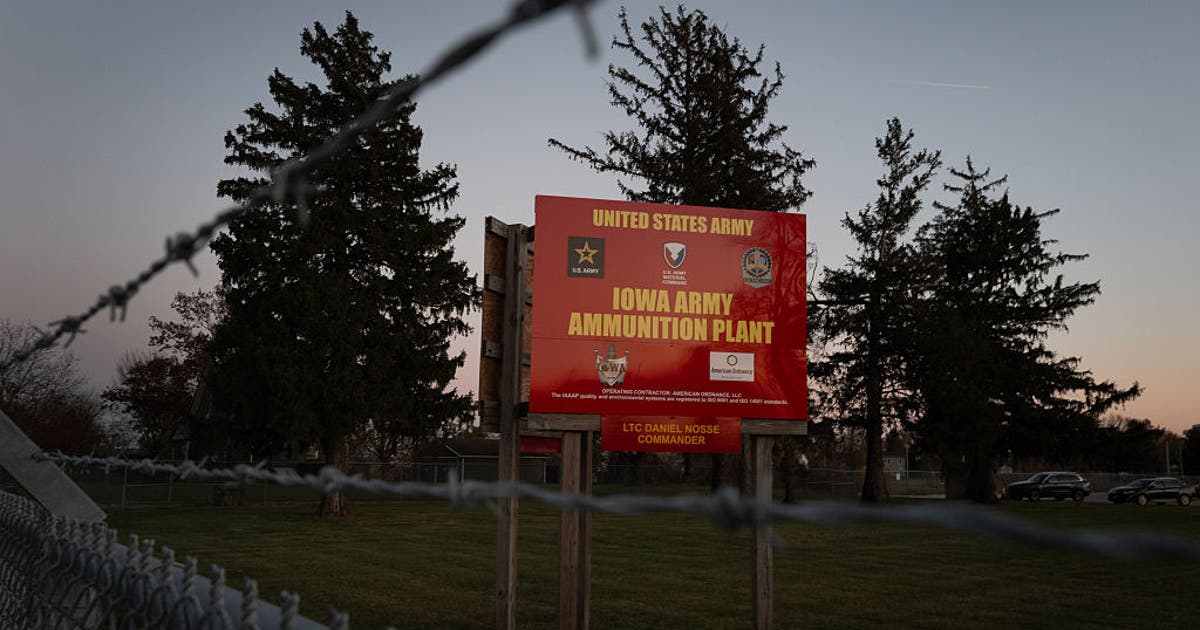
Environmental groups challenge risk claims and public notice
“There is no safe level of lead exposure, and Iowans were given just days to prepare for the November 20 detonation,” the Iowa Environmental Council said in a statement. The groups argue that many residents living within the risk zone were unaware the explosion had been scheduled.
The Army previously advised residents within the risk zone to leave their homes for six hours during the blast and until dust settled.
Lead particles may move through the air
David Cwiertny, director of the University of Iowa’s Environmental Policy Research Program, told CBS News that lead particles could move freely in the air and collect on the ground, though “we do expect that air to dissipate fairly quickly as it moves with the wind.” The government has not released details for the rescheduled detonation.
More on Iowa Environmental Council
Jeffery Simmons Records 3 Sacks as Bears Beat Saints 21-10
Defensive tackle Jeffery Simmons recorded 3.0 sacks and the Bears defense forced a critical fourth-quarter stop as Chicago...

Nurse Calls Barlow ‘Excellent’ in Season Debut Despite Sixers Loss to Bucks
Barlow missed the first 16 games and preseason with a back injury. Three of his five baskets came...

Vermont’s Malia Lenz Returns From Injury, Catamounts Beat Central Connecticut 71-59
Vermont women's basketball returned a preseason all-star and beat Central Connecticut State 71-59 on Sunday at Patrick Gym....

Historians Still Debate Tom Horn’s Guilt Over 1903 Execution
More than a century after Tom Horn was hanged for the murder of a 14-year-old boy, historians still...