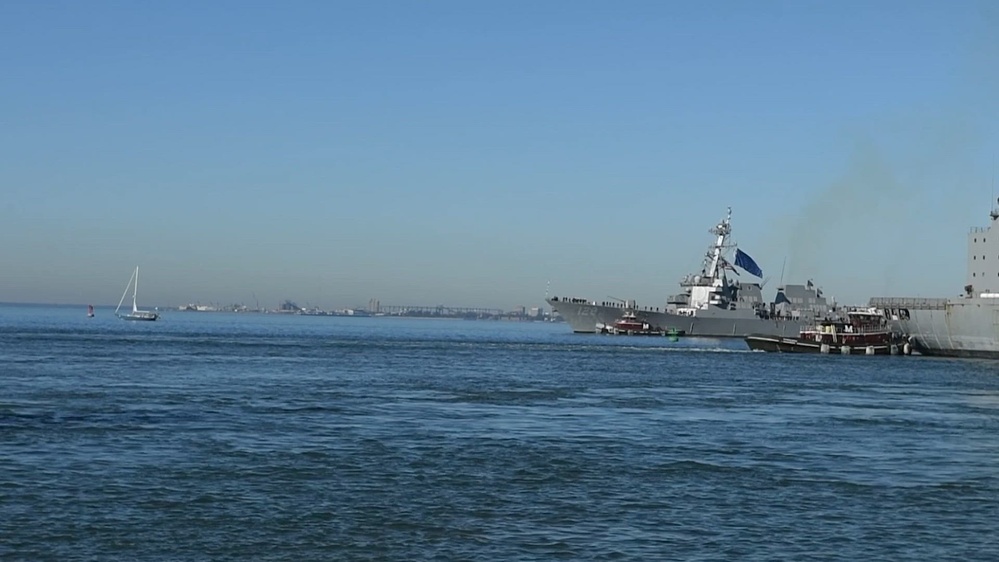
The Navy’s newest Flight III destroyer, USS Ted Stevens, pulled into Naval Station Norfolk on Wednesday as a commissioned warship for the first time, marking the end of a months-long voyage that stitched together the service’s industrial base, its Arctic frontier and its institutional memory.
The arrival on November 18 fell on the birthday of the ship’s namesake, the late Senator Ted Stevens of Alaska, a decorated World War World War II Army Air Corps pilot who represented the state in the Senate from 1968 to 2009.
It was the second time the hull had reached Norfolk — the first was in May, when it arrived as a pre-commissioning unit fresh from Huntington Ingalls Industries’ Ingalls Shipbuilding division in Pascagoula, Mississippi.
Between those two Norfolk arrivals, the ship traveled a deliberate geographic arc. After completing full-ship shock trials off Florida in July, the destroyer transited to the Pacific, sailing alongside USS Daniel Inouye (DDG 118) off San Diego on September 17 in a tribute to the lifelong Senate partnership of the two World War II veterans for whom the ships are named.
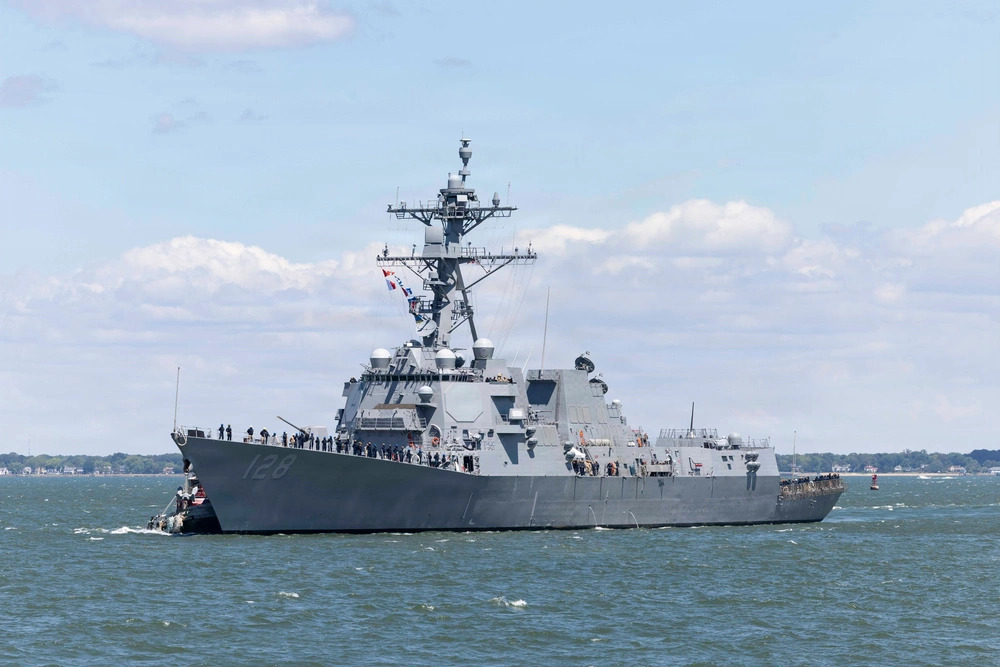
The commissioning ceremony took place October 3 in Whittier, Alaska, with the ship’s sponsors — Catherine Ann Stevens, Susan Stevens Covich and Lily Stevens Becker — in attendance. A four-day port visit to Juneau followed, where the crew hosted public tours and community events before the ship turned south for the Panama Canal and the run home.
The return leg carried its own symbolism. From November 6 to 13, USS Ted Stevens sailed escort for the decommissioned ex-Enterprise (CVN 65), the world’s first nuclear-powered aircraft carrier, as it was towed toward Mobile, Alabama, for dismantling. The Navy’s newest surface combatant shepherding the Navy’s first nuclear carrier closed a loop of technological generations at sea.
“We are proud to return to our homeport of Norfolk as a commissioned warship,” said Capt. Mary Katey Hays, commanding officer of USS Ted Stevens. “From Full Ship Shock Trials to our commissioning in Whittier, AK, from our port visit in Juneau and back through the Panama Canal, the crew has embodied our motto, ‘Lead with Courage.’ We are ready to join the Fleet!”
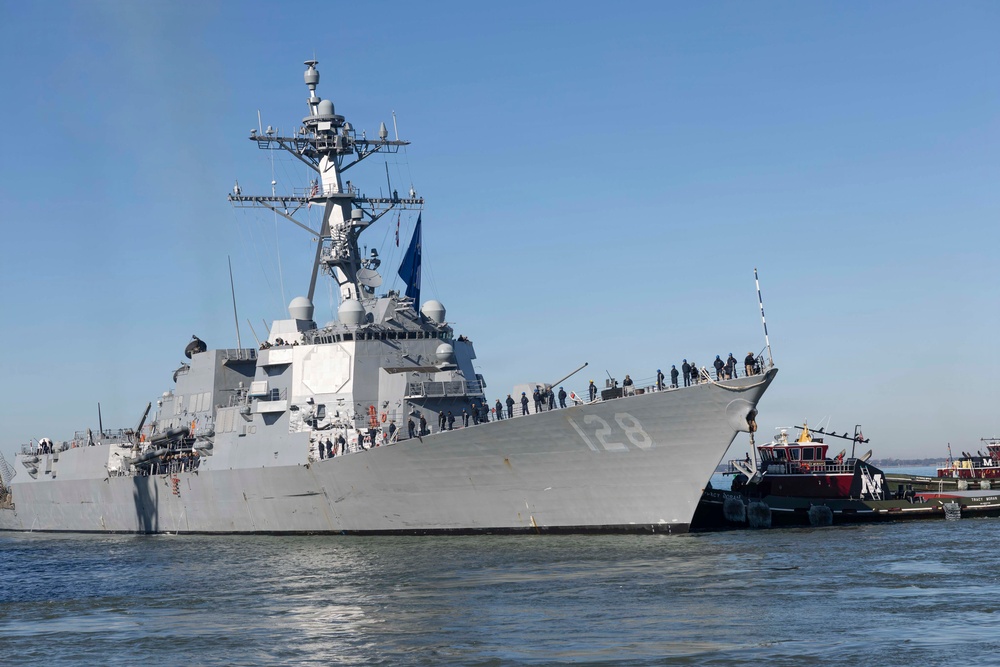
As the second Flight III Arleigh Burke-class destroyer delivered by Ingalls, Ted Stevens brings the AN/SPY-6(V)1 Air and Missile Defense Radar (AMDR) and Aegis Baseline 10 combat system to the Atlantic Surface Fleet.
The combination adds significantly upgraded electrical power and cooling capacity designed to detect, track and counter advanced ballistic, cruise and hypersonic missile threats — a capability set the Navy has said is critical for the evolving threat environment in the North Atlantic and Arctic.
Theodore Fulton Stevens Sr. served as a U.S. Senator from Alaska from 1968 until 2009, becoming the longest-serving Republican senator in history at the time of his retirement. He later authored the Trans-Alaska Pipeline Authorization Act and the Alaska National Interest Lands Conservation Act, legislation that defined the state’s modern economic and geographic footprint.
Commander, Naval Surface Force Atlantic (COMNAVSURFLANT) will man, train and equip the ship for integration into a force composed of 66 ships and 31 shore commands.

Chicago Holiday Season Opens Nov. 20 With Free Tree Lighting, Skating, Parades
Chicago's holiday season opens on Nov. 20 with the 113th Christmas tree lighting in Millennium Park, kicking off...
Volpe Appoints Patrick Springer Deputy Fire Chief Effective Dec. 1
Patrick Springer takes over as deputy fire chief on Dec. 1, filling the vacancy left when Daniel Volpe...

West Tennessee Healthcare, Le Bonheur Expand Pediatric Care in Paris, Dyersburg
"Bringing these services closer to the families who need them is incredibly important to us," said Deena Kail,...

Orchestra Noir Marks 10th Anniversary With R&B and Hip-Hop Classical Arrangements
Atlanta’s Orchestra Noir marks a decade of reframing the symphonic canon this Friday, turning the Cobb Energy Performing...