
“The story for 2026 is not people changing their identity. It’s people crossover voting or not voting,” said Quin Monson, a political science professor at Brigham Young University, after a survey of 5,230 Utah voters released Thursday by BYU’s Center for the Study of Elections and Democracy.
Democratic candidates for the U.S. House received 47% of the vote, up 14 percentage points from 2024, while Republican candidates fell from 62% to 47%, according to the BYU analysis reported by Deseret News. The share of active Latter-day Saints who voted for Democratic congressional candidates more than doubled from 13% to 28%, supplying about half of the statewide swing toward Democrats. Latter-day Saints represent roughly half of the Utah electorate.
Republican share fell crossover voting increases
The Republican share of the electorate fell from 63% to 52%, driven by a 7-point reduction in “Strong Republicans,” evenly split between “traditional” and “MAGA” camps, the survey found. Poor turnout among voters more likely to be MAGA supporters coincided with elevated crossover voting among Republicans who do not consider themselves strong partisans. About 1 in 6 of that cohort backed Democrats in 2026, compared with less than 1 in 10 in the previous general election.
Independent voters delivered the most decisive flip. In 2024 the split was nearly even; by 2026 they favored Democrats 57% to 22% for Republicans. The BYU analysis concluded that three-fifths of Democratic gains came from Republican voters dropping out and two-fifths from independents and “weak” Republicans voting more Democratic. Overall, the portion of Republicans who voted for congressional Democrats rose from 4% to 9%, with the spike most pronounced among Latter-day Saints, tripling from 3% to 10%.
Identity versus vote choice
“Vote choice and party identity are two different things,” Monson told Deseret News. “I don’t think there’s any evidence that there’s massive realignment in terms of their identity. They’re still Republicans.”
Latter-day Saint Republican identification fell from 83% to 75%, but Monson attributed that to low turnout rather than a fundamental shift. The survey found 54% of Utah Republicans identify as traditional Republicans and 33% as MAGA supporters; among active Latter-day Saints the split was 60% traditional and 29% MAGA.
Brad Jones, senior research director at YouGov and a BYU graduate, pointed to the national environment. “The clearest read of this election, why Democrats outperformed by so much, is Trump, right?” Jones said.
“That his unpopularity is just a drag on the whole party, which he’s basically made in his image.” A series of Economist/YouGov polls showed that Latter-day Saint Republicans faced a wider enthusiasm gap about voting in 2026 than the typical American voter or white evangelicals.
Demographic drivers and the 2028 outlook
Data scientist Alex Bass, analyzing NORC’s Civic Health and Elections Project on his Mormon Metrics blog, found Latter-day Saints shifted 12 percentage points toward Democrats between 2024 and 2026 — larger than the 7-point national shift and larger than most other religious groups.
The shift was fueled by a 30-point swing among voters under 30 and roughly 20-point swings among those without a college degree and those earning less than $50,000 a year, groups more likely to be affected by cost-of-living issues.
“The future is very uncertain,” Bass told Deseret News. “I could see Utah going both ways. I think there’s a good chance for a competitive Senate election in 2028. But also it could just revert back to the way it was.”
Exit polls from CNN and NBC News found two-thirds of Latter-day Saints cast ballots for Republicans in the 2026 midterms — the largest share of any religious category included in those surveys.

UMass Football Closes Season at Bowling Green on ESPN+
AMHERST, Mass. -- Massachusetts football closes the regular season Saturday at Bowling Green, a 3:30 p.m. kickoff at...

The Advocate Names 26 Essential Baton Rouge Restaurants for 2026
The Advocate released its annual list of the 26 best restaurants in Baton Rouge on Monday, selecting establishments...

Over 400,000 Gallons of Fuel Oil Leaked at H-Power; Log Discrepancies Hit 78% During Months-Long Spill
An underground fuel line at H-Power leaked over 400,000 gallons while daily discrepancies between fuel received and burned...
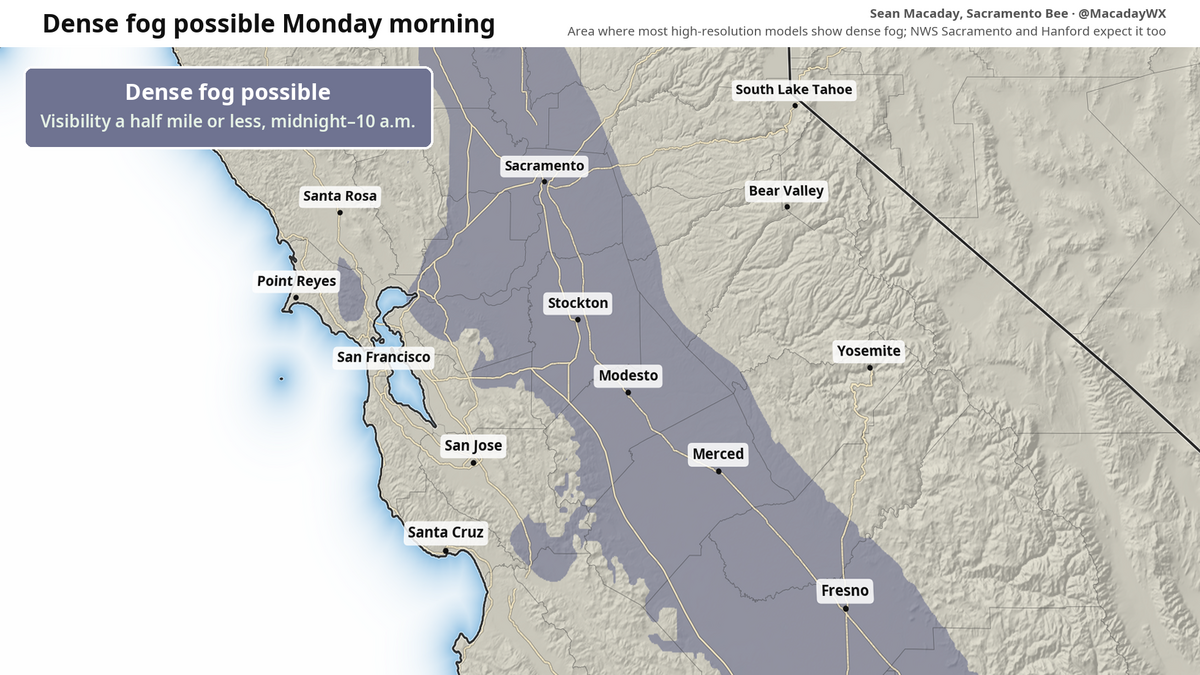
Tule Fog Returns, Weaker Atmospheric River Expected in Sacramento Valley
Tule fog has returned to the Sacramento Valley, prompting a dense fog advisory through 10 a.m. Monday, while...