Lake Karachay took in 4.44 exabecquerels of radioactivity. By 1990, an hour near its discharge point was lethal.
The Soviet Union used Karachay, a pond in Russia’s southern Ural Mountains, as a dump for high-level nuclear waste from the Mayak plant. The waste was too “hot” to store in the plant’s own tanks. Its cesium-137 alone was roughly 40 times what the Chernobyl disaster released.
In 1968, a drought exposed the lakebed. Wind carried radioactive dust across the region and irradiated around half a million people. The lake no longer exists.
Lake Nyos, in a volcanic crater in northwest Cameroon, released a huge cloud of carbon dioxide on August 21, 1986. Scientists call this kind of event a limnic eruption. Nyos is its best-known example.
Since 2001, pipes have been venting gas from the lake bottom to keep it from happening again.
Only three lakes in the world are known to have limnic eruptions. Kivu is one of them. Sediment records point to mass die-offs there roughly every thousand years.
Will that be enough to keep the lake stable in the long run? Honestly, nobody can say yet.
Horseshoe Lake, at the foot of Mammoth Mountain in California, looks like a postcard from the Sierra Nevada. Then you notice the trees. A wide band of forest around the shore stands dead and gray. As it rises, the gas pushes oxygen out of the ground. The tree roots suffocate.
Nothing supernatural is going on. It’s chemistry, plain and simple. Few creatures can live in it.
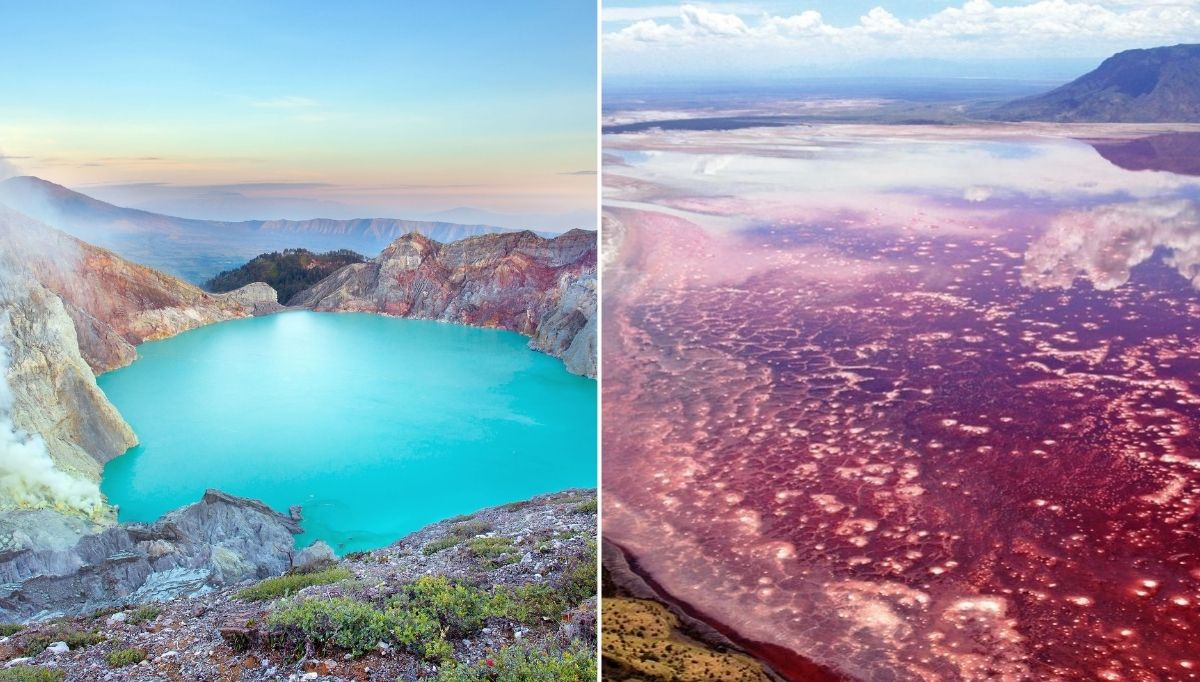
Kawah Ijen, in East Java, Indonesia, is famous for blue flames that light up its crater at night. That inviting turquoise lake beside them? Volcanic gas drifts across the crater. Beauty and danger rarely sit this close together.
Gaet’ale Pond, in the Danakil Depression of Ethiopia’s Afar Region, is only about 60 m across. Small, but extreme: it is the saltiest body of water on Earth. Local residents say a 2005 earthquake created it by reactivating a hot spring. Iron compounds give the water a yellow tint. Almost nothing but microscopic life survives in it. Water, here, is no sign of life at all.
Its threat is a modern one, and entirely man-made. Through the food chain, microplastics can reach people too. Lugano makes the point that a lake can be deadly slowly, without any eruption at all.
10-Year-old Boy in Pakistan Found With Fetal Skeleton in Abdomen
A 10‑year‑old boy in Pakistan was found to have a 14‑centimetre mass containing a well‑formed fetal skeleton, a...

ASEAN Tourism Faces Cost and Geopolitical Hurdles for 2027 Growth
Southeast Asia welcomed about 147 million international visitors in 2025, with roughly 42 percent from within the region....

Albania Protests Turn Violent on Independence Day Demanding Edi Rama’s Resignation
Independence Day parades gave way to tear gas and petrol bombs in Tirana on Saturday as thousands demanding...

Hunger Games: Sunrise on the Reaping” Opens $120M Domestic Over Thanksgiving”
The Hunger Games: Sunrise on the Reaping opened with $120 million domestically and $225 million worldwide over the...