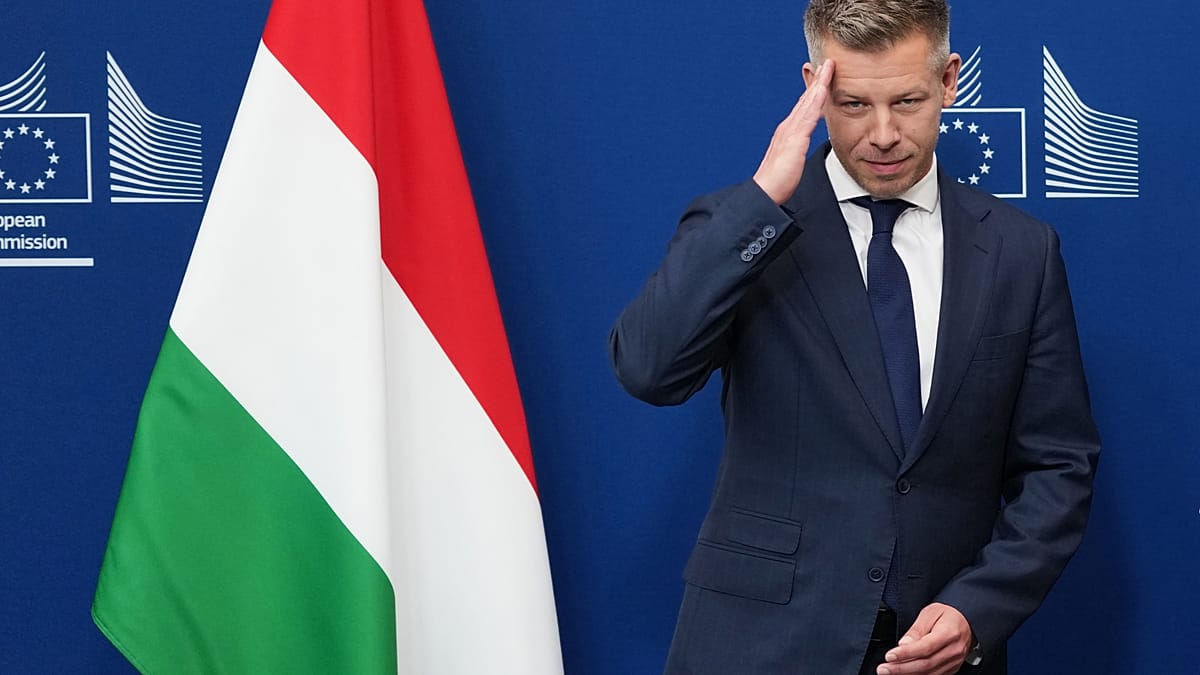
EU leaders will gather in Brussels on Thursday for a special summit on the bloc’s next seven-year budget, but the Visegrád Four have already signaled the proposal from European Council President António Costa is unlikely to survive intact.
“There is no point spending two days in Brussels not agreeing on anything,” he said, according to euronews.
Costa unveiled his compromise on November 21, cutting the Commission’s original €1.8 trillion draft by €204 billion, according to Daily Sabah. The plan reduces the European Competitiveness Fund by €84.5 billion, or 16.2 percent, compared with the Commission’s proposal, The Irish Times reported.
Horizon Europe would receive €158 billion in current prices, a figure maintained from the Irish presidency’s October negotiating box but 9.6 percent below the Commission’s €175 billion target and well short of the Parliament’s €200 billion ask, Science|Business reported. Agriculture spending holds at €297 billion in direct payments, though Emmanuel Macron’s office called the proposal “deeply disappointing” and said it “doesn’t provide a basis for an agreement,” POLITICO reported.
The Visegrád leaders met in Bratislava on Monday alongside Austrian Chancellor Christian Stocker. Czech Prime Minister Andrej Babiš asked whether the Commission had considered savings such as eliminating the European Parliament’s three seats.
Magyar insisted Ukraine support remain outside the EU budget to avoid mandatory contributions, a position echoed by Donald Tusk despite his strong backing for Kyiv. Slovak host Robert Fico said the group had not adopted a common budget position, though they broadly agreed on cohesion, agriculture and migration.
Lead MEPs reject cuts to the EU long-term budget proposal, but welcome work on own resources.@SMuresan, lead MEP on the next EU long-term budget: “The [proposal] takes us backwards instead of preparing Europe for the challenges ahead.” Learn more ⬇️ https://t.co/DRBHn9s7D2
Business groups are pressing in the opposite direction. A coalition of 75 companies and industry associations, including France’s EDF, wrote to EU leaders demanding a €26.6 billion increase for the Competitiveness Fund focused on industrial decarbonization, wind, solar and battery storage, Oilprice reported.
“This proposal is unacceptable to Parliament and cannot form the basis for our consent. The EU budget is an investment budget. Cuts, more cuts and a side of cuts are not an investment strategy,” said Siegfried Mureșan, the Parliament’s chief budget negotiator, according to Reuters via Oilprice.
Costa’s plan also introduces five new “own resources” — including a digital levy on U.S. tech firms — projected to raise €60 billion annually, though an European Parliament analysis estimates a broader base could yield €25.7 billion in 2028 alone, Tomorrow’s Affairs reported.
Taoiseach Micheál Martin said Ireland would not support the digital tax. “We would not support [digital taxation] … global taxation was meant to be dealt with by the BEPS (Base Erosion and Profit Shifting) process,” he told The Irish Times.

The summit begins Thursday. EU ambassadors will meet on Wednesday to prepare the sanctions package, but the budget requires unanimity among the 27. “I’m confident that this proposal is a good basis for moving towards a final agreement,” Costa said on November 21.
Budget arithmetic and new fault lines
The proposal “keeps national contributions within reasonable limits, and that includes a balanced basket of new own resources,” Costa added.”
The Visegrád Four, a political alliance of the Czech Republic, Hungary, Poland and Slovakia founded in 1991 and united in the EU since 1 May 2004, coordinates positions before summits to amplify their collective weight on shared priorities.
On Monday in Bratislava, the group met alongside Austrian Chancellor Christian Stocker to align on cohesion, agriculture and migration ahead of Thursday’s budget summit, with Czech Prime Minister Andrej Babiš and Hungarian Prime Minister Viktor Orbán pressing to keep Ukraine aid outside the EU budget framework.
EU President "is confident" in today's press comunication about MFF proposal: "We are increasing funding for competitiveness by 120%, Horizon Europe will increase by 57%, Erasmus will increase by 25%” He forgot to add – CAP will be cut by 30% and EU farmers are not confident……”
France and Germany divided
“They basically got what they wanted.” They “have the same strategy of focusing on new own resources [taxes] and postponement of NextGenEU [post-Covid debt] as issues that should be solved before the end game,” said a second diplomat. Still, governments are gearing up for some tough negotiating ahead.
More on Visegrád Four
The EU budget cannot do more with less Shrinking the Multiannual Financial Framework would cost jobs, weaken Europe's competitiveness and risk leaving a deal without enough votes in Parliament.https://t.co/W20efW7GUx
Today I put forward a proposal for a realistic budget: ✔️ It addresses our new priorities while preserving our established policies. ✔️ It keeps national contributions within reasonable limits. ✔️ It includes a balanced basket of new own resources.https://t.co/5T7fvfstDE pic.twitter.com/6qSGreOqmg
Related reading

Giants Defeat Jaguars at MetLife Stadium; Daboll Says Team Doesn’t Live in Scared World
The Giants defeated the Jacksonville Jaguars at MetLife Stadium on Sunday, snapping a stretch in which they had...

Lions Linebackers Wear Jack Campbell Wristbands for Rest of Season to Honor Injured Teammate
Lions linebackers debuted black wristbands bearing Jack Campbell’s No. 46 on Sunday against Tampa Bay, extending a tribute...

Norton Rose Fulbright Partner Vincent Dunn Represents Clients on Multiple Renewable Energy Financing Transactions, Firm Reports
Vincent Dunn has represented clients on multiple renewable-energy tax-equity and construction financing transactions, the firm reported. The total...

Illinois Fans Celebrate Record 133-Point Win Over Winthrop
Illinois routed Winthrop 133-83, breaking the Big Ten single-game scoring record in a game that saw the Illini...