West Virginia electricians now face a licensure exam built on a codebook the state has not yet adopted for daily work, a shift that took effect January 1, 2026, and reshapes how journeymen study for the license that lets them pull permits.
The State Fire Marshal moved the test to the 2023 National Electrical Code while the West Virginia Building Code remains on the 2020 edition, creating a gap between what the exam demands and what inspectors enforce in the field.
The change also collapsed the old format — 50 multiple-choice questions plus five stand-alone calculations — into a single 50-question paper test where every item is worth two points and calculations are embedded in the multiple-choice set.
“The exam is a cycle ahead of the code you may work to,” the academy said in its breakdown of the new rules. That mismatch means candidates must master 2023 NEC articles, tables, and exceptions that may not match the installation standards currently legal under state building code.
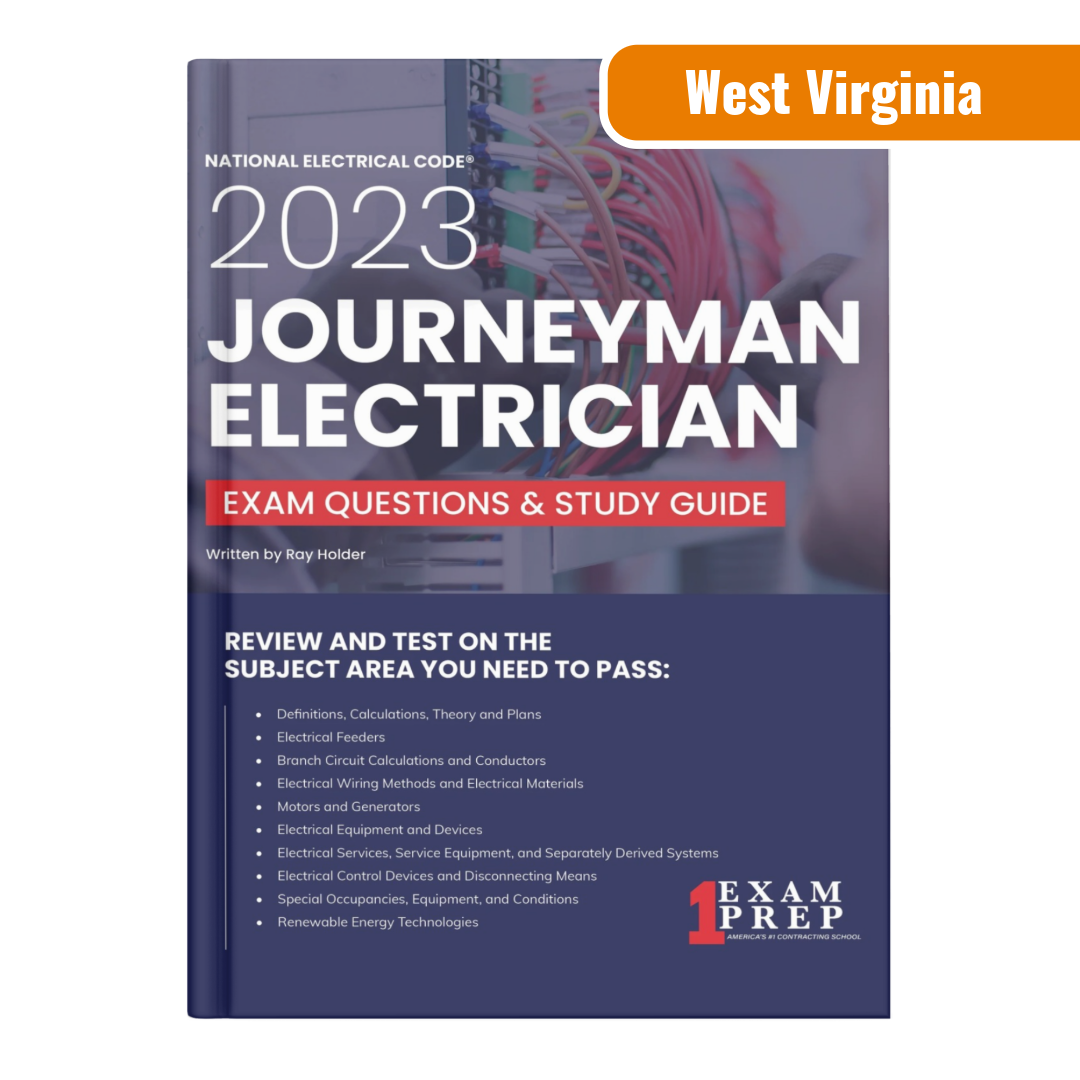
The Fire Marshal offers no study guides, prep courses, or practice exams, leaving electricians to manage the transition alone. Third-party providers have filled the void; 1examprep.com markets a 2023-specific package of 12 practice exams plus two full final exams, emphasizing how quickly test-takers can find code references over memorization for the open-book test.
Three experience paths qualify applicants for licensing
Applicants must be at least 18 and satisfy one of three experience paths: 2,000 hours of hands-on electrical work, a completed U.S. Department of Labor registered apprenticeship, or a West Virginia Department of Education 1,080-hour vocational program. Graduates of apprenticeship or vocational programs can obtain a one-time, 90-day temporary journeyman license for $50 while they await a test date.
Out-of-state license holders receive recognition if their credential is in good standing and they meet West Virginia’s minimum 2,000-hour experience threshold. New residents who have held a comparable license for at least a year qualify under universal license recognition rules.
Twenty-four paper exam sessions scheduled for 2027
The Fire Marshal administers paper exams in Charleston, Beckley, Clarksburg, Martinsburg, and Wellsburg. Twenty-four sessions are scheduled for 2027. Candidates apply through the Fire Marshal’s online license portal with a $25 non-refundable fee at least ten working days before the exam; walk-ins are not permitted.
Results arrive within 15 business days. A 70 percent score passes. No mandatory waiting period exists for retakes — candidates simply reapply for a later date with a new application and fee. Missing an exam without 24 hours’ notice forfeits the fee.
What you can bring into the room
The open-book policy allows the 2023 NEC, book tabs, a keyword index, Ugly’s Electrical References, a calculator, and a No. 2 pencil. Fire Cert Academy stressed that candidates must bring the 2023 edition; the 2020 codebook will not cover the tested material.
Licenses expire June 30 with three-year renewal option
Every West Virginia electrician license expires June 30. Renewal runs $50 per year for up to three years. Late renewal in the same license year adds a $50 penalty. A lapsed license can be revived without retesting within five years of the last renewal at double the standard fee.
The Fire Marshal licenses individual electricians; businesses that contract electrical work need a separate license from the West Virginia Contractor Licensing Board, which uses Prov’s trade exam and the Contractor Licensing Act exam — a different track entirely.
The open-book trap
“Open book simply changes what the test is measuring,” 1examprep.com observed in its 2026 statewide exam update. “Instead of pure memorization, the exam rewards electricians who can read for the real task, navigate efficiently, confirm details accurately, and protect their pace.”
With only 50 questions, each worth two points, a handful of avoidable misses — misreading a question, overlooking an exception, using the wrong table value — can flip a pass to a fail.
The Fire Marshal has not published an official exam outline beyond stating that every test derives from the NEC and requires 70 percent. Prep providers build their own blueprints weighted by NEC chapter, but those remain informed guesses.
For the electrician in the field, the stakes are concrete: the license is the gateway to pulling permits, bidding jobs, and moving from apprentice wages to journeyman scale. The code-cycle gap means the study hours invested in the 2023 NEC may not align with the 2020 rules governing tomorrow’s job site — at least until the state building code catches up.
Worth a look

“It was a quick burst,” National Weather Service meteorologist Parker Alvstad said
“It was a quick burst,” National Weather Service meteorologist Parker Alvstad said, describing the storm that buried Anchorage...

St. Michael’s Defense Extends Shutout Streak to 10 Games Ahead of State Semifinal
St. Michael's has not allowed a point since August 21, a shutout streak spanning 10 games that has...

Ying Cenly Chen Took ChronoScale CEO Role Nine Days Before Super Micro Indictment
Ying Cenly Chen accepted the chief executive role at ChronoScale on March 10, nine days before a federal...

Attorneys Renew Bid for Corie Walsh’s Release, Argue Jail Lacks Psychiatric Care
Defense attorneys for Corie Walsh filed a renewed motion for pretrial release Thursday in Will County court, arguing...