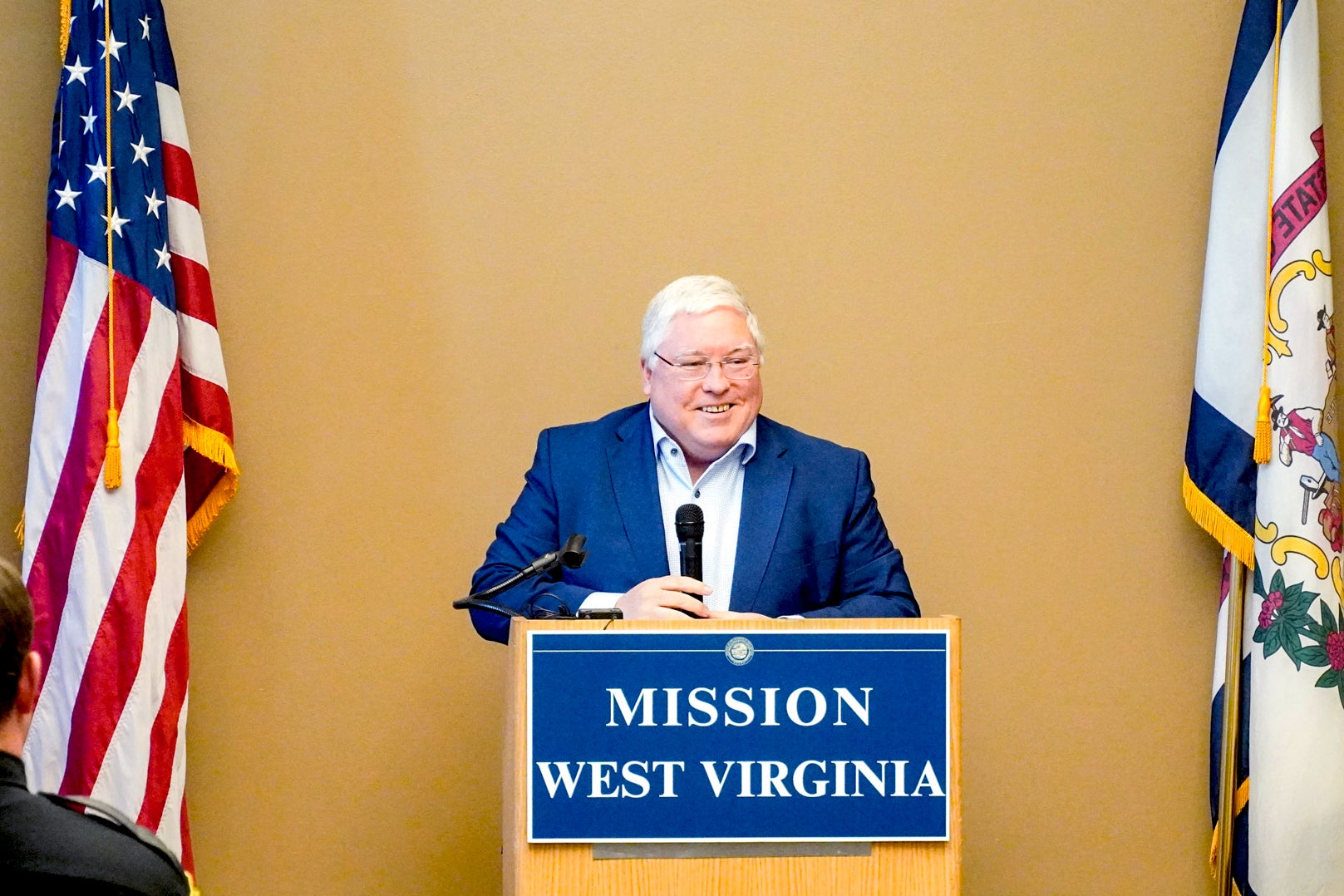
West Virginia Governor Patrick Morrisey chose Bridgeport’s Charles Pointe development as the state’s bid site for the United States Space Academy on Tuesday, entering a nine-state competition with a proposal that leans on existing infrastructure and a university pipeline ready to host cadets by 2028.
The announcement, made alongside legislative leaders and economic development officials at the Harrison County site, frames the 305-acre parcel along Interstate 79 as a turnkey solution for a service academy NASA wants operating with an inaugural class of 300 students in three years. Morrisey said the state submitted its formal application to NASA on Monday, November 16, positioning West Virginia against bids from Colorado, Texas, Alabama, Florida, Ohio, Pennsylvania, Louisiana, and Nevada.
“West Virginia helped write the history of America’s space program, and we’re ready to help write its next chapter,” Morrisey said in a statement released by the governor’s office. “We have the land, the infrastructure, the schools, and the people to make this Academy a success.”
Heading to Bridgeport to make an announcement about West Virginia’s Space Academy submission to NASA yesterday. That event will begin shortly after 11 AM. We will also announce another significant matter at the conclusion of the space event. Thank you.
The site and the timeline
Charles Pointe sits at Exit 124 off I-79, roughly halfway between Morgantown and Fairmont. The governor’s office said electric, natural gas, water, sewer, and fiber already serve the development, and the North Central West Virginia Airport is adjacent. NASA’s Katherine Johnson Independent Verification and Validation Facility operates up the road in Fairmont, while the FBI’s Criminal Justice Information Services Division anchors Clarksburg.
NASA’s solicitation requires a permanent campus of at least 300 acres with room to grow to 1,200 students by 2031 and roughly 4,000 eventually. The agency also wants ground broken on that permanent campus no later than 2027. West Virginia’s application meets the acreage threshold with the 305 developable acres at Charles Pointe and identifies additional nearby land for expansion, according to the governor’s office.
While construction proceeds, the first class would live and learn at West Virginia University. The plan lodges cadets in Lyon Tower on the Morgantown campus and uses WVU classrooms, labs, and student services starting in 2028.
Marshall University, West Virginia State University, WVU Institute of Technology, Fairmont State University, and Pierpont Community and Technical College would contribute faculty and programs, backed by the West Virginia Manufacturers Association and the West Virginia Space Grant Consortium.
A regional play with national competition
Senate Majority Whip Ben Queen, a Harrison County Republican, cast the bid as a statewide economic lift rather than a local one. “What makes West Virginia unique, West Virginians have an incredible respect for our military men and women who serve our country,” Queen said.
“When it comes to welcoming those who serve, you’re not going to find protests here. You’re going to find appreciation, respect and communities that are proud to stand behind our men and women.”
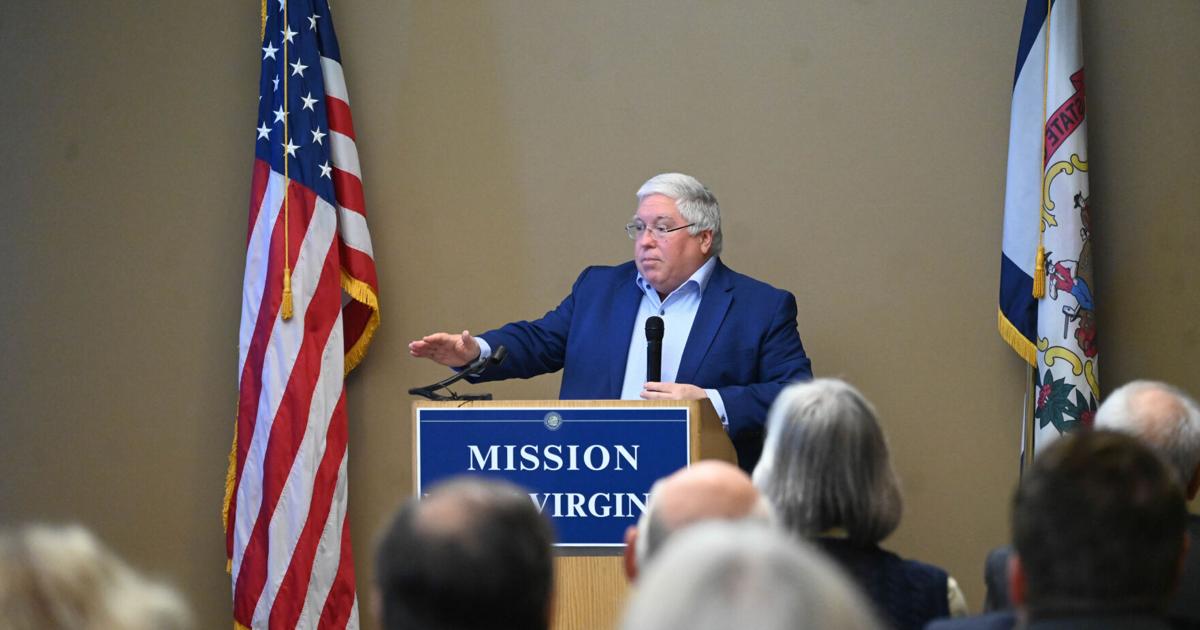
“North central West Virginia has everything needed to make this Academy successful, from land that’s ready for development to an airport, major federal facilities, universities, and a growing aerospace industry. This has been a regional effort from the beginning, and bringing the Academy to Bridgeport would create opportunities for communities across West Virginia.”
Tracy Miller, president of the Mid-Atlantic Aerospace Complex, tied the bid to the state’s industrial lineage. “We have been pioneers,” she said. “Our hardwood was part of the Wright Brothers airplane. Whether it’s our environment, from our trees, or it’s in our people, we are ready to have this be a part of our community.”
Morrisey acknowledged the competing states bring deep NASA ties — Colorado hosts the current Air Force Academy and Space Command headquarters; Alabama runs Marshall Space Flight Center; Florida and Texas dominate launch operations.
West Virginia counters with the legacy of Homer Hickam, the Coalwood native and former NASA engineer whose memoir Rocket Boys became the film October Sky, and Katherine Johnson, the NASA mathematician born in White Sulphur Springs. Hickam has agreed to serve on a newly formed West Virginia Space Academy Launch Council alongside the Governor’s Office, university leaders, and other prominent West Virginians to guide the effort.
Gov. Patrick Morrisey has announced that as part of West Virginia's application seeking the first Space Force Academy, they are seeking to locate the facility at Charles Pointe in Bridgeport.https://t.co/zQuyjAPaTv
“West Virginia has the universities, research facilities, and technical expertise to support this Academy from its first day. By bringing our colleges and universities together, we can give students access to the education and hands-on experience they’ll need to become the next generation of American space leaders.”
NASA decision timeline remains unannounced
NASA has not announced a decision timeline. The agency’s requirement to break ground by 2027 for a 2028 first class compresses the normal federal construction cycle, meaning the winning state must move from selection to shovel-ready in months. West Virginia’s pitch rests on the premise that Charles Pointe’s existing utilities and the WVU bridge campus eliminate the usual stand-up delays.
The governor’s office said the Launch Council will coordinate with NASA through the evaluation period. If selected, the academy would become the nation’s sixth service academy and the first dedicated to the Space Force, which was established as a separate military branch in 2019.

Annapolis Restores Free Holiday Parking Through Jan. 1, 2027
Holiday Parking Returns to Downtown Annapolis The City of Annapolis announced the return of its seasonal parking initiative,...

USACE Drawdown at Detroit Lake Could Start Saturday as Local Governments Seek Emergency Stay
Water levels at Oregon's Detroit Lake could drop as early as 9 a.m. Saturday as the United States...

GlobalFoundries to Test Boston Dynamics Atlas Humanoid in Semiconductor Fabs in 2027
GlobalFoundries will test Boston Dynamics’ Atlas humanoid in semiconductor manufacturing tasks in 2027, making the chipmaker the first...

Augusta Commission Approves Budget With Mayor’s Office Increase
Augusta commissioners approved the city's $1.26 billion 2027 spending plan, backing a $126,470 increase for the incoming mayor's...