
The Real Price Tag of Moving Missouri River Water West
Imagine if Lake Oahe were filled with oil instead of water. We would treat it as one of the country’s greatest economic assets, running pipelines and building industries around it as a matter of routine budget planning. Instead, generations of public investment have masked the true cost of water by the time it pours from a kitchen faucet. While most households barely notice the water portion of their monthly utility bills, consumers happily pay about $1.50 for a single 20-ounce bottle—the equivalent of nearly $10 a gallon.
That economic disconnect sits at the heart of the Western Dakota Regional Water System’s proposed $4.5 billion pipeline. The project aims to move Missouri River water roughly 165 miles west through a massive pipeline and major pumping facilities.
Calculating Cost Per Gallon Based on Projected Needs
Before the political arguments fixate entirely on the $4.5 billion price tag, the system’s baseline metrics offer a different perspective. The project secured a future-use permit for 20,765 acre-feet of Missouri River water annually, which translates to roughly 18.5 million gallons a day based on projected needs through 2080. Dividing that $4.5 billion construction expense across a 50-year timeframe at that exact output yields a basic capital outlay of roughly 1.3 cents per gallon, prior to accounting for financing, treatment, pumping, and daily operational expenditures.
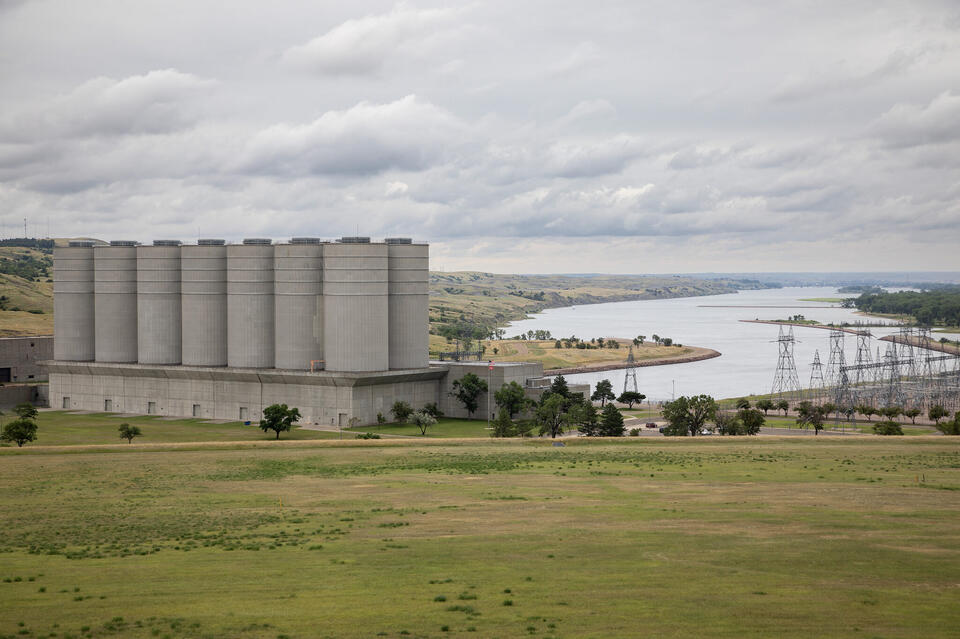
To evaluate whether that investment makes sense, communities have to weigh the price of construction against the rising cost of scarcity. Generations of public works built a cushion of cheap, dependable water, leading many to forget what happens when supplies run short. A useful historical parallel is the Lewis & Clark Regional Water System, which took decades and hundreds of millions of dollars to build. That network now serves roughly 350,000 people across South Dakota, Iowa, and Minnesota, delivering about 44 million gallons a day—more than twice the capacity proposed for Western Dakota. Southeastern South Dakota without that system would have faced stunted, expensive growth heavily constrained by local aquifers.
Drought Pressures and the Black Hills Realities
The Western Dakota proposal did not materialize from an arbitrary wish list. A 2019 South Dakota School of Mines study found that existing local supplies can meet demand during average years but become dangerously unreliable during prolonged droughts. Those vulnerabilities are already visible around Rapid City, Box Elder, and Ellsworth Air Force Base.
High in the Black Hills, Pactola Reservoir remains under severe drought pressure. As inflows fell well below normal, Rapid City shifted the reservoir to alert status and extended water restrictions year-round, while the Bureau of Reclamation cut winter releases from Pactola in half to conserve dwindling storage. Reservoir managers are doing what they are trained to do: holding back water from wet years to survive dry ones. But population growth complicates that math. While not everyone in the Black Hills welcomes rapid development, the demand projections behind the pipeline rely on trends planners already expect. Without an alternative supply, growth will likely slow, grow more prohibitively expensive, or shift elsewhere.
Contamination and the Price of Losing What You Have
Infrastructure is undeniably expensive, but scarcity carries its own heavy toll. The proposed pipeline is not designed to manufacture explosive growth so much as it is meant to remove water as a hard ceiling on regional survival. Rapid City is already expanding, and Ellsworth Air Force Base’s impending B-21 mission is driving a fresh surge in population, housing, and municipal utility demands.
At the same time, Ellsworth has demonstrated just how costly it is to lose water a community already relies upon. To restore reliable service to residents whose private wells suffered PFAS contamination while concurrently increasing local capacity, the Air Force is investing approximately $12.5 million into a new water system. According to federal documents detailing the environmental assessment of the contamination plume, the pollution stretches approximately 25 miles south-southeast along Boxelder Creek toward the Cheyenne River. Water remains remarkably inexpensive until the supply you depend on suddenly becomes unusable.
Missouri River water stands as one of South Dakota’s premier natural assets. The underlying question for the state is not whether $4.5 billion is a vast sum of money. The question is whether South Dakota wants to choose its economic future while options still remain on the table, or simply wait for water scarcity to choose it.
Related reading

Dolly Parton video screened at SEUS-Japan meeting in Nashville
A Posthumous Welcome at the JW Marriott A video recorded by Dolly Parton just days before her death...

Augustana vs. USF Volleyball Play-by-Play Highlights
Augustana and Sioux Falls battled through a fiercely contested volleyball showdown featuring tight scoring sequences, key substitutions, and...

Evangel University leads Columbia College 46-28 in second half
The Second-Half Momentum Shift As the clock ticked down to the 20-minute mark, the game's rhythm accelerated through...

AG Neronha: Seven Indicted in $2 Million Medicaid Fraud Scheme
Rhode Island Indicts Seven in Alleged $2 Million Medicaid Fraud Featuring AI Seven people connected to a Providence...