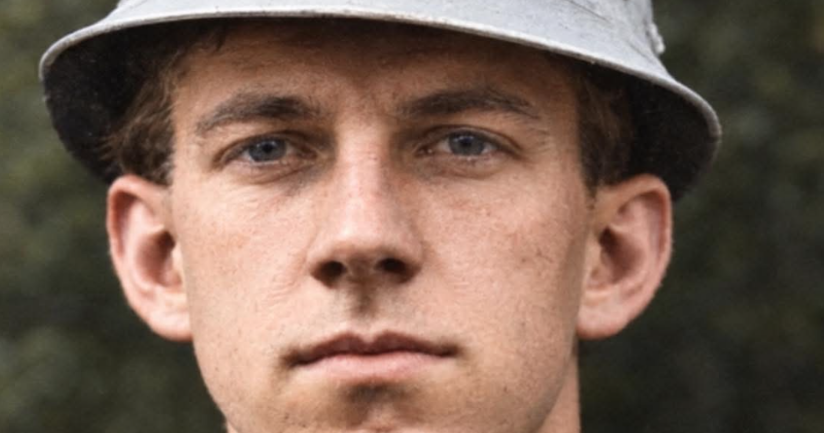
On the 107th anniversary of his death, the final resting place of Wilmington Patrolman Thomas Zebley was finally marked with a permanent headstone at Riverview Cemetery.
For more than a century, the officer’s grave sat unmarked, a historical oversight that remained uncorrected until members of the modern-day Wilmington Police Department decided to intervene.
The path to this weekend’s ceremony began earlier this year, when the Wilmington Police Department learned of the missing marker. Two officers, Sergeant James Tobin and Officer Albert Wysock, volunteered their time to research the department’s fallen and coordinate the placement of the stone.
Patrolman Zebley died on November 13, 1919, after being shot by a suspect wielding a stolen revolver while attempting to serve a warrant. He had served the city for eleven years at the time of his death. Zebley was a widower with no surviving children, a detail that helps explain why his family plot remained unmarked for over a hundred years.
The effort to identify and honor his grave was part of a broader, ongoing project by Officer Wysock, who spends his personal time researching fallen officers across Delaware, cleaning headstones, and working with agencies to ensure their service is properly recognized.
Sergeant Tobin served as the master of ceremonies for the event, which featured the department’s Honor Guard, Pipes & Drums, and a performance of “Taps” by Delaware State Police Captain Jonathan Packard.

“During this historic year, today’s ceremony is a reminder that history isn’t just about major events. It’s about the people who shaped our communities, said Wilmington Mayor John Carney.”
The ceremony brought together city leadership and members of the Zebley family, including retired State Police Colonel Melissa Zebley, who spoke on behalf of the family. While the immediate community impact is symbolic, it serves as a tangible link between the current force and the city’s past.
The case of Patrolman Zebley shows the risks inherent in police work, even a century ago. When the shooting occurred in 1919, Zebley and his partner were attempting to apprehend two suspects accused of stealing several firearms. The encounter turned fatal when one suspect opened fire; Zebley’s partner was also wounded in the exchange but survived.
For the modern Wilmington Police Department, the project was a matter of professional and institutional duty. Chief Wilfredo Campos emphasized that the department remains indebted to those who made the ultimate sacrifice, regardless of how much time has passed.
We owe it to each and every police officer who makes the ultimate sacrifice to forever honor their service — whether their death was recent or more than a century ago, Chief Campos said. Chief Campos
The ceremony at Riverview Cemetery on November 16, 2026, effectively closes a chapter on a case that had slipped through the cracks of historical record-keeping. While the city has grown and changed significantly since 1919, the recognition of Zebley’s service signals a renewed focus on maintaining the institutional memory of the department.
This work of historical correction is rarely headline news, yet it represents the quiet, persistent effort of officers to ensure that no one who dies in the line of duty is forgotten by the organization they served.
The effort to secure the headstone was finalized following research conducted by Sergeant Tobin and Officer Wysock, ensuring that the legacy of Patrolman Thomas Zebley is now permanently recognized at his final resting place.
Keep reading
Louisville Bats Unveil Purple City Connect Uniforms for 2027 ‘Purple Fridays
Purple is officially returning to the Louisville Bats' on-field identity for the 2027 season, replacing a decade-old red...
Brian Kelly Interviews for Maryland Job, First Time in 35-Year Career
Brian Kelly confirmed that he interviewed to be the next head coach at Maryland, marking a novel experience...

98 of 108 Topeka-Area Establishments Pass October Safety Inspections
State records show 98 out of 108 service establishments inspected across the Topeka area in October passed their...
Diaunte Adams Allegedly Followed Northwestern Students to Dorm and Attacked Woman
Northwestern University increased its campus security presence after a stranger allegedly followed students off a train and into...