
Port Washington Mayor Ted Neitzke is defending a massive data center project under construction in his Wisconsin city as a potential national model, even after midterm voters across the country approved moratoriums and restrictions on such facilities.
Neitzke argues the development — spanning the equivalent of 500 football fields on former farmland — can deliver industrial-scale tax revenue and lower property taxes without the downsides that have fueled public opposition.
The project moves forward as Congress debates legislation to ease data center construction nationwide, a bill that passed the Senate last week. Neitzke, mayor of the formerly industrial city north of Milwaukee on Lake Michigan, frames the facility as a modern return to the economic foundation his community was built on.
“Every revolution has brought an evolution, and that’s what I think is happening,” Neitzke told NPR last month. “We are living in the early 20th century, just remodeled again. We have Zuckerberg. They had J.P. Morgan. We have Elon Musk. They had Rockefeller.”
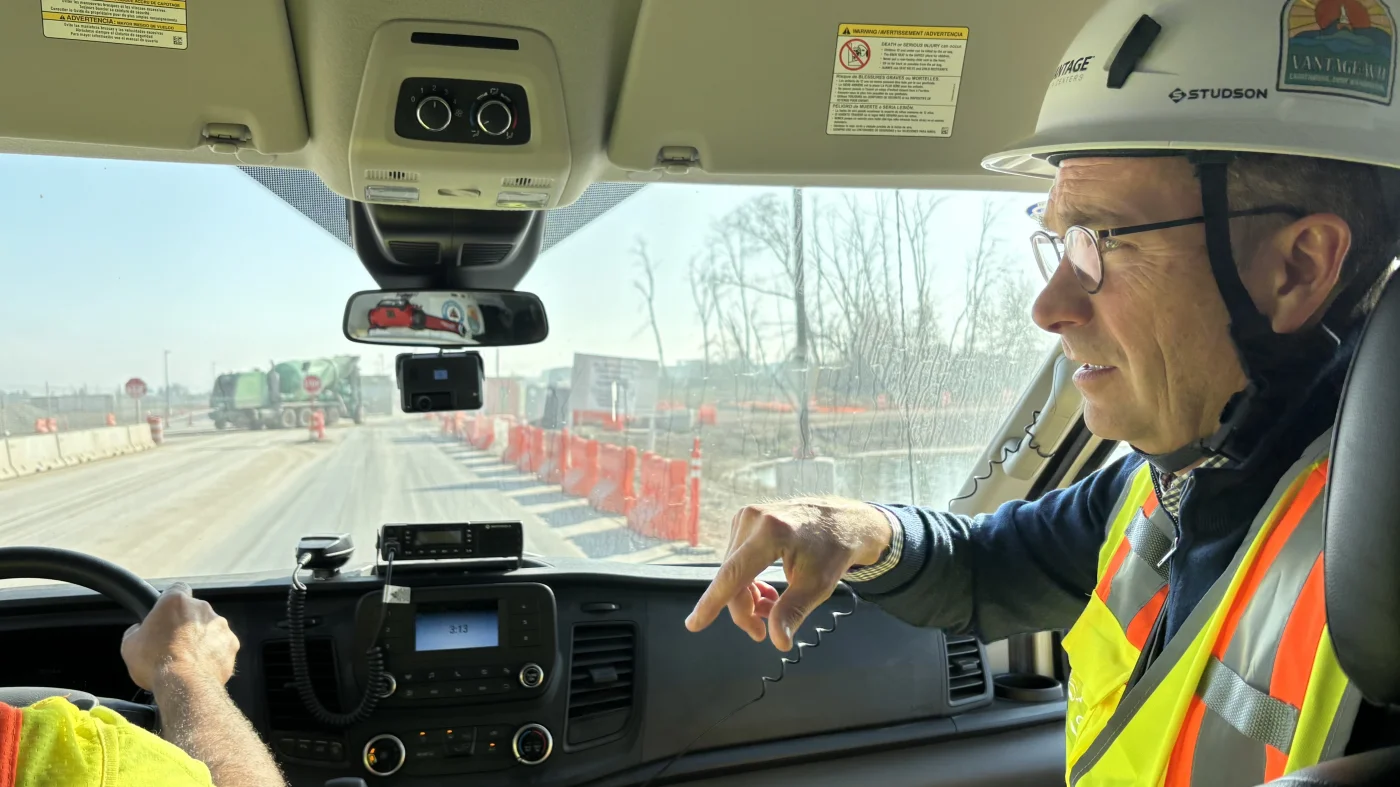
Opponents believe the project will harm the community, but Neitzke says he has structured the deal to reap benefits while minimizing downsides. “I don’t understand why a community like ours, who grew up in an industrial base, would fight the fact that we would need this back again,” he said.
Local communities across the country approved moratoriums and restrictions on data center construction during the midterm elections, delivering what Neitzke called a decisive rebuke of such projects. The votes reflected widespread public opposition documented by NPR reporting. Source 1, Source 2, Source 3 and Source 4 all note that most Americans do not like data centers.
Despite that electoral backlash, the Senate passed legislation last week aimed at easing data center construction nationwide. The bill is now being debated in Congress, creating a contrast between federal momentum and local resistance. Source 1, Source 2, Source 3 and Source 4 each report the Senate passage and ongoing congressional debate.
Neitzke told NPR last month that Port Washington grew up on an industrial base and should welcome a modern equivalent, comparing today’s tech titans to the financiers and industrialists of the early 20th century. “We have Zuckerberg. They had J.P. Morgan. We have Elon Musk. They had Rockefeller,” he said.
Neitzke’s political foundation began with one term as a Port Washington alderman and council president in the mid-1990s before he spent decades in educational leadership. He has served as chief executive officer of CESA 6 since 2016 and previously worked as superintendent of the West Bend School District and principal of Badger Middle School in West Bend.
Even after the midterms delivered what he called a decisive rebuke of data center projects, Neitzke maintains his city’s agreement could serve as a national model that resolves many of the concerns Americans have about them. “There is no better square-foot-value industrial development than a data center,” he added, “and a lot of people will get very upset when I say that.”
Related reading

Bills Beat Chiefs 13-10 on Bass 57-Yard Field Goal as Time Expires on Thanksgiving
Tyler Bass drilled a 57-yard field goal as time expired to lift the Buffalo Bills over the Kansas...

Olivet University Gains Accreditation for 20 Programs After Missouri Campus Move
Olivet University secured accreditation for 20 academic programs this month, five months after its main campus moved from...
Trump to Attend TSMC Arizona Groundbreaking Dec. 4 Amid Nvidia CEO Reinstatement
President Trump will attend the groundbreaking for a new Taiwan Semiconductor Manufacturing Co. chip foundry in Phoenix on...

Emmer Says GOP Failed to Level With Voters on Economic Turnaround Time
House Republicans lost both chambers of Congress this month, leaving President Trump without unified legislative control for the...