Ten Wyoming towns with populations ranging from a few hundred to nearly 19,000 share a common thread: mountain backdrops, open water and a pace that lets visitors skip a packed itinerary, World Atlas reported.
Pinedale, home to about 2,005 people in the 2020 Census, sits at the base of the Wind River Range. Fremont Lake anchors the area with fishing, kayaking and mountain reflections, while Skyline Drive climbs through forest to overlooks of Fremont, Half Moon and Soda lakes. The Bridger-Teton National Forest borders town, and the Museum of the Mountain Man preserves the region’s fur-trading past.
Dubois, roughly 90 minutes from Yellowstone National Park, keeps a frontier feel with log buildings, wooden boardwalks and the weekly summer Dubois Friday Night Rodeo. Togwotee Pass and Brooks Lake offer mountain views and fishing, and the area hosts the largest wintering herd of Rocky Mountain bighorn sheep. A rideable fiberglass jackalope and a large Sasquatch statue mark the Giant Jackalope Exxon Country Store.
Ten Sleep, with only a few hundred residents, rests at the base of the Big Horn Mountains. Ten Sleep Canyon’s dolomite and limestone walls draw rock climbers worldwide, while Bighorn National Forest adds hiking, mountain biking and wildlife watching. Tensleep Creek is a trout-fishing draw, and Ten Sleep Brewing Company serves local beer with seasonal live music.
Lander, described by the Wyoming Office of Tourism as “the place where the rails end, and the trails begin,” serves as a gateway to Sinks Canyon State Park. The Popo Agie River vanishes into a limestone cavern before reappearing at the Rise. Cliffs around the canyon attract rock climbers, and the Wind River Wild Horse Sanctuary north of town offers guided tours to see wild mustangs on the Wind River Indian Reservation.
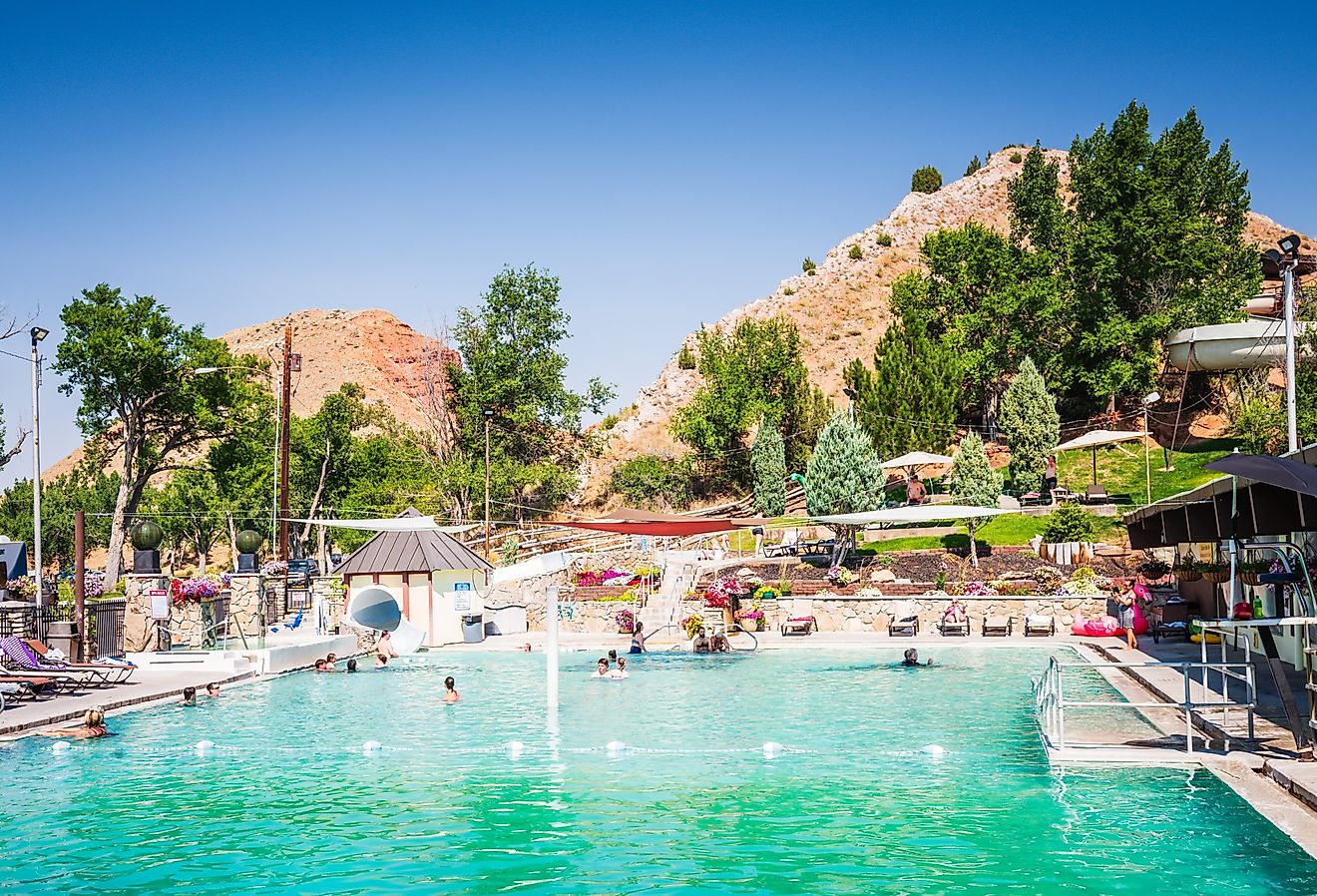
Thermopolis centers on the world’s largest mineral hot springs along the Bighorn River.
The State Bath House at Hot Springs State Park holds water at 104 degrees. The Wyoming Dinosaur Center runs active dig sites, and Legend Rock State Petroglyph Site displays carvings dating to the Paleo-Indian period.
Cody, founded in 1896 by Colonel William F. “Buffalo Bill” Cody, counts 10,028 residents. Buffalo Bill State Park supports fishing and boating on the reservoir. The Buffalo Bill Center of the West houses multiple museums, and the Irma Hotel & Restaurant, built in 1902, remains a landmark. Secluded cabins in Shoshone National Forest and cowboy cabins at Buffalo Bill Village provide lodging options.
Sheridan, population 18,737, sits at the base of the Big Horn Mountains. The Bighorn Scenic Byway leads into Bighorn National Forest. King’s Saddlery and Museum showcases Western saddles and ranching history, while the historic Sheridan Inn, once owned by Buffalo Bill, anchors Main Street.
Afton, framed by the Salt River and Bridger-Teton National Forest, features the Periodic Spring in Swift Creek Canyon, where water flows in cycles. Downtown’s World’s Largest Elk Antler Arch uses more than 3,000 antlers. Low light pollution makes the area suited for stargazing and meteor showers.
Sundance, in the Black Hills foothills, is where outlaw Harry Longabaugh earned the nickname “The Sundance Kid.” A bronze statue marks the town square.
Devils Tower, the first U.S. national monument and a sacred site for Native American prayer rituals, vision quests and sun dances, lies about 30 minutes away.
Saratoga, along the North Platte River between the Snowy Range and Sierra Madre, offers Hobo Hot Springs averaging 106 to 119 degrees year-round. The historic Union Pacific Depot houses the Saratoga Museum, and the Snowy Range Scenic Byway crosses alpine lakes and mountain views.
Related reading

Columbus Airport Authority Urges Thanksgiving Travelers to Download Airline Apps Amid Outages
The Columbus Regional Airport Authority on Tuesday urged Thanksgiving travelers to download their airline's mobile app as the...

Charleston Metro Chamber Publishes Member Survey: Networking Valued, Needs Differ by Size
The Charleston Metro Chamber of Commerce published findings Tuesday from its recent member survey, revealing that networking remains...
Crosspoint Church, Bangor Christian Schools Petition Supreme Court Last Friday Over Maine Tuition Exclusion
Crosspoint Church and Bangor Christian Schools petitioned the U.S. Supreme Court last Friday to review a ruling that...

Man Arrested After Bringing Gun to Downtown Eugene Workplace
Police arrested a man Tuesday after employees reported he brought a gun into a downtown Eugene workplace, Eugene...