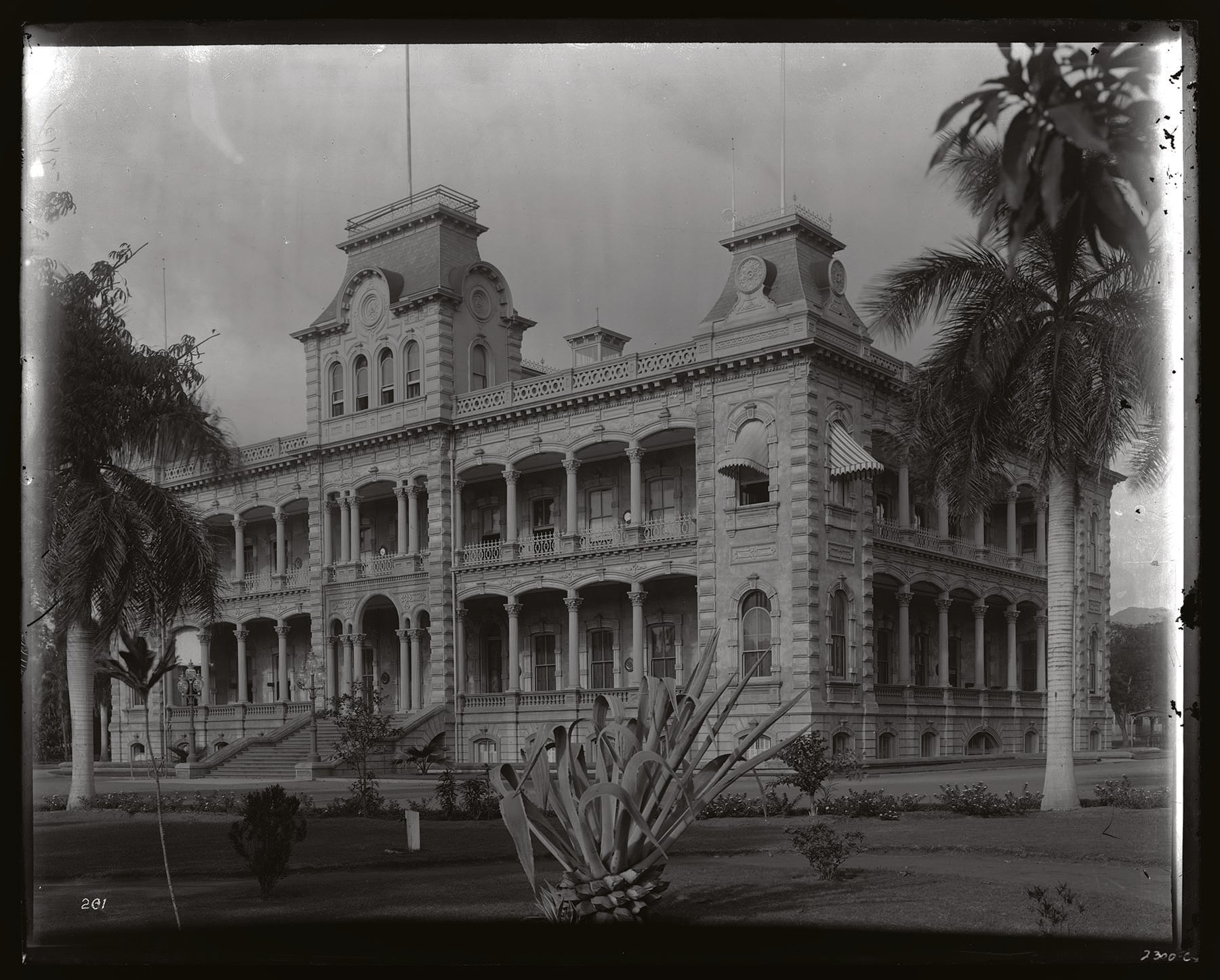
ʻIolani Palace draws about 100,000 visitors a year, 60 years after The Friends of ʻIolani Palace formed to restore it, Hawaii Business Magazine reported.
The nonprofit marks its 60th anniversary this year. Paula Akana, president and CEO of The Friends of ʻIolani Palace, said the building provides a history lesson vital for visitors and locals alike.
“I think it’s really important that our young people know that history and understand the trials and tribulations, and all the wonderful accomplishments” of the Hawaiian Kingdom, she told Hawaii Business Magazine. “And when visitors come here, I’m hoping they’ll gain a better understanding of what Hawai‘i was, is, and could be.”
King Kalākaua commissioned the current palace after termites destroyed the original wooden structure in 1874. Completed in 1882, it featured electric lighting four years before the White House, plumbing, telephones and an opera house. Palace Historian Zita Cup Choy said Kalākaua met Thomas Edison in New York after seeing the first electricity exposition in Paris and riding an early electric streetcar.
“He asked insightful, intelligent questions, and they had a wonderful time talking about this new technology,” Cup Choy told Hawaii Business Magazine. She began as a volunteer docent in 1977 and will mark 50 years at the palace next year.

The Throne Room walls hold foreign royal orders from Great Britain, Germany, Spain, Belgium, Siam and Japan. Cloisonné vases from Emperor Meiji of Japan flank the grand staircase; a portrait of King Louis Philippe from France hangs in the Blue Room.
Cup Choy said the king’s entertaining was strategic networking. “The more research I do, the more convinced I am he was networking. Kalākaua placed his chair at the center of the dining table “because he wanted to talk to everybody and hear from everybody,” Akana said.”
After the 1893 overthrow, Queen Liliʻuokalani was held under house arrest in an upstairs room for nearly eight months. At its center sits her 97-by-95-inch quilt, stitched with the words “Imprisoned at ʻIolani Palace… We began the quilt there.”
“She was isolated, and spent time arranging flowers, writing letters, writing music, reading the Book of Common Prayer,” Cup Choy told Hawaii Business Magazine. In late January the queen abdicated so that those convicted of treason and sentenced to death would have their sentences commuted to life in prison.
ʻIolani Palace stands as the only royal palace on U.S. soil, serving as the official residence of the Hawaiian monarchy from Kamehameha III in 1845 through Queen Liliʻuokalani’s reign ending in 1893.
King Kalākaua commissioned the current structure, completed in 1882, which showcased the Kingdom’s sovereignty through advanced technology — including electric lighting four years before the White House — and strategic diplomacy, evidenced by foreign royal orders from Great Britain, Germany, Spain, Belgium, Siam and Japan displayed in the Throne Room.

The state Legislature moved to a new capitol in 1969, freeing the palace for restoration. The Friends of ʻIolani Palace embarked on restoring the palace to its former glory—including fixing the Grand Staircase and reproducing the original wallpaper. “It’s wonderful when things come home… that becomes super special, which means it’s really difficult for people to let go of, and we have to just be patient,” she said.
Keep reading

Third Man Sentenced to Prison in Milwaukee 13-Year-Old Sexual Assault Case
A Milwaukee County judge sentenced Deville Quinn, 32, to seven years in prison on Monday for his role...

OneMain Financial Hiring Loan Sales Specialist in Lansing, Michigan
OneMain Financial is hiring a Loan Sales Specialist in Lansing, Michigan, offering a path to branch management for...

No. 2 Cal Beats No. 4 USC 11-9 in OT for MPSF Third Place
No. 2 California defeated No. 4 USC 11-9 in overtime in the MPSF Tournament third-place match on Sunday,...

Dallas News Editorial: Hinojosa’s Proposals Risk Texas School Gains, Board Says
Gov.-elect Gina Hinojosa promised to dismantle Texas’ school accountability system even as Dallas ISD and Houston ISD show...