
“We do have an unusually high level of agreement amongst the computer models that there could be a significant storm the second half of Thanksgiving into Friday,” said Francis Tarasiewicz, a meteorologist with the National Weather Service.
The NWS is tracking two storm systems this week, with the second posing the greater threat to holiday travelers across eastern Massachusetts and Rhode Island.
The first system is expected to linger into Monday, bringing widespread rainfall of one to two inches and wind gusts up to 21 mph, with a high near the mid-60s. Skies should clear through the day Monday, followed by dry conditions Tuesday and Wednesday with highs in the mid-40s and near to slightly below normal temperatures, Tarasiewicz said.
Thanksgiving Day is forecast to begin mostly cloudy before increasing winds and rain arrive around the afternoon. The storm could deliver an inch and a half to three inches of rain through Friday, with winds reaching 35 to 50 mph across a large portion of the forecast region, mainly eastern Massachusetts.
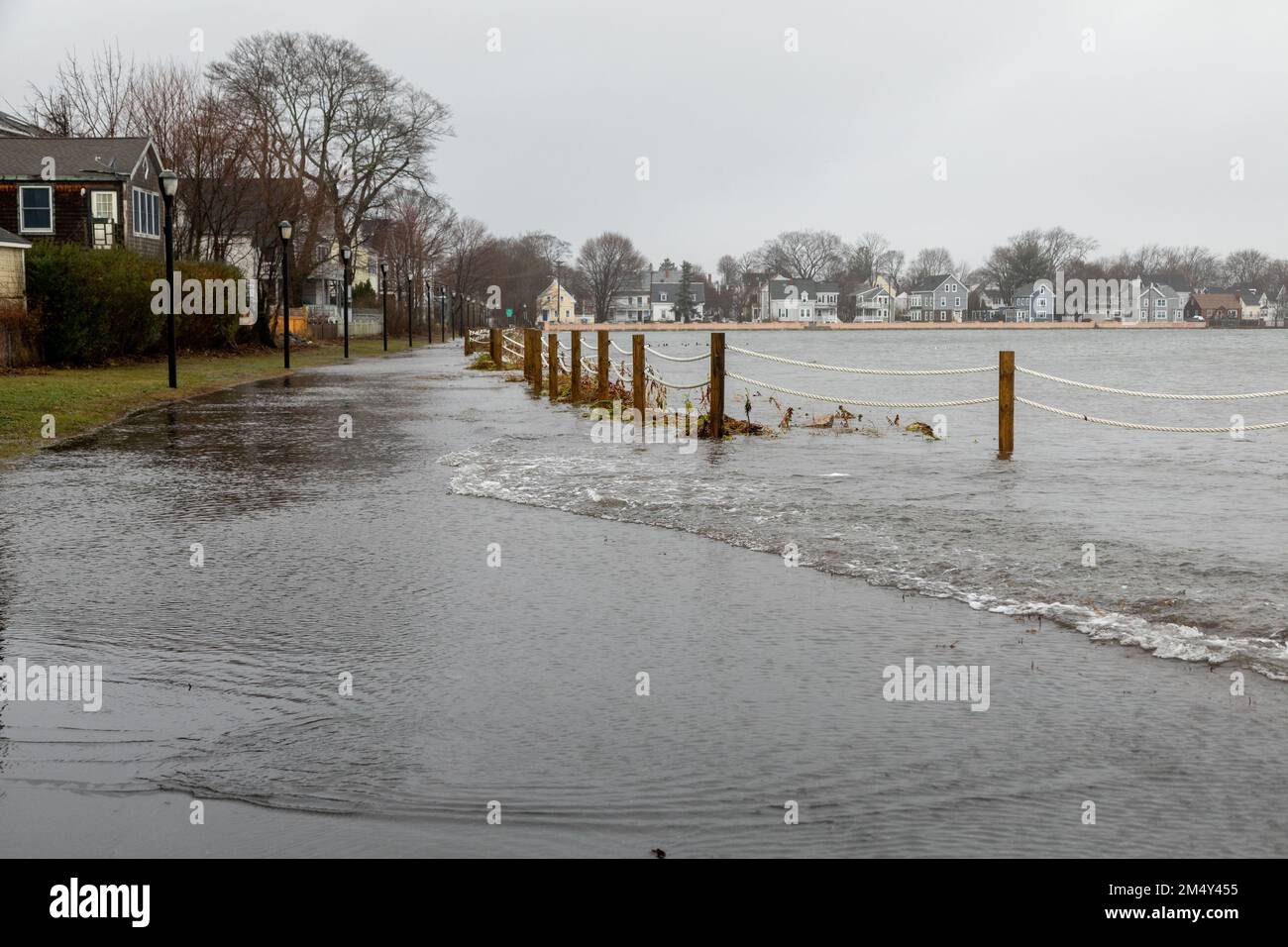
“Our greatest concern at the moment is coastal flooding,” Tarasiewicz said. “We will have abnormally high tides as a result of the full moon. Combined with strong easterly and northeasterly winds, we could see some coastal flooding, mainly along the eastern shore of Massachusetts.” The system may also produce localized flooding farther inland.
Travel disruptions are likely. “This is one of those things that could disrupt flights, especially if we have low clouds and those strong winds,” Tarasiewicz said.
“Thankfully, we’re not looking at a really wintry storm here. There’s going to be a lot of warm air around.” For drivers, ponding on roadways and urbanized flooding may be a concern, and those in high-profile vehicles should watch for potentially strong winds.
Conditions are expected to dry out Friday heading into the weekend, with highs preliminarily forecast around the low 50s. Tarasiewicz noted the forecast remains five to six days out and could still change.
Related reading

Third Man Sentenced to Prison in Milwaukee 13-Year-Old Sexual Assault Case
A Milwaukee County judge sentenced Deville Quinn, 32, to seven years in prison on Monday for his role...

OneMain Financial Hiring Loan Sales Specialist in Lansing, Michigan
OneMain Financial is hiring a Loan Sales Specialist in Lansing, Michigan, offering a path to branch management for...

No. 2 Cal Beats No. 4 USC 11-9 in OT for MPSF Third Place
No. 2 California defeated No. 4 USC 11-9 in overtime in the MPSF Tournament third-place match on Sunday,...

Dallas News Editorial: Hinojosa’s Proposals Risk Texas School Gains, Board Says
Gov.-elect Gina Hinojosa promised to dismantle Texas’ school accountability system even as Dallas ISD and Houston ISD show...