
Michigan voters head to the polls for high-stakes Senate and gubernatorial races
More than 1.7 million absentee ballots have already been returned in Michigan as the state begins its Election Day proceedings, according to data released by the Michigan Secretary of State’s office. This massive volume of early voting sets the stage for a high-stakes Tuesday, with voters across the state deciding not only the future of the U.S. Senate seat but also the direction of the Michigan governorship and several critical local proposals.
WXYZ reported that polls officially opened across the state this morning, marking the start of a day that will determine the political landscape for both local and federal offices. While much of the focus remains on the major statewide races, the impact of this election extends into individual school districts and municipal budgets, where voters face decisions that could shift hundreds of millions of dollars in local funding.
The scale of participation is already evident in the early numbers. The Secretary of State’s office confirmed that 2,187,787 absentee ballot requests were issued, with 1,756,313 of those ballots returned. This surge in absentee voting is part of a broader pattern of engagement seen throughout the state, though the final impact of these ballots will not be known until the tallies are processed following the close of the polls.
Turnout climbs as early voting numbers emerge
As the morning progresses, the data suggests a steady increase in voter engagement. 9and10news.com reported that as of 7:30 a.m., voter turnout in Michigan stood at 31.2%. This figure reflects a combination of long-term absentee voting and the recent expansion of early voting windows.
The geographic distribution of the vote shows significant activity in several key counties. Data provided to 9and10news.com highlights the following participation levels in Northern Michigan:
| County | Absentee Ballots Returned | Early Voting Ballots Cast | Total Ballots Reported |
|---|---|---|---|
| Grand Traverse | 21,210 | 9,425 | — |
| Leelanau | 6,949 | 2,106 | 9,055 |
| Wexford | 3,732 | 1,342 | 5,074 |
In addition to the absentee totals, the Secretary of State’s office noted that 3,892 same-day voter registrations have been processed so far today. For those heading to the polls in person, officials remind voters that while bringing a photo ID is required, those without one can still cast a ballot by signing an affidavit.
DOJ monitors face scrutiny over precinct interactions
The election process has not been without procedural friction. The Michigan Secretary of State’s office reported that Department of Justice (DOJ) monitors in two specific cities—Dearborn and Flint—engaged in activities that appeared to fall outside their designated scope of work.
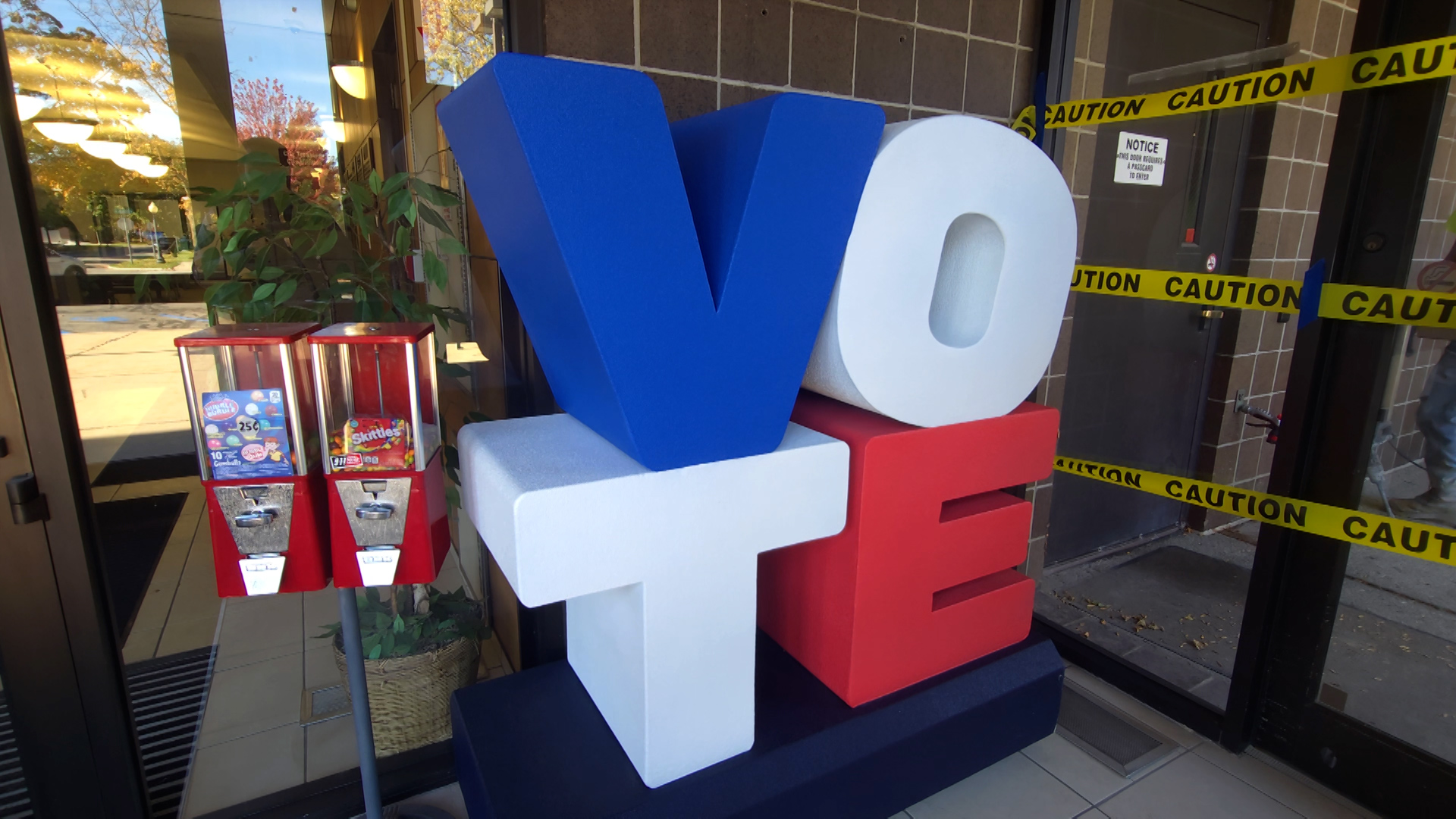
According to the Secretary of State, monitors in Dearborn reportedly asked poll workers for copies of their training materials. In Flint, monitors questioned poll workers regarding the specifics of their training processes. While monitors are permitted to observe the voting process and maintain contact with precinct captains, these specific inquiries into administrative training protocols prompted a response from state officials.
The Secretary of State’s office has since communicated with the DOJ liaison in Michigan. The liaison stated that these actions were not part of the monitors’ training and indicated a plan to follow up with the individuals involved to reiterate the legal boundaries of their roles under state law.
Local bond proposals and community stakes
Beyond the federal and state-level contests, the election carries heavy economic implications for specific municipalities. In Dearborn, the focus remains on a significant school bond proposal. 7 News Detroit reporter Tony Geftos reported from the area, noting that the proposal aims to replace expiring city bonds to generate $1.5 billion for district-wide building renovations.
The outcome of such measures often creates a divide between those prioritizing immediate infrastructure investment and those concerned with the long-term tax implications of large-scale bond replacements. For the students and staff within the district, the vote represents a choice between aging facilities and a massive infusion of capital for modernization.
As the day unfolds, the tension between high-level political shifts and these granular, community-level financial decisions remains the defining characteristic of the Michigan electorate. The final results will depend on how these local issues align with the broader momentum of the Senate and gubernatorial races.
Related reading

Wisconsin Gubernatorial Election: Crowley and Tiffany Battle for Control of Key State
Wisconsin voters face a historic choice for the governor's mansion Voters will decide Tuesday whether to elect Wisconsin’s...

Charleston Approves Free Metered Parking for Holiday Season
Charleston residents and holiday shoppers will find metered street parking free on six specific Saturdays throughout the upcoming...

Johnny Ray Richmond passes away in Shreveport, Louisiana
The Life and Legacy of Johnny Ray Richmond Johnny Ray Richmond, a man known for his ability to...

Janoo Leads Phil Scott by 8 Points in Vermont Governor Race
Vermont voters head to the polls as gubernatorial and lieutenant governor races tighten The final countdown for Vermont’s...