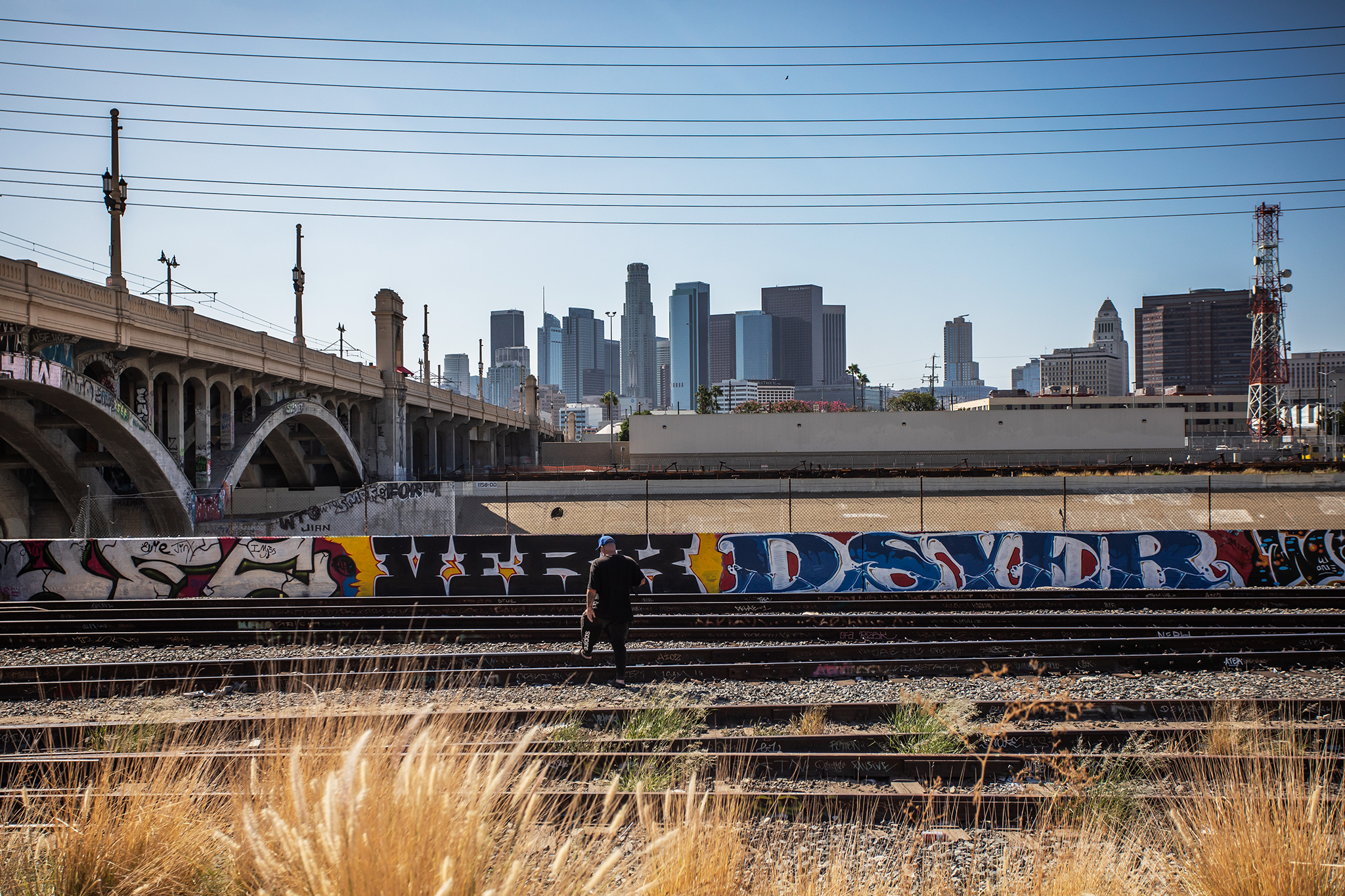
Fourteen suspects face federal charges after an alleged cargo theft ring looted more than $22.5 million in consumer goods from freight trains across Southern California over a two-year period.
- Federal prosecutors charged 14 defendants on Thursday for a train heist ring operating from February 2024 to August 2026.
- The crew allegedly targeted at least three dozen freight trains in Pico Rivera, Fullerton, and other Southern California locations.
- Stolen merchandise included Nike sneakers and Milwaukee tools, which suspects sold on the black market.
Prosecutors Charge 14 in Nike Train Thefts
Federal prosecutors announced the charges in a news release, stating that the suspects broke into at least three dozen freight trains on tracks in Pico Rivera, Fullerton, and surrounding areas.
The U.S. Department of Justice said that the crew specifically targeted shipping containers holding Nike sneakers arriving through the ports of Los Angeles and Long Beach. Nathan Daniel Angel, a 21-year-old from East Los Angeles, is accused of leading the scheme alongside 13 co-conspirators ranging in age from 23 to 38.
All 14 defendants made their first court appearance and were arraigned on Thursday afternoon in downtown Los Angeles. The group is accused of various felonies, specifically conspiracy, the theft of cargo from interstate railroads, holding stolen freight, and committing acts of violence against railroad carriers.
Convictions could result in penalties of up to five years in federal prison for conspiracy, a maximum of 10 years for each individual theft charge, and life imprisonment for every count involving violence against railroad carriers.
“The scale of the theft is staggering,” said First Assistant United States Attorney Bill Essayli.
“We will prosecute the people who raid these trains and those who knowingly turn stolen cargo into cash,” Essayli added.
Methodology and Black Market Sales
According to the Department of Justice, the crew coordinated operations on Instagram, assigning different co-conspirators to distinct roles. Accomplices rented vans and trucks to transport burglars to the tracks while acting as lookouts. Once the trains were moving, burglars boarded them and cut the air hoses to trigger emergency stops. Accomplices then met the burglars to load the stolen merchandise into vehicles before hiding the goods at various stash houses.
The group shared photos and discussed prices with resellers in group chats. An unnamed business identified as “Company 1” allegedly purchased the stolen items knowing they were illicitly acquired. Two of the defendants generated approximately $1,081,493 from Company 1 by selling the stolen products for a profit.

“This historic indictment, following a 14-month investigation assisted by our Bureau of Investigation, demonstrates the importance of dismantling entire criminal enterprises — from those stealing the cargo to those profiting from its resale,” said Los Angeles County District Attorney Nathan J. Hochman.
Supply Chain Impact in Southern California
Large-scale cargo thefts have surged across Southern California, driven by the region’s heavy concentration of manufacturers, freight forwarders, and distribution networks. Keith Lewis, vice president of operations for Verisk CargoNet, told SFGATE that Riverside, Los Angeles, and San Bernardino counties remain major hotspots.
“California being the heartbeat of the nation, fourth largest economy in the world, the ports, the railroad, the highway infrastructure, the technology, the imports. It’s the perfect storm for cargo thieves,” Lewis said to SFGATE.
Lewis said that cargo theft operations require a high degree of coordination. Because freight trains take miles to brake, thieves know precisely where to sever brake lines to halt the cars for offloading into box trucks.
“It may take the train 4 or 5 miles to stop,” Lewis told SFGATE. “So the bad guys know exactly where to cut the brake line to get the train to stop to where they can get it off-loaded and get it on a box truck to get it out of there, out of the area. So it’s highly sophisticated.”
More on Nike
Keep reading
- Flagg Posts 24 Points, 12 Assists as Mavericks Rout Nuggets 120-101 to Lead NBA Cup Group
- Mayor Mamdani Announces Free Parents’ Night Out Dec. 13, 2026 at Five Borough Centers
- Tariffs Added 2.9 Points to Goods Inflation, About 0.6 to All Prices (daybreakwire.com)
- US jury convicts Huawei of bank fraud and trade secret theft, acquits of racketeering (newsarchyuk.com)

Flagg Posts 24 Points, 12 Assists as Mavericks Rout Nuggets 120-101 to Lead NBA Cup Group
Dallas rookie Cooper Flagg scored 24 points and tied a career-high with 12 assists as the Mavericks routed...

Mayor Mamdani Announces Free Parents’ Night Out Dec. 13, 2026 at Five Borough Centers
Mayor Zohran Mamdani announced Tuesday the return of “Parents’ Night Out” on Sunday, Dec. 13, giving families a...

Express Arrow Runs Weekly Cheyenne-Billings Bus Mondays and Tuesdays
Express Arrow runs a weekly bus service between Cheyenne and Billings, operating northbound on Mondays and southbound on...
Fall River Wildlife Area: 9,352 Acres of Hunting, Fishing and Ecology in Kansas Osage Cuestas
The Fall River Wildlife Area spans 9,352 acres in the Osage Cuestas region of southeast Kansas, offering 14...