
Baltimore’s Land Use and Transportation Committee will hold a public hearing Dec. 3 on legislation to close a five-lane segment of Light Street near Harborplace, the second of two required hearings before the City Council can vote.
The hearing follows the Planning Commission’s Nov. 19 approval of the street closure, which would fold the Light Street-to-Calvert Street traffic spur into a $900 million-plus mixed-use project proposed by MCB Real Estate.
The developer plans to demolish the Harborplace pavilions and build two apartment towers, offices, shops, restaurants and open space on city-owned land. The Board of Estimates is scheduled to consider the redevelopment lease agreement with MCB on Dec. 2, one day before the council hearing.
Zeke Cohen introduced Council Bill 06-0256 in September on behalf of the Scott administration to authorize condemnation and closure of portions of Calvert, Light and Pratt streets.
Planning Department Director Renata Southard told the Planning Commission the panel has endorsed closing the spur several times, most recently in February, largely for pedestrian safety. “It would be inconsistent for the commission to vote against a plan that it has previously endorsed if the facts haven’t changed,” Southard said.
At the Planning Commission hearing, eight of 10 speakers opposed the plan. Former City Council member Tony Ambridge urged a trial closure first: “Try it out and see what happens.”
Kevin Murphy, a University of Maryland professor and Federal Hill resident, raised deeper concerns about the 2023-2024 Traffic Impact Analysis conducted by The Traffic Group, a paid consultant to MCB. “There’s an inherent conflict of interest in this,” Murphy told Baltimore Fishbowl. He said the study relied on five days of traffic counts over six months and omitted key data, including an evening Orioles game.
“One of the dates that was left out was actually one that [had] an evening game,” he said. For the Pratt and Light intersection, the model projects a 240 percent increase in eastbound evening traffic, far above the advertised 14 percent average increase across all studied intersections.
Murphy also said the analysis predates the March 2024 collapse of the Francis Scott Key Bridge, and he said any studies conducted before the bridge collapsed are out of date because traffic patterns have changed since then and more vehicles now go through downtown because drivers can’t use the bridge.
He questioned whether the city’s fire department has signed off on the plan. “I cannot find… any statement from the fire department that they have reviewed these studies and shown that if this model goes through, that it can make sure that there will not be a negative impact,” Murphy said.
Murphy also challenged city ownership of Light Street, which carries a state highway designation. Committee chair Ryan Dorsey said the designation does not confer state ownership, noting Charles Street has a similar designation but is city-maintained. “It is my understanding that Baltimore owns Light Street,” Dorsey said. He added that legislation can be drafted to “open and close” a street to resolve any ownership ambiguity.
The Inner Harbor Coalition, which is suing to block the project, held a $250-per-person fundraiser Nov. 20 that drew 80 people and raised more than $18,000 for legal costs.
Harborplace, opened in 1980 as a Rouse Company festival marketplace, became a national model for waterfront revitalization, drawing crowds with local vendors before shifting to national chains like The Cheesecake Factory and Ripley’s Believe It or Not! by the 2010s.
After Ashkenazy Acquisition Corporation purchased the complex in November 2012, deferred maintenance accelerated its decline, leading to court-ordered receivership in March 2019 and the permanent closure of The Gallery at Harborplace in January 2022. MCB Real Estate acquired the pavilions between April and December 2022, proposing a $900 million-plus mixed-use project to replace them with apartment towers, offices, and open space on city-owned land.
The redevelopment has sparked intense opposition over traffic and transparency.
The Dec. 3 hearing begins at 10 a.m. on the fourth floor of Baltimore City Hall, 100 Holliday St.
Related reading
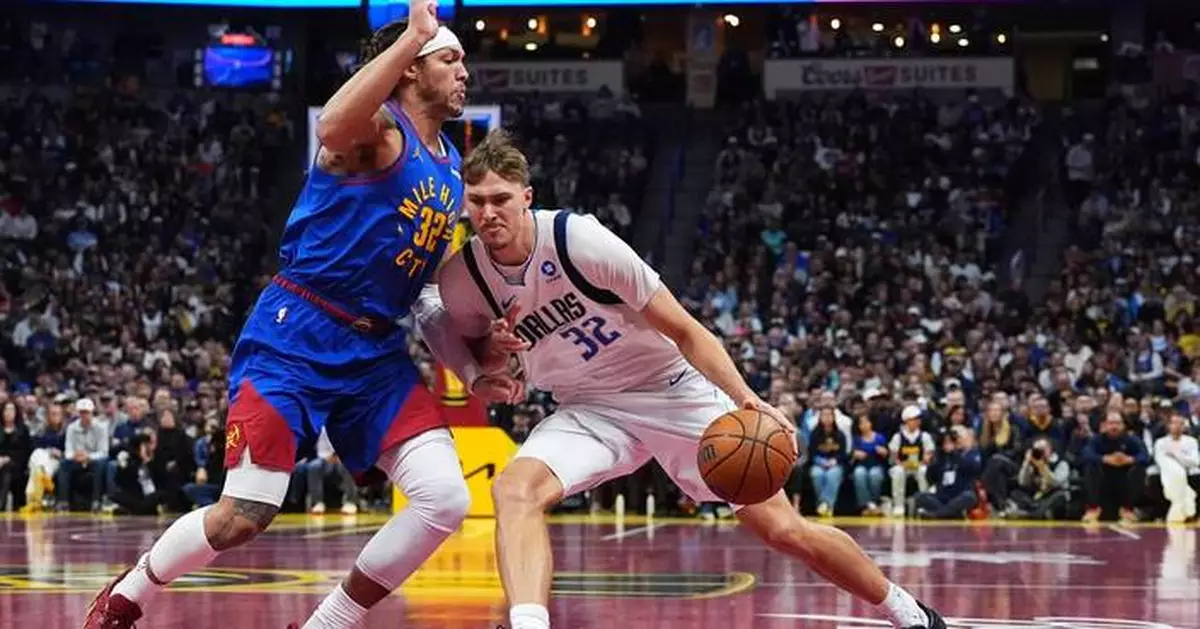
Flagg Posts 24 Points, 12 Assists as Mavericks Rout Nuggets 120-101 to Lead NBA Cup Group
Dallas rookie Cooper Flagg scored 24 points and tied a career-high with 12 assists as the Mavericks routed...

Mayor Mamdani Announces Free Parents’ Night Out Dec. 13, 2026 at Five Borough Centers
Mayor Zohran Mamdani announced Tuesday the return of “Parents’ Night Out” on Sunday, Dec. 13, giving families a...

Express Arrow Runs Weekly Cheyenne-Billings Bus Mondays and Tuesdays
Express Arrow runs a weekly bus service between Cheyenne and Billings, operating northbound on Mondays and southbound on...
Fall River Wildlife Area: 9,352 Acres of Hunting, Fishing and Ecology in Kansas Osage Cuestas
The Fall River Wildlife Area spans 9,352 acres in the Osage Cuestas region of southeast Kansas, offering 14...