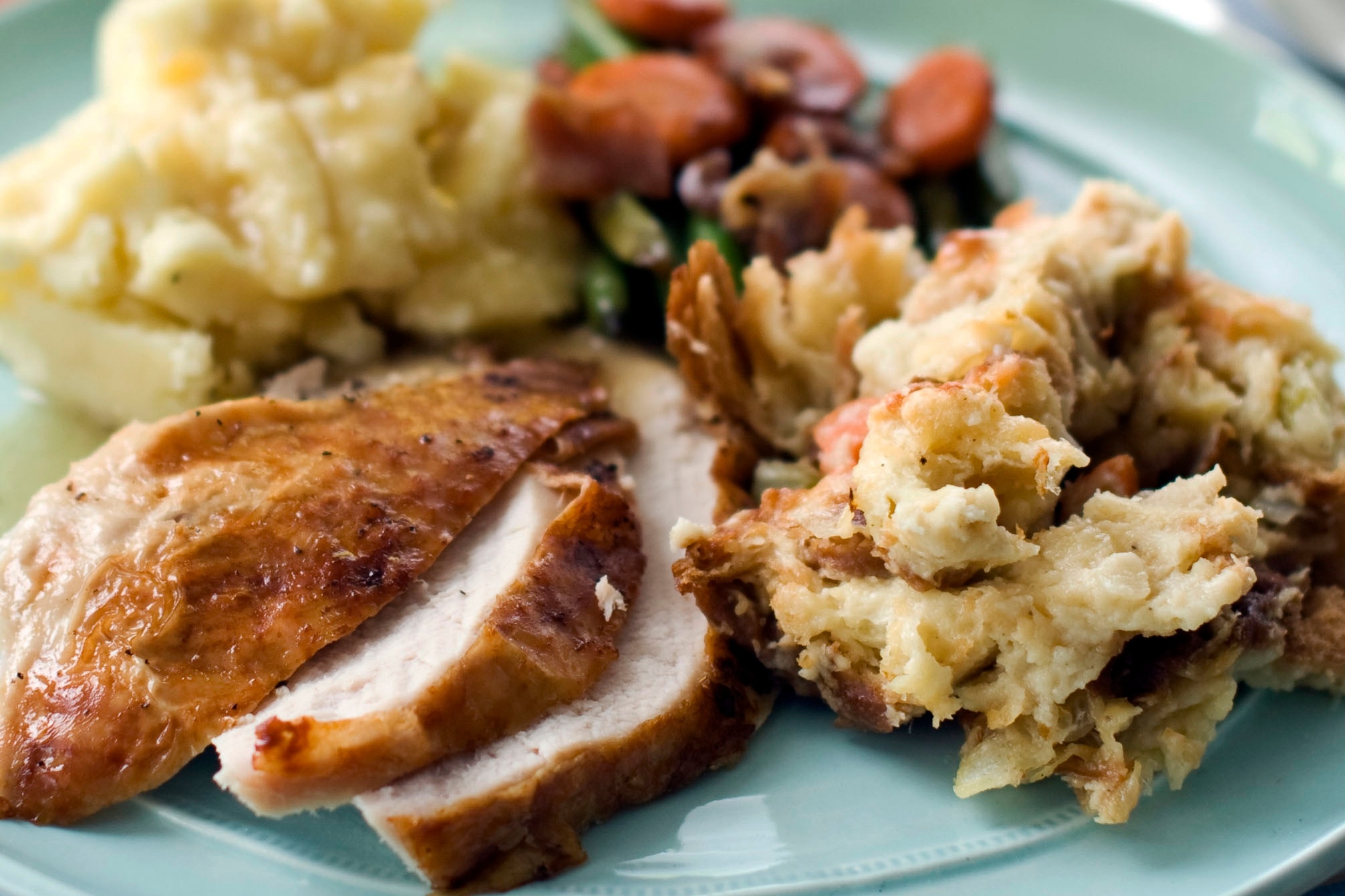
Philadelphia’s City Controller said a Thanksgiving dinner costs nearly four times what it did in 1976.
Controller Christy Brady released a report this month estimating a classic meal for 10 at $73.21 today versus $15.93 in the Bicentennial year — a 360 percent jump that the office framed as evidence of the pressure on household budgets. WHYY dug through November 1976 grocery ads in The Philadelphia Inquirer and found the controller’s 1976 baseline was low, in some cases by a wide margin.
The report listed a 16-pound turkey at $7.54. A Genuardi Super Markets ad from Nov. 21, 1976, promised “Nobody Can Offer You A More Savory Turkey!” at $8.48 or more for that size. The controller put whole milk at 86 cents a gallon; a Great Scot Market ad showed $1.39.
Three pounds of sweet potatoes were priced at 68 cents in the analysis, but an A&P ad listed them at $1.76. Leaving aside a miscellaneous relish-tray item that is hard to price, the controller’s basket came to $14.77. The advertised prices across several stores totaled $15.99 — about 8 percent higher.
Adjusted for inflation, the controller’s 1976 meal would cost roughly $86 in 2026 dollars. The advertised basket comes to about $93. The controller’s researchers priced the same items in Philadelphia stores today at about $66. That means the real, inflation-adjusted cost of the dinner has actually fallen over the last half-century.
“Thanksgiving is a time about family, gratitude, coming together,” Brady said, “and we hope this report just gives Philadelphians an interesting look at how much has changed over the past 50 years, while recognizing the financial pressures many families face today.”
Brady declined to comment on the discrepancy when WHYY presented the findings. Her office’s release highlighted specific spikes: dinner rolls up 721 percent, fresh cranberries, whole milk and pie shells each rising more than 480 percent since 1976. Those percentage increases are calculated against the controller’s lower 1976 figures. Using the higher advertised prices from the period would shrink those percentage gains considerably.
The controller’s analysis drew on average prices collected from grocery stores throughout Philadelphia and a menu based on the American Farm Bureau Federation’s classic lineup. WHYY’s check relied on retail advertisements published in the city’s major newspaper at the time. Neither methodology captures what shoppers actually paid at the register after coupons, loyalty discounts or store-brand substitutions.
The gap matters because the 360 percent figure landed in headlines as a measure of how far behind wages have lagged. If the 1976 starting line was higher, the real increase is smaller — and the current $66 price tag is cheaper in real terms than what Philadelphians paid 50 years ago. That doesn’t erase the strain families feel at the checkout today. It does reframe the history.
Philadelphia, founded in 1682 by William Penn, served as the nation’s first capital from 1775 until 1776 and again on four occasions until 1800. The city remained the largest in the United States until 1790. It is a city of many national firsts, including the first library (1731), hospital (1751), medical school (1765), stock exchange (1790), and zoo (1874).
The controller’s report also noted Philadelphia’s role in the 1976 Bicentennial celebrations, tying the price comparison to the city’s place in the national birthday party. The Municipal Money Matters release framed the exercise as perspective on “how dramatically the cost of everyday essentials has changed.” The ads from that November suggest the essentials were already more expensive than the retrospective calculation assumes.
Keep reading

Ellington Man Pleads Guilty to Fentanyl Trafficking, Gun Charges
"He drove away at a high rate of speed after witnessing the traffic stop," federal officials said. Jose...

Florida High Returns to Face Bolles in 2A Regional Semifinal Rematch
A year ago, Bolles running back Xander Edwards gashed Florida High for 228 yards and four touchdowns in...

UC Irvine Beats Idaho State 66-51 After Travel Chaos
UC Irvine defeated Idaho State 66-51 on Wednesday evening at the Bren Events Center, leading wire-to-wire after dealing...

Zack Baun Lone Eagles Player on PFF Midseason All-Pro Team as Philadelphia Struggles at 2-7
The Philadelphia Eagles sit at 2-7 and in last place in the NFC East, but linebacker Zack Baun...