The International Court of Justice ruled Thursday that Myanmar committed genocide against the Rohingya, the first time the court has held a state responsible for the crime.
Seven Years to a Verdict
The Gambia filed the case in 2019 with backing from the 57-member Organization of Islamic Cooperation, arguing that Myanmar breached the 1948 Genocide Convention. Myanmar’s civilian leader at the time, Aung San Suu Kyi, travelled to The Hague to defend the military’s actions, calling them a legitimate response to attacks by the Arakan Rohingya Salvation Army (ARSA).
PRESS RELEASE: The #ICJ today delivered its Judgment in the case concerning Application of the Convention on the Prevention and Punishment of the Crime of Genocide (The #Gambia v. #Myanmar: 11 States intervening). Read more: https://t.co/u34i58PKSa pic.twitter.com/MnN2KIw5VP
During hearings, Myanmar’s representative Ko Hlaing told judges the military “was not obliged to remain idle and allow terrorists to have free rein.” The court rejected that defence, saying the “only reasonable inference” from the evidence was genocidal intent.
What the Ruling Orders
The ICJ ordered Myanmar to provide reparations and restitution, including facilitating the “safe and dignified return to their place of residence and the reunification of families for the Rohingya displaced as a result of Myanmar's wrongful acts.”
WATCH LIVE: The #ICJ delivers its Judgment in the case concerning Application of the Convention on the Prevention and Punishment of the Crime of Genocide (The #Gambia v. #Myanmar: 11 States intervening)https://t.co/06S1Lk28D5
The court said appropriate restitution would also cover returning or replacing collective property, searching for the disappeared, ensuring proper burials, and providing physical and psychological rehabilitation.
The ruling formally classifies the Rohingya as a distinct ethnic group under international law.
An attack on the @IntlCrimCourt was never just an attack on one court. Reports that #USA could sanction judges of the @CIJ_ICJ over a possible genocide ruling against Myanmar should set off alarm bells everywhere. Independent judges must be able to interpret and apply…
Enforcement Runs Through the Security Council
The ICJ has no enforcement mechanism of its own. If Myanmar refuses to comply, the matter can be referred to the UN Security Council, where the five permanent members must agree on any action.
Britain’s foreign minister, Ed Miliband, said the UK was expelling Myanmar’s defence attaché and calling urgently for a Security Council session.
Survivors in Cox’s Bazar Watch and Wait
More than 1.3 million Rohingya remain displaced across South and Southeast Asia, including 1.2 million in the sprawling camps of Cox’s Bazar, Bangladesh.
In the camps, a Rohingya rape survivor said: I want justice.

Survivor Mohammed Osman, 20, told AFP he hoped the ruling would let him return home to perform last rites for his parents and younger brother: “They shot my father dead, forced my mother into a house with a few other women, raped them and burnt down our homestead.”
A Precedent Watched in The Hague and Beyond
The decision marks only the fourth time since the Holocaust that an international court has found the legal threshold for genocide met, joining rulings on Rwanda, Srebrenica and Cambodia’s Khmer Rouge.
Legal scholars are scrutinizing the judgment for guidance on South Africa’s pending case accusing Israel of genocide in Gaza, where Israel similarly argues its operations target Hamas militants. The court’s dismissal of Myanmar’s counter-terrorism defence may shape how it evaluates that argument.
The prosecutor at the International Criminal Court requested an arrest warrant for Min Aung Hlaing in 2024 for crimes against humanity related to the 2017 deportation and persecution of the Rohingya; no decision has been made public.
The International Court of Justice, the principal judicial organ of the United Nations, began work in April 1946 as successor to the Permanent Court of International Justice and is the only principal UN organ not located in New York City.
Its 15 judges are elected by the General Assembly and Security Council for nine-year terms, with no two judges sharing the same nationality, and the bench must represent the main forms of civilization and principal legal systems. Since its first case in 1947, the court has entertained 201 cases as of September 2025; its judgments are binding and final but it possesses no enforcement mechanism, leaving compliance ultimately to the UN Security Council.
A court in Argentina issued arrest warrants against dozens of Myanmar officials, including Min Aung Hlaing, in 2025 under universal jurisdiction. Thursday’s ICJ ruling is the first international judgment finding Myanmar authorities responsible for genocide.
More on International Court
Worth a look
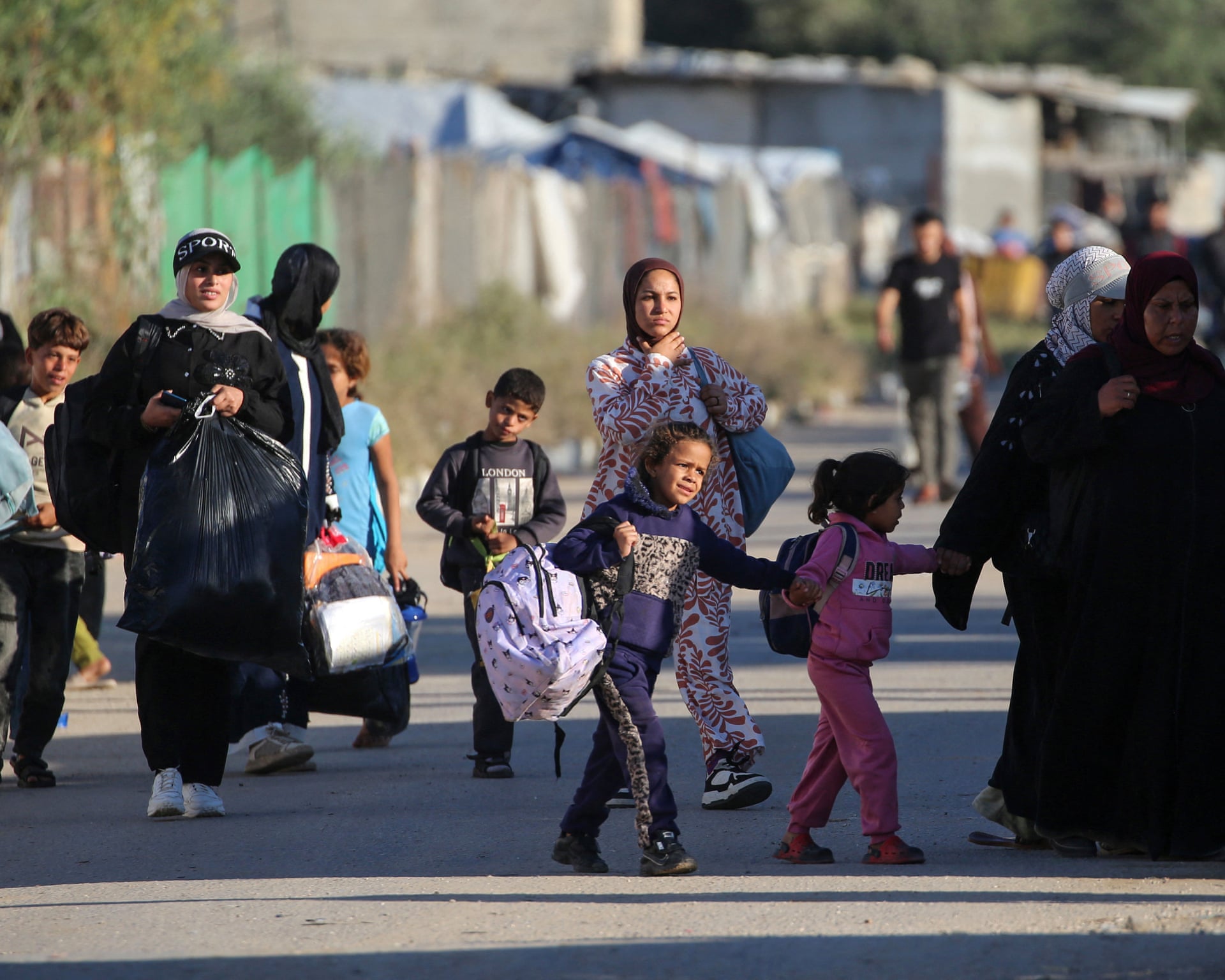
Israeli Military Completes Ground Operation Beyond Yellow Line
Israeli tanks rolled across the Yellow Line into Hamas-controlled central Gaza on Wednesday, the first announced ground incursion...
Netanyahu Associates Acknowledge Role in Setting Off Election Day Arrests
Prime Minister Benjamin Netanyahu's chief of staff and a former aide acknowledged this week they triggered the Election...

Drivers Paid $88 Billion More for Gasoline, Brown University Lab Finds
Americans paid an extra $88 billion for gasoline this year as the U.S.-Israeli war with Iran pushed pump...
