
States Pledge Electoral Votes to Popular Vote Winner
Americans heading to the ballot box often discover that winning the national popular vote does not guarantee winning the White House. That structural reality, highlighted in a report by ClickOnDetroit, has brought renewed attention to a state-level compact designed to bypass the Electoral College without a constitutional amendment.
Under the National Popular Vote Interstate Compact, participating states pledge all their electoral votes to the winner of the national popular vote, but the pact remains dormant until it accumulates the 270 electoral votes required to win the presidency. Right now, 18 states and Washington, D.C., have signed on, accounting for 222 electoral votes. Adding Michigan and four other swing states would push that total to 283, clearing the threshold to activate the agreement.
How the Electoral System Operates
Voters do not cast ballots directly for the president. Instead, each state is assigned a specific number of electoral votes based on its total congressional delegation, combining its members in the House of Representatives with its two senators, which brings the national total to 538. Michigan holds 15 of those votes.
In 48 states, the system is winner-take-all, allocating their entire slate of electors to the candidate who wins the most votes within that specific state. This dynamic allows a candidate to amass millions more votes nationwide yet still lose the election, an outcome that materialized in 2016. Similar upsets occurred in 1824, 1876, 1888, and 2000.
The Path Through State Legislatures
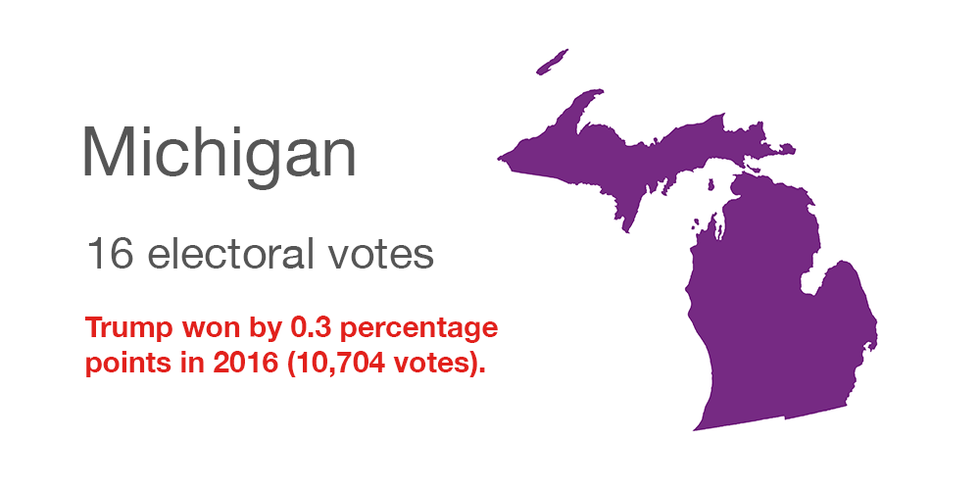
New legislative majorities in Pennsylvania, Michigan, Arizona, Wisconsin, and Nevada could provide the remaining votes to push the total to 283.
Yet, turning that possibility into reality involves significant hurdles. The Michigan Legislature declined to pass the measure when the Democratic Party held majorities in recent years. Any enacted compact would face steep political resistance, followed by challenges in Congress and the Supreme Court.
The National Popular Vote Compact just moved closer to reality. Virginia joined in 2026, bringing the total to 222 electoral votes—only 48 short of the 270 needed to effectively nullify the Electoral College without a constitutional amendment. Ken Cuccinelli warns it could… pic.twitter.com/ysbrOCSXdK
Keep reading

Providence Mission Hospital Abandons Micro-Hospital Plan for Laguna Beach
Providence Mission Hospital Drops Laguna Beach Micro-Hospital Plan Over $160-Million Gap On Tuesday, November 3, Providence Mission Hospital...

Murray Brown notes breeding carries unique weight at Harrisburg sale
The High Stakes and Heartbreak of the Harrisburg Yearling Sale In a recent column for Harness Racing Update,...

University Beats Salem 14-10 in Division III Quarterfinal
A Courtroom Victory Turns into a Gridiron Survival at Sebo Stadium Few high school football teams punch their...

Oklahoma City Thunder look to extend home win streak against Wizards
Oklahoma City Brings Home Win Streak Into Matchup With Washington The Oklahoma City Thunder return to their floor...