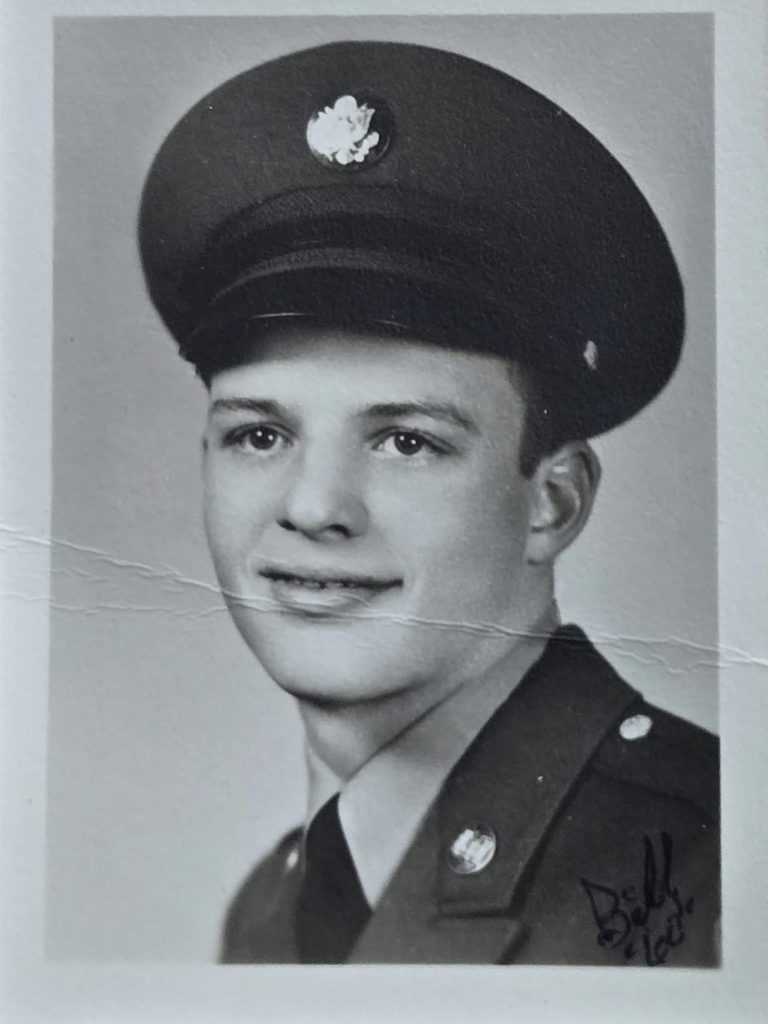
From North Dakota to the Rhine: A Rancher’s Cold War Journey
For Ardmore William “Bill” Thompson, the path from a southwestern North Dakota ranch to the front lines of the Cold War began with a simple choice in 1959. Fresh out of Hettinger High School, Thompson faced a recruitment process that felt worlds away from the quiet plains of home. After an induction journey that took him from Bismarck to Fort Carson, Colorado, and eventually to the sweltering heat of Fort Hood, Texas, the young rancher found himself assigned to the Second Armored Division—the storied “Hell on Wheels” unit once commanded by General George Patton during World War II.
Thompson’s military service was defined by a series of shifts, from mastering heavy weaponry and tank maneuvers in the Texas scrub to handling the complexities of occupied Germany. His decision to forgo airborne ranger training in favor of an overseas assignment was motivated by a desire to see the world, a curiosity that would eventually place him in the heart of a rapidly shifting European landscape.
The Reality of Occupation and the Rise of the Berlin Wall
The environment was a stark departure from the American military installations he had grown accustomed to.

The duty was demanding, often involving training in the treacherous, mud-heavy terrain near the Czechoslovakian border. Thompson recalls the physical toll of carrying full gear through the “gumbo” soil, a substance familiar to any North Dakota rancher, which would cling to boots and equipment, adding significant weight to every mile marched. It was during this period that the geopolitical tension of the era became personal.
“I watched the wall being built right through people’s houses. I spoke to a man whose bedrooms would be separated from the rest of his house by the wall. That man moved out of his home.”
Life Behind the Wheel and a Life-Changing Encounter
Thompson’s role in the Army evolved when he was tapped to serve as a driver for Colonel Scruggs. The assignment required not only mechanical aptitude but a keen sense of direction, as he navigated the Colonel through the German countryside, often relying on his own navigation skills when official maps fell short. His service was briefly interrupted by a severe spinal injury sustained during a vehicle accident on a logging trail, an event that led to 40 days of hospitalization and traction.
Yet, it was the unlikely intersections of military life that left the most lasting mark. While stationed in Germany, he formed an enduring connection with a fellow soldier who had escaped Hungary during the 1956 revolution. This friend, a university-educated draftee, lived in constant fear of retribution, communicating with his mother only through a secure intermediary. It was through another friendship—this one forged in the unlikely setting of an Army kitchen—that Thompson was introduced to his future wife, Heidi.
The invitation to an Austrian family’s home for the holidays in 1962 bridged the gap between the American soldier and local life. By February of the following year, the couple was engaged, and on June 25, 1963, they were married. Thompson extended his service to remain in Germany, spending his final months balancing rigorous training exercises with the quiet realities of civilian-military life, including the small, domestic cultural adjustments that accompany any international marriage.
The transition from the wide-open spaces of North Dakota to the rigid, high-stakes environment of the European theater in the early 1960s remains a defining chapter for Thompson. His account offers a glimpse into a time when the U.S. military footprint in Europe was expanding rapidly to meet the challenges of a divided continent. Today, his story serves as a reminder of the individuals who stood watch in the shadow of the Wall, far from the ranches and hometowns they left behind.

Rapid City Legal and Finance Committee to review 2027 fees and fleet expansion
Rapid City Considers 2027 Fee Adjustments and Fleet Expansion Ahead of November 10 Meeting The Rapid City Legal...

Johnny Whysong Scores 23 to Lead CIU Over Paine College 77-68
Johnny Whysong scored 23 points and Gray Madeira added 15 off the bench Friday evening, leading CIU men's...

Providence Mission Hospital Abandons Micro-Hospital Plan for Laguna Beach
Providence Mission Hospital Drops Laguna Beach Micro-Hospital Plan Over $160-Million Gap On Tuesday, November 3, Providence Mission Hospital...

Murray Brown notes breeding carries unique weight at Harrisburg sale
The High Stakes and Heartbreak of the Harrisburg Yearling Sale In a recent column for Harness Racing Update,...