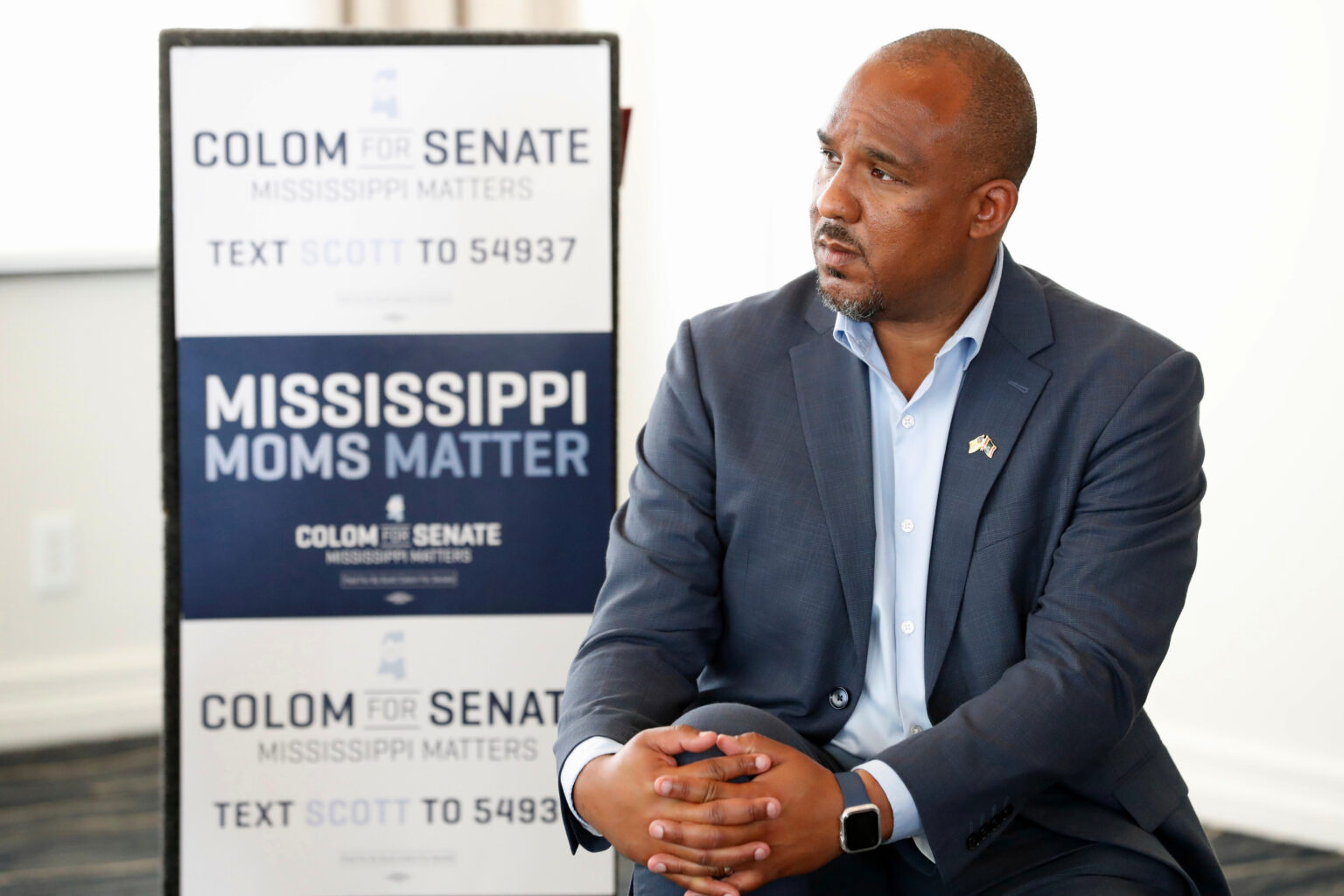
As of 3:48 a.m. Wednesday morning, Democrat Scott Colom led incumbent Republican Sen. Cindy Hyde-Smith by just 43 ballots — 462,821 to 462,778 — with 96% of the vote counted, according to the Associated Press, as Democracy Docket reported. In a state where the last Senate contest wasn’t close, that margin is effectively a tie, and the race may not be decided for days.
What makes this razor-thin margin so consequential is that thousands of ballots are still legally in play. Mississippi accepts mail ballots postmarked by Election Day if they arrive within five business days, and roughly 6,500 requested ballots had not been returned before Election Day — a pool of votes large enough to swing a 43-vote gap many times over. The U.S. Supreme Court’s decision this June to preserve that grace period, over the Republican National Committee’s objections, is now potentially the deciding factor in who controls this seat and how large the Democratic majority in the Senate will be.
The Supreme Court Decision That Could Decide the Race
In Watson v. Republican National Committee, the Court ruled 5-4 against the RNC’s argument that federal laws setting a single Election Day preempt states from counting ballots received after that date.
The story of Mississippi in two statistics Turnout relative to 2024 in majority-Black counties: 83% Turnout relative to 2024 in majority-white counties: 73% pic.twitter.com/Utxw4OClOE
“The election-day statutes say nothing about ballot receipt, and we cannot add to the words Congress chose,” Justice Amy Coney Barrett wrote for the majority.
The RNC was unusually candid about why it wanted grace periods banned. In its briefs, its lawyer wrote that Democratic voters tend to mail ballots later than Republicans, and cited the MIT Election Lab: in the 2022 general election, 46% of Democratic voters mailed in their ballots, compared with 27% of Republicans. Late-arriving ballots, the RNC argued, disproportionately favor Democratic candidates. The ruling preserved grace-period laws in 13 other states and Washington, D.C., plus UOCAVA-specific receipt deadlines in 17 states.
How Many Ballots Are Still Out There?
The math in Mississippi is stark. According to the University of Florida’s Election Lab tally of early votes, Mississippians requested 123,040 mail ballots this year — more than twice as many as in 2022 — and returned 116,453 before Election Day. That leaves roughly 6,500 ballots that could still arrive during the grace period, on top of military and expatriate ballots under the Uniformed and Overseas Citizens Absentee Voting Act, whose deadline is Nov. 10. For scale, VoteBeat reported that Mississippi counted 1,140 after-Election-Day ballots in 2024; this year’s outstanding pool is nearly six times that size, and the margin is 43 votes.
The partisan breakdown of those grace-period ballots isn’t yet clear, but recent elections show Democrats using mail voting at higher rates than Republicans — the very pattern the RNC cited in court.
Complicating the Count: Purged Voters and Affidavit Ballots
Secretary of State Michael Watson, a Republican, aggressively purged inactive voters from the registration rolls ahead of the election, forcing thousands of Mississippians to cast affidavit ballots. Those voters must verify their identity within five days of Election Day for their ballots to count — another batch of votes whose fate will be settled in the same window as the mail ballots.
What a Colom Win Would Mean
The stakes extend beyond one seat. Telegram.com reported that if Colom wins, he would become the first Black senator from Mississippi since the Reconstruction era, and the victory would mark the Democrats’ eighth Senate flip of the cycle — in a historically red state. Democrats have already flipped seats in seven other states, including Texas, South Carolina, Kansas, Ohio, Maine, Iowa and North Carolina. Colom’s potential win was also shaped by another Supreme Court ruling this year, Louisiana v. Callais: when the Court’s conservatives weakened the Voting Rights Act, it triggered a fierce backlash among Black voters across the South, and massive Black turnout helped Democrats win in Georgia and made the Mississippi and Louisiana Senate races the tightest in decades. Mississippi has no automatic recount law; a recount happens only if a court orders one.
Election officials may need considerable time to tally final results, and the Nov. 10 deadline for military, overseas and grace-period ballots means the 43-vote margin could hold, grow, or flip entirely. In a race this close, a June decision about five business days of mail ballots may end up writing the final chapter.
More on Mississippi
Related reading
- City of Salem NJ Solicitation for 2027 Professional Services Proposals
- Blue Jackets honor military with Lightning game Nov. 12 at 7 p.m., featuring Damon Bass
- James Talarico wins Texas U.S. Senate race (newsarchyuk.com)
- Trina Thompson's Order Bars DOJ Ballot Threats, Not Subpoenas, to Nov. 16 (daybreakwire.com)

City of Salem NJ Solicitation for 2027 Professional Services Proposals
Fifteen days. That's the window professional firms have to submit sealed proposals for the City of Salem's 2027...

Blue Jackets honor military with Lightning game Nov. 12 at 7 p.m., featuring Damon Bass
Thursday's 7 p.m. Puck Drop Against Tampa Bay The Columbus Blue Jackets will turn Nationwide Arena into a...

Jon Echols wins Oklahoma attorney general race over Nick Coffey
Jon Echols Takes Oklahoma Attorney General's Race, Vowing a "Safer, Freer, Stronger Oklahoma" Republican Jon Echols is set...

In a column, the writer argues that the Christmas season begins earlier and earlier every year
Christmas Before Thanksgiving in Bismarck In a column, the writer argues that the Christmas season begins earlier and...