Iran Strikes Gulf States Following Sixth Night of U.S. Attacks
Tehran launched a series of missile and drone strikes against multiple countries across the Gulf and the wider region overnight, marking a significant escalation as the United States military continued its air campaign against Iran for the sixth consecutive night. According to reports on Friday morning, Bahrain, Iraq, Kuwait, Oman, Qatar, Jordan, and Syria were forced to take defensive actions against Iranian projectiles. Tehran justified the strikes by asserting that it was targeting U.S. facilities, alleging that Washington has utilized regional bases as launchpads for its ongoing military operations against Iran.

Escalation in the Gulf and Regional Impact
The retaliatory strikes targeted various U.S. military assets across the region. In Qatar, which hosts major U.S. facilities, authorities issued two security alerts early Friday morning after loud explosions were heard in Doha. Qatar’s Ministry of Defence confirmed that all incoming projectiles were intercepted, though the Ministry of Interior reported that a child sustained injuries from falling shrapnel. In Kuwait, the Islamic Revolutionary Guard Corps (IRGC) claimed to have struck a U.S. military base, specifically targeting a missile defense radar, weapons depots, and two HIMARS surface-to-surface missile launchers. Meanwhile, in Bahrain, air raid sirens were activated as the IRGC reported targeting U.S. helicopters and reconnaissance aircraft at the Sakhir airbase. Further regional impacts included:
For more on this story, see Egypt, Saudi Arabia Demand Immediate De-Escalation After Iranian Attacks.
- Oman: The IRGC claimed to have destroyed a U.S. air control radar in the Ghanim region and a maritime surveillance radar located in the Strait of Hormuz.
- Jordan: The Jordanian army announced that its air defense systems successfully shot down three Iranian missiles transiting its airspace. No casualties were reported.
- Iraq: U.S. coalition forces intercepted eight explosive drones over the city of Erbil, according to the Iraqi News Agency.
- Syria: The IRGC reported an attack on a U.S. special operations command center at the al-Tanf military base.
U.S. Military Campaign Against Iran
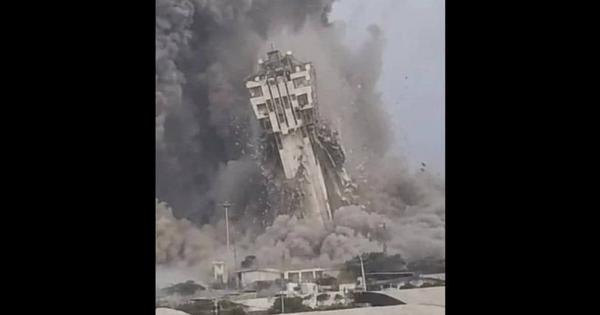
The Iranian strikes occurred against the backdrop of an intensifying U.S. air campaign. U.S. Central Command (CENTCOM) confirmed it completed a major wave of attacks early Friday. Military operations have targeted civilian and military infrastructure, including telecommunications networks, railway systems, and several bridges in Iran’s southern Hormozgan province. Photos shared by U.S. Secretary of War Pete Hegseth showed the collapse of a maritime control tower at Iran’s Chabahar port. The U.S. military stated these operations are intended to degrade Iranian military capabilities and hold the country accountable for recent actions involving commercial shipping. Iranian state media reported that at least eight people were killed in the most recent overnight strikes, bringing the total reported death toll to 38 since June 22.

Diplomatic Efforts Amid Heightened Hostilities
As the conflict threatens to curb the global economy and destabilize the region, international calls for a ceasefire have intensified. Chinese Foreign Minister Wang Yi and Pakistani counterpart Ishaq Dar issued a joint appeal on Friday for the immediate resumption of dialogue.
The current fighting follows the collapse of a preliminary ceasefire agreement. On July 9, U.S. President Donald Trump declared the ceasefire “over,” leading to a resumption of hostilities. Iran’s military leadership, however, has signaled a shift in the status of the Strait of Hormuz, with spokesperson Ebrahim Zolfaghari stating that the waterway will never return to what it was before the 40-day war.
Efforts to return to the negotiating table remain focused on the framework established during talks held in Switzerland on June 22, which initially aimed for a 60-day period to end the war. Despite these diplomatic overtures, military officials on both sides continue to engage in active strikes, deepening the uncertainty surrounding the future of the region.
This follows our earlier report, Trump resumes Iran talks as US strikes 170 targets in Strait of Hormuz.
Keep reading
South Africa Imposes Antidumping Duties on Chinese Color-Coated Steel
South Africa imposed provisional antidumping duties on Chinese color-coated steel, effective August 28, 2026, for six months, with...


Nepal Rescuers Pull Two Workers Alive From Hydropower Tunnel
Rescuers in Nepal pulled two workers alive on Friday from a tunnel at the Trishuli 3A Hydropower Station,...
Oil Surpasses $97 Per Barrel as U.S. Diesel Prices Hit Highest Level Since 2022
Global crude oil surpassed $97 per barrel on Thursday, driving U.S. diesel fuel to $5.78 per gallon—a 53%...