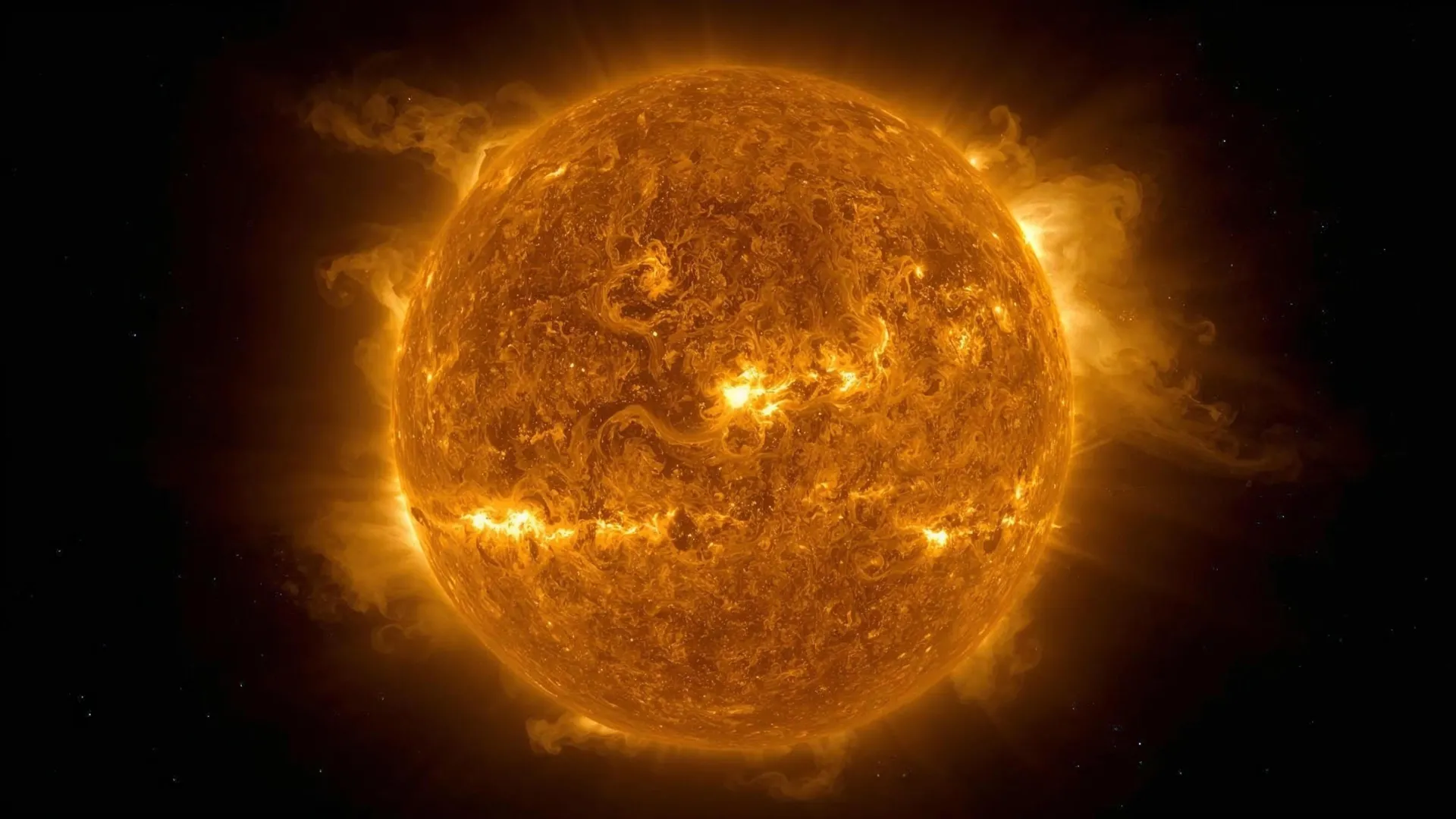
Astronomers at Uppsala University have calculated that the Sun contains 55 percent more silver than previous estimates suggested.
For years, scientists studying the composition of the solar system faced an enduring puzzle. While the Sun, planets, and primitive meteorites all condensed from the same primordial cloud of gas and dust approximately 4.6 billion years ago, measurements consistently suggested our star held significantly less silver than its ancient rocky counterparts. That mismatch forced researchers to question whether unknown physical processes had quietly altered the Sun’s elemental makeup over eons, or if standard analytical models were missing a critical piece of physics.
Instead, earlier scientific methods simply underestimated the abundance of the element due to limitations in how astronomers interpreted the Sun’s spectral data, according to research led by Uppsala University scientists.
Reading the Solar Fingerprint Through Advanced Spectroscopy
Determining what elements make up a star from millions of miles away requires careful examination of starlight. Hydrogen and helium account for roughly 98.5 percent of the Sun’s total mass, leaving heavier elements—including carbon, iron, and silver—to comprise a tiny fraction of the remaining 1.5 percent. Even in trace quantities, these elements provide invaluable clues about the chemical evolution of the Milky Way and the stellar explosions that forged heavy metals.
To measure these hidden components, researchers study sunlight through spectroscopy. Atoms in the solar atmosphere absorb light at specific wavelengths, creating dark absorption lines that act as a distinct chemical fingerprint. Silver presents a particularly difficult challenge because only two usable lines from neutral silver atoms can be observed at 328 and 338 nanometers. Both sit in the ultraviolet range, and the 328-nanometer line in particular is heavily crowded and blended with signals from other atomic species.
Simulating Non-Equilibrium Effects on the Swedish Supercomputer
Traditional calculations relied on simplified models that assumed local thermodynamic equilibrium across the solar atmosphere. Under those older assumptions, each small region of gas maintained uniform energy states without accounting for how intense radiation interacts dynamically with individual atoms.
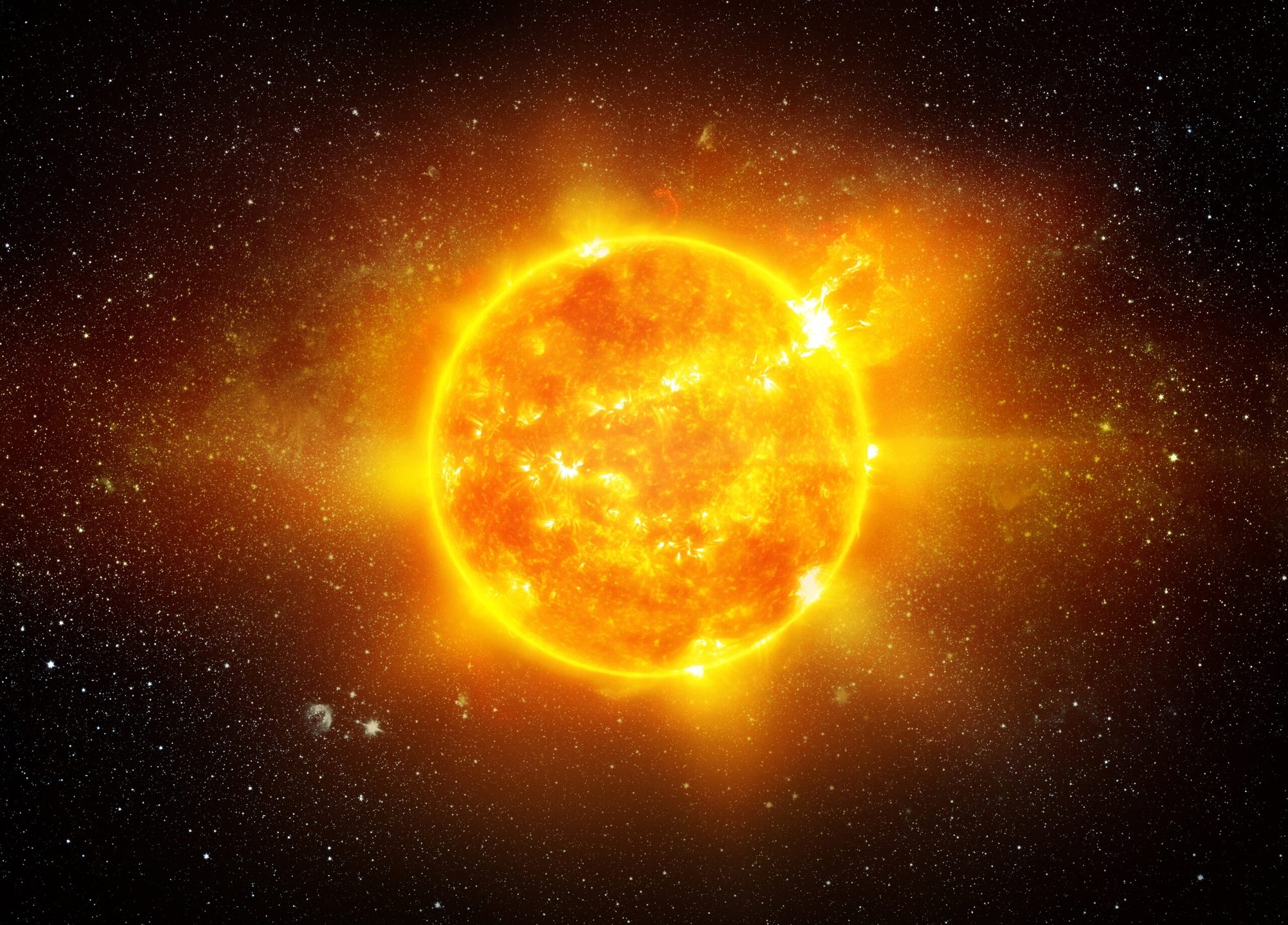
The team constructed the first detailed non-equilibrium model for neutral silver, incorporating 57 atomic energy levels alongside calculations for electron collisions and radiation absorption.
When modeled against a three-dimensional simulation of the Sun’s bubbling surface—complete with rising hot plasma and sinking cooler gas—the calculations revealed that radiation actively excites silver atoms from their lowest energy states. This process redistributes atoms across higher levels and weakens the resulting spectral lines. A weaker absorption line means that a higher total concentration of silver is required to produce the features observed in sunlight.
Aligning the Sun With Ancient Meteorites and Future Stellar Studies
The resulting 55 percent upward revision brings the Sun’s calculated silver inventory into much closer agreement with ancient CI chondrites. These primitive meteorites are treated by scientists as cosmic time capsules because they have remained chemically unaltered since the birth of the solar system.
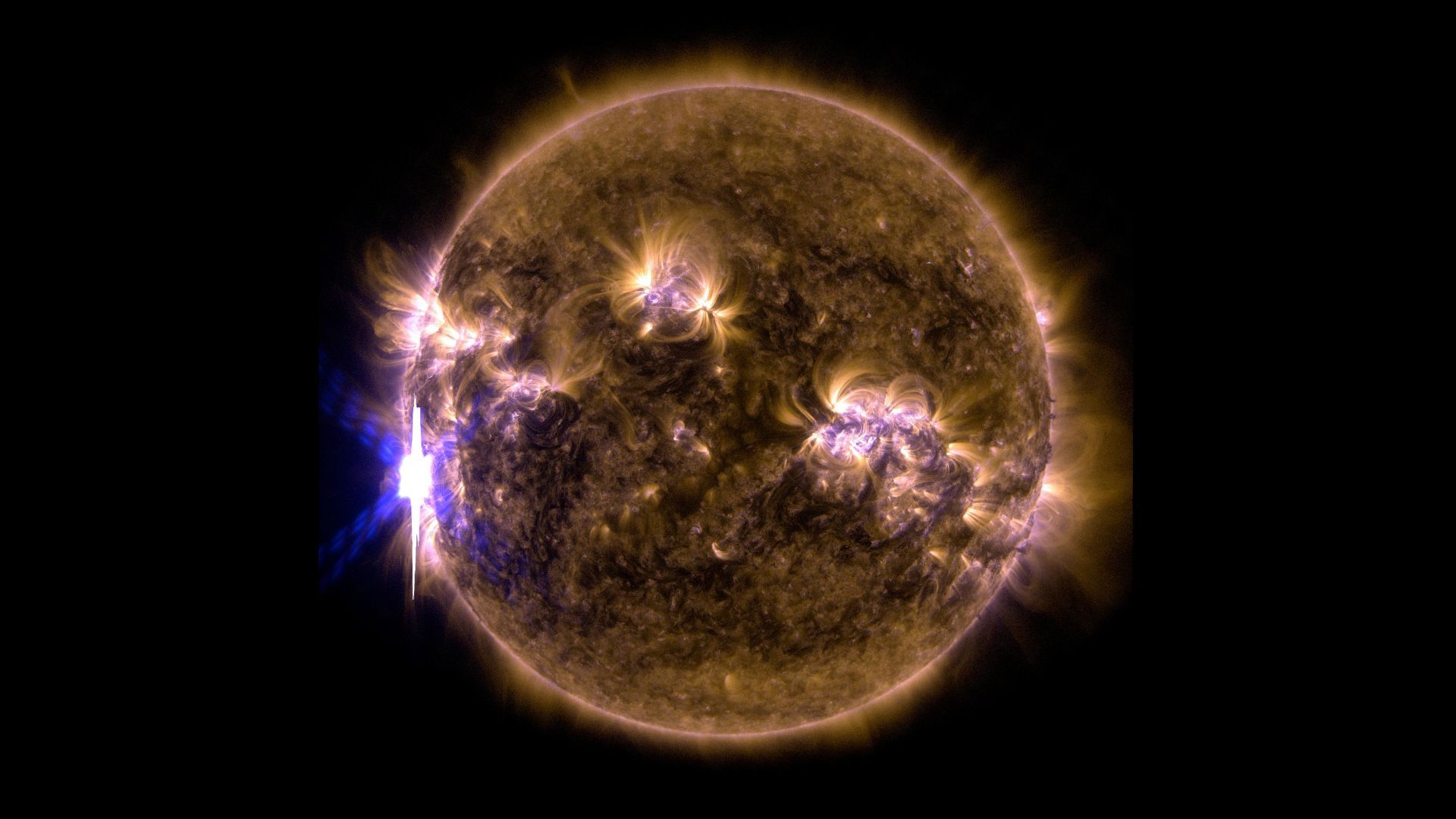
By accounting for these complex atomic interactions, scientists can now rule out extraordinary evolutionary theories that previously attempted to explain why the Sun appeared depleted of silver. The improved modeling techniques also open a new avenue for galactic research.
The research team plans to apply these same advanced simulation methods to other stellar bodies across the galaxy, using the Sun’s recalibrated chemical benchmark to trace the cosmic origins of heavy elements.

SpaceX Launches Final Three O3b mPOWER Satellites for SES
SpaceX successfully launched the final three O3b mPOWER satellites for SES on September 13, 2026, from Cape Canaveral...
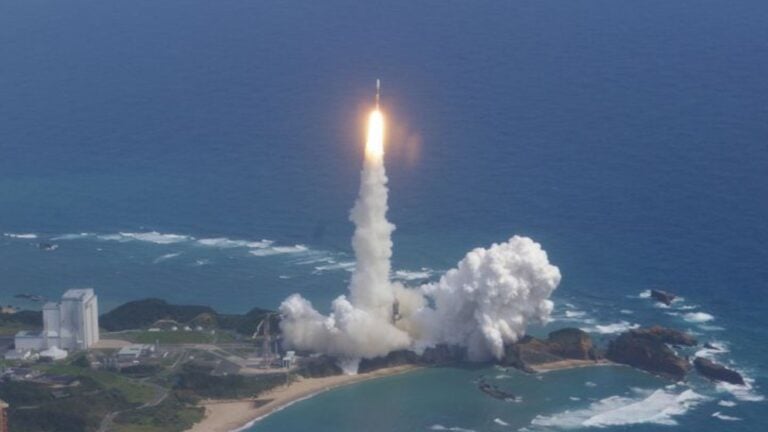
Japan Launches Kaguya Spacecraft to Map Moon in 2007
On September 13, 2007, Japan launched its advanced Kaguya spacecraft from the Tanegashima Space Centre aboard an H-IIA...

Astronomers Identify Eos, a Massive Molecular-Hydrogen Cloud Near the Sun
Astronomers have identified Eos, a massive molecular-hydrogen cloud located roughly 300 light-years away and spanning 40 full-Moon widths...
Researchers Find Diamond Melting Point Is Lower Than Previously Measured
Researchers zapping synthetic diamond plates with a powerful ultraviolet laser discovered the mineral's melting point is more than...