
Astronomers have identified Eos, a massive molecular-hydrogen cloud located roughly 300 light-years away and spanning 40 full-Moon widths across the sky. Discovered in 2025, the crescent-shaped structure largely escaped previous detection because conventional surveys rely on carbon monoxide to trace cold gas, and almost all of Eos is CO-dark.
How a 300-Light-Year Cloud Hid in Plain Sight
One of the nearest molecular clouds to the Sun managed to remain hidden across a patch of sky spanning approximately 20 degrees, a span roughly 40 times the apparent diameter of the full Moon. Discovered through a 2025 study in Nature Astronomy, the crescent-shaped structure was named Eos after the Greek goddess of dawn. According to discovery accounts from Rutgers University, the cloud’s oversight was not due to a tiny physical size or a lack of telescope resolution. Instead, the omission stems from how astronomers traditionally census interstellar material.
Molecular hydrogen, known chemically as H2, serves as the primary building block for stars and planetary systems in cold interstellar clouds. Yet cold H2 is notoriously difficult to detect directly. Because the two atoms in an H2 molecule are identical, the molecule lacks the electric dipole transitions required to produce bright rotational emission lines at the frigid temperatures found inside typical clouds, which often hover near 10 kelvin. The first excited state capable of producing radiation demands a temperature of about 511 kelvin, leaving the vast majority of interstellar hydrogen entirely silent in standard radio wavelengths.
The Limits of Carbon Monoxide as an Interstellar Proxy
To map cold molecular clouds across the Milky Way, researchers have long relied on a chemical shortcut. Carbon monoxide is vastly less abundant than molecular hydrogen, but it readily produces bright radio emission under cold conditions, making it the standard proxy for tracking star-forming gas. As explained in NASA accounts of Planck’s all-sky carbon monoxide map, astronomers routinely measure carbon monoxide brightness and apply a conversion factor to estimate the underlying mass of molecular hydrogen.
This method breaks down at the translucent outer edges of molecular clouds. Molecular hydrogen can protect itself from destructive ultraviolet photons through self-shielding before carbon monoxide becomes abundant enough to survive and glow visibly. This creates a substantial reservoir of gas that astronomers classify as CO-dark molecular gas.
Mass Estimates and the CO-Dark Reality of Eos
Within Eos, the disparity between total hydrogen and carbon monoxide tracing is stark. The discovery team calculated that Eos holds an H2 mass of approximately 3,400 times the mass of the Sun. When combining atomic gas and heavier elements, the total cloud mass reaches roughly 5,500 solar masses.
To put that scale in perspective, the carbon luminosity of a smaller nearby feature known as MBM 40 corresponds to only about 20 solar masses under standard conversion formulas, with plausible variations lifting that figure to roughly 40. If MBM 40 is physically associated with Eos, the CO-bright estimate represents only about 0.6 to 1.2 per cent of the massive cloud’s total molecular mass. That quantitative imbalance explains why conventional surveys missed the structure entirely until researchers looked for far-ultraviolet fluorescence from molecular hydrogen itself.
Mapping the Distance and Galactic Coordinates
Pinpointing the exact boundaries of a diffuse interstellar cloud spanning hundreds of light-years requires sophisticated spatial modeling. Three-dimensional dust maps trace the structure along specific sightlines, placing the near side of Eos at roughly 94 parsecs, or about 307 light-years from the Sun. Dust maps extend the feature out to approximately 130 parsecs, or about 424 light-years, meaning the frequently cited distance of 300 light-years represents a rounded measure to its closest boundary rather than a single fixed depth.
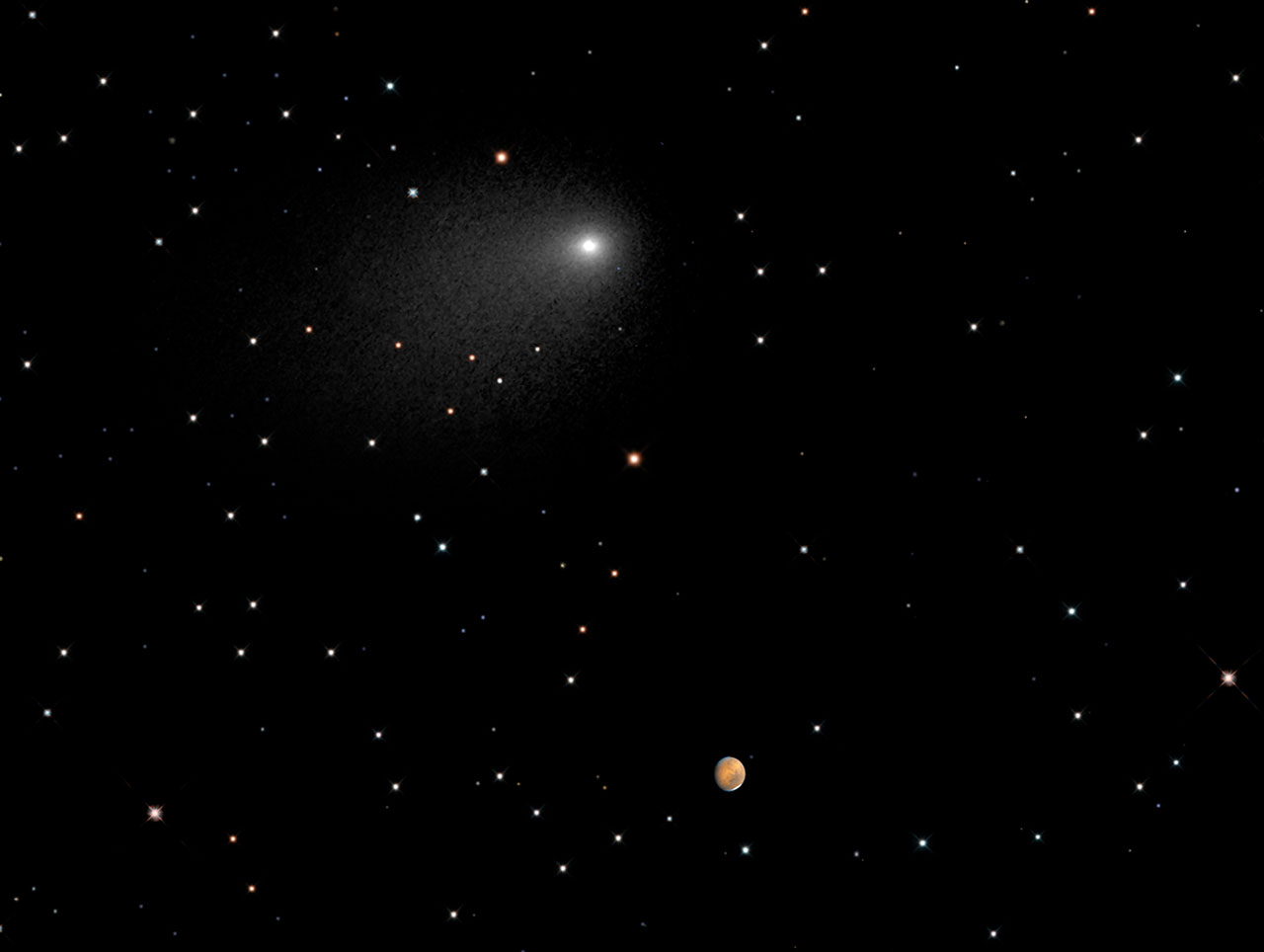
On the celestial sphere, the fluorescent gas complex occupies Galactic longitudes between 25 and 45 degrees and latitudes spanning 40 to 63 degrees. While its angular width of roughly 20 degrees gives it an immense footprint on the sky, the discovery team applied a physical radius of about 25 parsecs, or 82 light-years, for their internal structural models.
Broader Borderlands of the Solar Neighborhood
The discovery of Eos highlights how much remains unknown about the immediate interstellar environment surrounding our solar system. While regions like the distant Oort Cloud extend outward from 2,000 to as much as 100,000 astronomical units into the quiet borderlands where galactic tidal forces tugging on icy planetesimals dominate over solar gravity, local molecular clouds like Eos sit much closer to home.
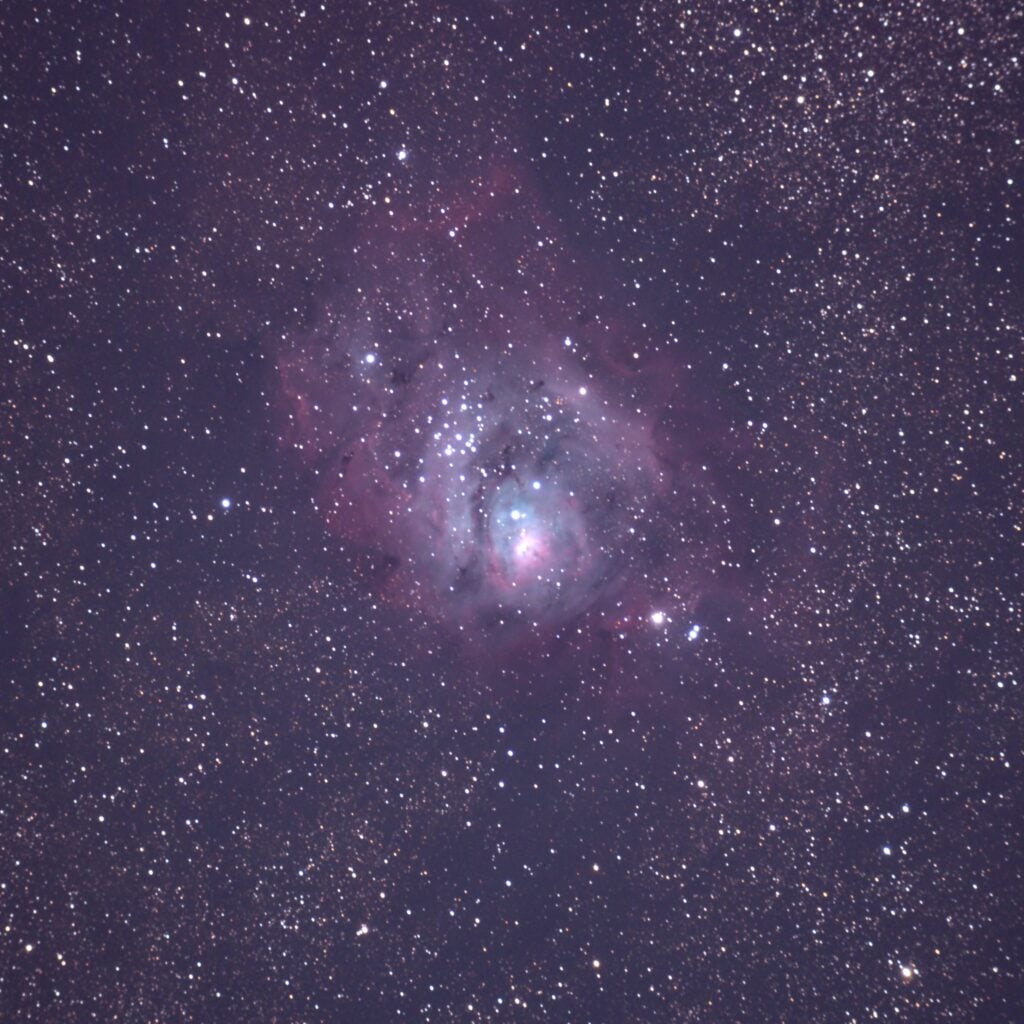
As astronomers continue refining ultraviolet and direct molecular hydrogen detection methods, structures that once hid behind invisible carbon-monoxide thresholds are slowly coming into focus, offering a clearer accounting of the raw material populating the stellar neighborhood.
Researchers Find Diamond Melting Point Is Lower Than Previously Measured
Researchers zapping synthetic diamond plates with a powerful ultraviolet laser discovered the mineral's melting point is more than...
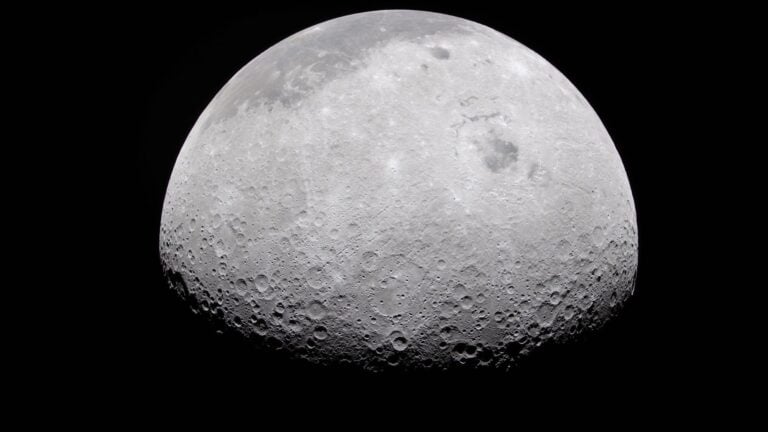
NASA and IBM Launch AI Model to Analyze 17 Years of Lunar Data
NASA and IBM released the NASA-IBM Lunar Foundation Model on Thursday, September 10.

Astronomers Release Unite Supernova Catalogue to Test Dark Energy Constant
Astronomers releasing a unified catalogue of 2,884 exploding stars have added fresh weight to signs that dark energy...

Kalimantan Forest Fires Caused by Human Activity, Not Coal Evaporation
Social media claims alleging Kalimantan forest fires are caused naturally by subterranean coal evaporation have been debunked by...