
July’s full Buck Moon reaches peak illumination on Wednesday, July 29, 2026, offering stargazers an amber moonrise alongside active meteor showers. While daytime hides the exact peak for North America, evening moonrises provide the most dramatic views, framed by the Moon illusion and nearby summer constellations.
Celestial calendars and astronomical calculations mark the arrival of midsummer’s most recognizable lunar display. Because that exact timing places the moon below the horizon for much of North America or squarely in daylight hours elsewhere, observers will find the best spectacles on the evenings immediately before and after the peak.
Coming just days after the anniversary of the historic Apollo 11 lunar landing, the event coincides with multiple active meteor streams. Yet the moon itself commands the night, shining brightly enough to wash out fainter shooting stars while creating prime conditions for unaided lunar geography observation.
Timing, Weather, and Where to Watch the Buck Moon Peak
For viewers in the UK, the moon peaks at 15:36 BST on July 29, with meteorological forecasts pointing toward favourable viewing conditions. Scotland, Wales, and Northern Ireland will experience slightly more variable cloud patterns, though eastern and northern Scottish districts retain solid chances of clear spells between showers.
In the Florida Panhandle and across wider North American latitudes, moonrise occurs after sunset—specifically at 8:03 p.m. To catch the most striking display, astronomers recommend finding an open area with an unobstructed view of the southeastern or eastern horizon. When the moon climbs just above the skyline, an optical phenomenon known as the economictimes.indiatimes.com makes it appear unusually large while Earth’s atmosphere scatters shorter blue wavelengths to leave a warm golden or amber hue.
Meteor Showers and Planetary Alignments Accompanying the Moon
Stargazers looking beyond the lunar disk will find a busy sky. Three meteor showers remain active during late July: the Southern Delta Aquarids, the Alpha Capricornids, and the Perseids.
“Meteor observing is often framed as a numbers game, but it doesn’t have to be, Even under the bright moonlight produced by the recently full Buck Moon, brighter meteors will still appear, just face away from the moon and, if possible, keep out behind a building or tree.”
Jamie Carter, senior contributor at Forbes
While the Delta Aquarids can produce roughly 25 meteors per hour from debris left by Comet 96P/Machholz, and the Alpha Capricornids generate about five per hour with occasional bright fireballs, the bright lunar light requires strategic viewing. Observers can block the glare using natural barriers or structures.
Origins of the Name and Visible Lunar Geography
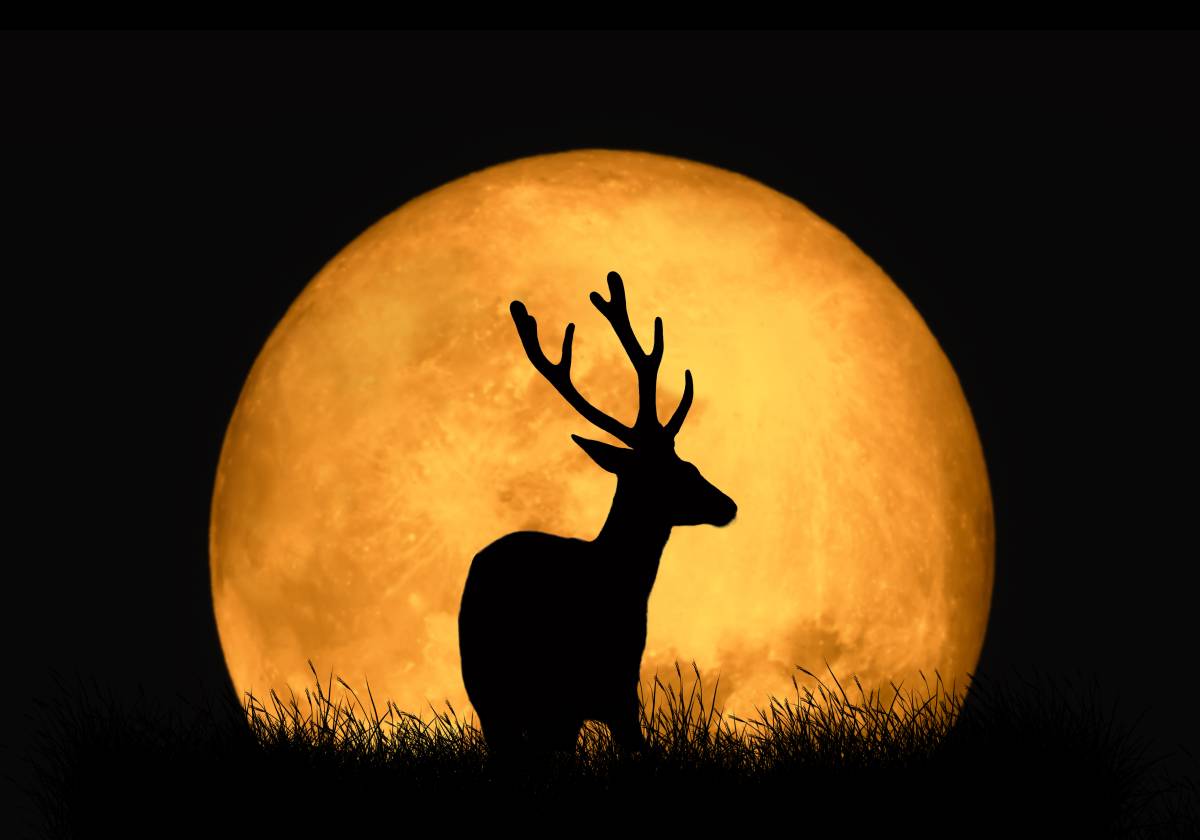
July marks the period when male deer rapidly grow velvet-covered antlers, expanding by up to two inches per week, according to data from usatoday.com noted in USA Today. Depending on cultural traditions, the month’s moon also carries titles such as the Thunder Moon, Hay Moon, Salmon Moon, and Raspberry Moon.

For observers examining the lunar surface without equipment, the full illumination highlights prominent geological features. According to NASA data outlined by <a href="https://www.usatoday.
- Aristarchus Plateau: A 25-mile-wide crater on the southern edge of the plateau that glows brightly during full illumination.
- Mare Imbrium: The Sea of Rains, a vast basaltic impact basin stretching 697 miles across the near side of the moon.
- Mare Serenitatis: The Sea of Serenity, split down the middle by bright rays of material blasted outward from the distant Tycho crater.
Binoculars or telescopes expand visible features to between 23 and 40 locations, including the Clavius Crater, the Alps Mountains, and historical Apollo landing sites.
The full illumination of the lunar surface from July's full moon reveals prominent geological features, including mountains, craters, and vast, dark plains, visible to the naked eye under ideal viewing conditions.Related reading

SpaceX Launches Final Three O3b mPOWER Satellites for SES
SpaceX successfully launched the final three O3b mPOWER satellites for SES on September 13, 2026, from Cape Canaveral...

Japan Launches Kaguya Spacecraft to Map Moon in 2007
On September 13, 2007, Japan launched its advanced Kaguya spacecraft from the Tanegashima Space Centre aboard an H-IIA...

Astronomers Identify Eos, a Massive Molecular-Hydrogen Cloud Near the Sun
Astronomers have identified Eos, a massive molecular-hydrogen cloud located roughly 300 light-years away and spanning 40 full-Moon widths...
Researchers Find Diamond Melting Point Is Lower Than Previously Measured
Researchers zapping synthetic diamond plates with a powerful ultraviolet laser discovered the mineral's melting point is more than...