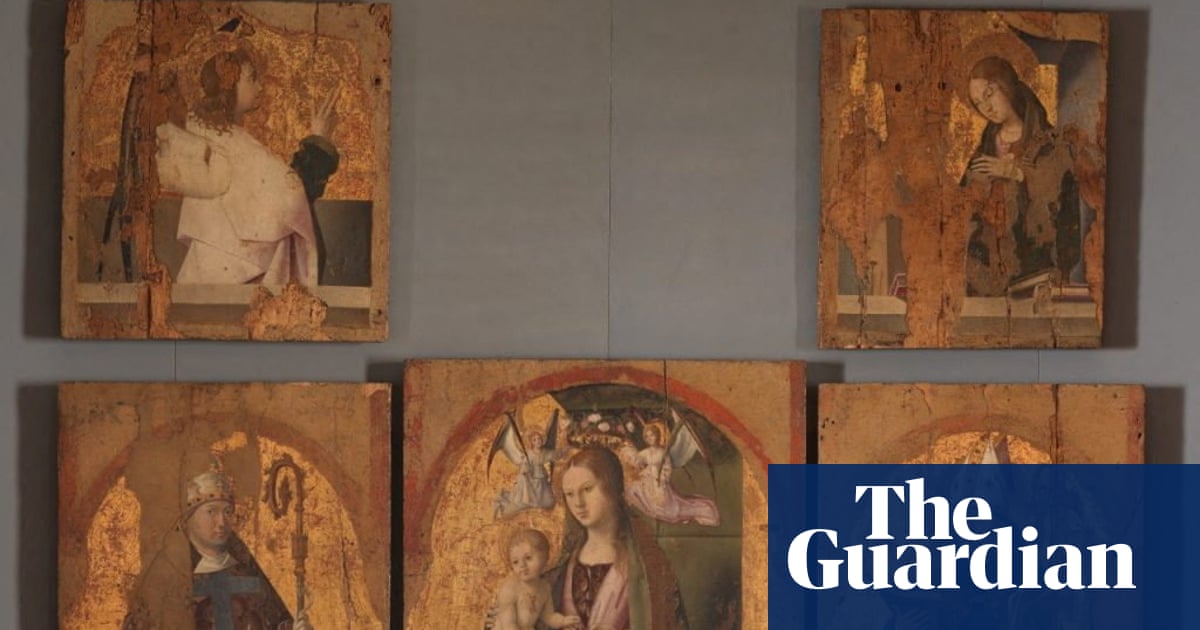
Four 15th-century Renaissance masterpieces attributed to Antonello da Messina were stolen on Saturday evening, August 15, from the Regional Museum of Messina in Sicily. Italian culture officials and local authorities confirmed that the overnight heist, targeting wood panels of extraordinary value, occurred during a major national holiday.
The Heist During the Ferragosto Holiday in Messina
Thieves targeted the Regional Museum of Messina, commonly known as MuMe, on Saturday evening while city attention was heavily drawn to La Vara, a massive religious festival taking place on August 15 as Italy observed the Ferragosto national holiday. Bypassing sophisticated security and alarm systems, the intruders broke into an armoured display case and made off with four wood panels created by the early Renaissance master Antonello da Messina.
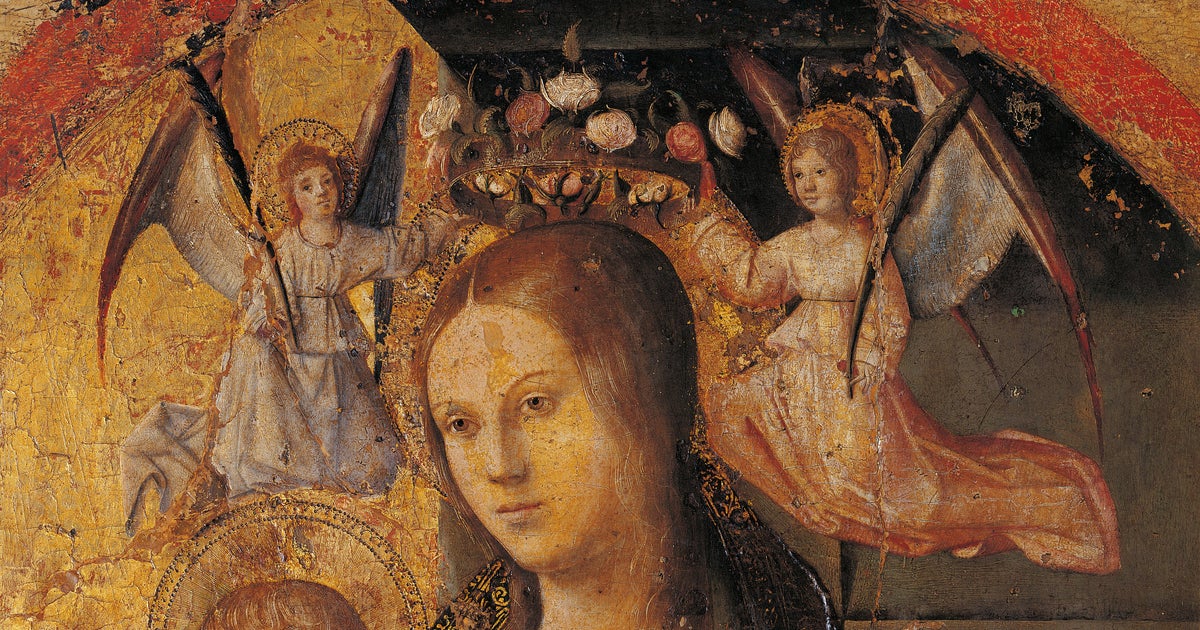
The stolen haul includes three of the five surviving panels that comprise the Polyptych of San Gregorio, originally painted in 1473 for the monastery of Santa Maria. That altarpiece holds immense local significance, as it was the only work by the Sicilian painter that had never left his home city, having survived both five centuries of history and the catastrophic 7.1-magnitude earthquake that struck Messina on December 28, 1908. A fourth item, a double-sided panel depicting the Virgin and Child with a Franciscan monk on one side and Christ on the other, was also removed from a secure display case. That piece had previously belonged to the Wilhelm Soldan collection before the Sicilian regional government purchased it through Christie’s in 2003.
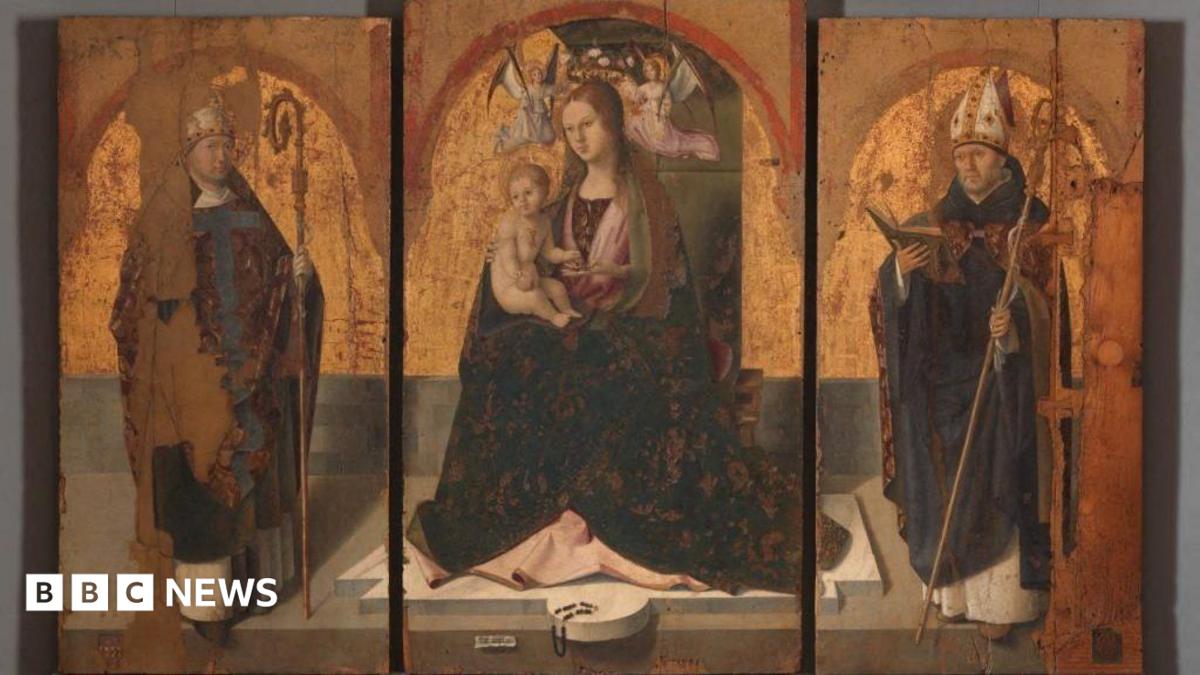
Although six paintings were initially taken, two of the panels were inexplicably abandoned on a low wall just outside the museum grounds. Museum director Marisa Mercurio noted that the theft occurred just before 10 p.m. local time on Saturday.
“We are devastated by what happened. They were two of Antonello da Messina’s most important and best-known works. It is a tremendous loss for the museum, the city, the community and the art world.”
Marisa Mercurio, Director of the Regional Museum of Messina, via ANSA and LaPresse
Official Outrage and the Investigation Into the Black Market
The cultural loss drew immediate condemnation from top Italian officials. Italy’s Minister of Culture, Alessandro Giuli, confirmed the theft of the works, describing the pieces as possessing extraordinary value
for the nation’s heritage and expressing his dismay and regret. Federico Basile, the mayor of Messina, labeled the incident a heinous criminal act
and voiced deep outrage that the theft unfolded during traditional celebrations honoring the Virgin Mary.
Prosecutors in Messina have launched a formal criminal investigation. Police sources noted that while the museum was equipped with multiple surveillance cameras and advanced alarms, investigators are actively examining whether the operation was an inside job or carried out by professional thieves working on commission for an art dealer. According to the state news agency Ansa, early investigative work is operating on the initial suspicion that the paintings were targeted specifically for the illicit art market.
Lynda Albertson, chief executive of the ARCA art crimes research association, explained that the stolen panels are instantly recognizable, which severely limits the thieves’ ability to offload them through legitimate auction houses or galleries.
“Stealing an Antonello may be far easier than selling one. If these are ordinary thieves, they will soon discover that, to their cost.”
Lynda Albertson, Chief Executive of ARCA art crimes research association, via La Repubblica and LaPresse
A Brutal Blow to Sicily’s Artistic Heritage and Recent Market Surge
Just months prior, in March, the Italian government acquired a rare devotional painting titled Ecce Homo by Antonello da Messina for $14.9 million at a Sotheby’s auction in New York. That high-profile acquisition had significantly elevated the global profile of the early Renaissance master, whose pioneering use of Flemish oil-painting techniques brought unprecedented softness and detail to Italian art.
Valentina Certo, an art historian affiliated with the University of Messina, emphasized that the cultural blow cannot be measured solely in financial terms. She noted that the stolen panels survived the devastating 1908 earthquake that leveled the city and killed half its population.
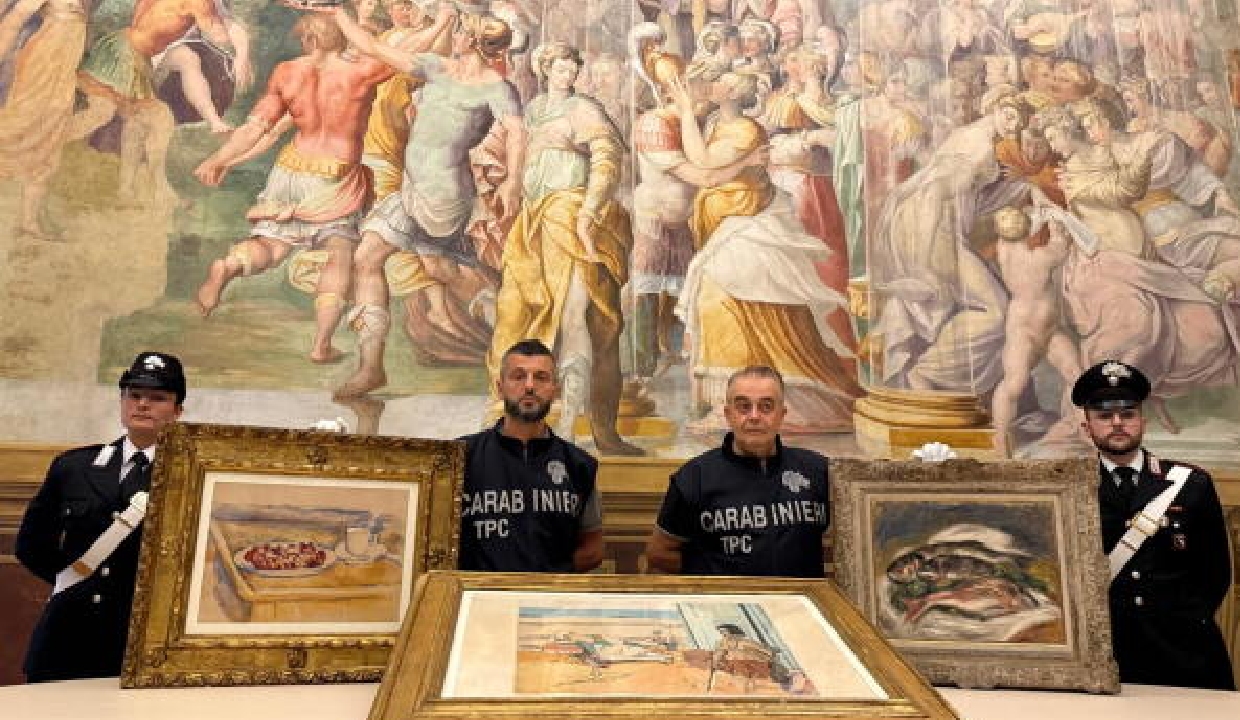
The museum remained closed while Carabinieri investigators collected physical evidence from the scene. The incident also follows closely on the heels of another major European art recovery: Italian police announced the recovery of three stolen artworks by Paul Cézanne, Pierre-Auguste Renoir, and Henri Matisse valued at roughly $11.5 million, following a separate raid in Parma province that resulted in five detentions.
Worth a look
Spider-Man: Brand New Day Hits $2 Billion Globally and Leads Box Office
Spider-Man Dominates North America While The Odyssey Crosses Billion-Dollar Milestones The dog days of August proved unusually lucrative...

Anne Hathaway and Bob Iger Named 2026 Disney Legends Honorees
Entertainment industry leaders, actors, and creators including Anne Hathaway, Bob Iger, and Dwayne Johnson will be inducted as...

Mason Thames and McKenna Grace Star in Punk-Rock Comedy Nimrods
Actors Mason Thames and McKenna Grace are starring as romantic opposites in the punk-rock comedy Nimrods, hitting theaters...

WWE Files Trademark Application for Potential Ring Name Andi Summers
WWE filed a trademark application for the potential ring name Andi Summers with the United States Patent and...