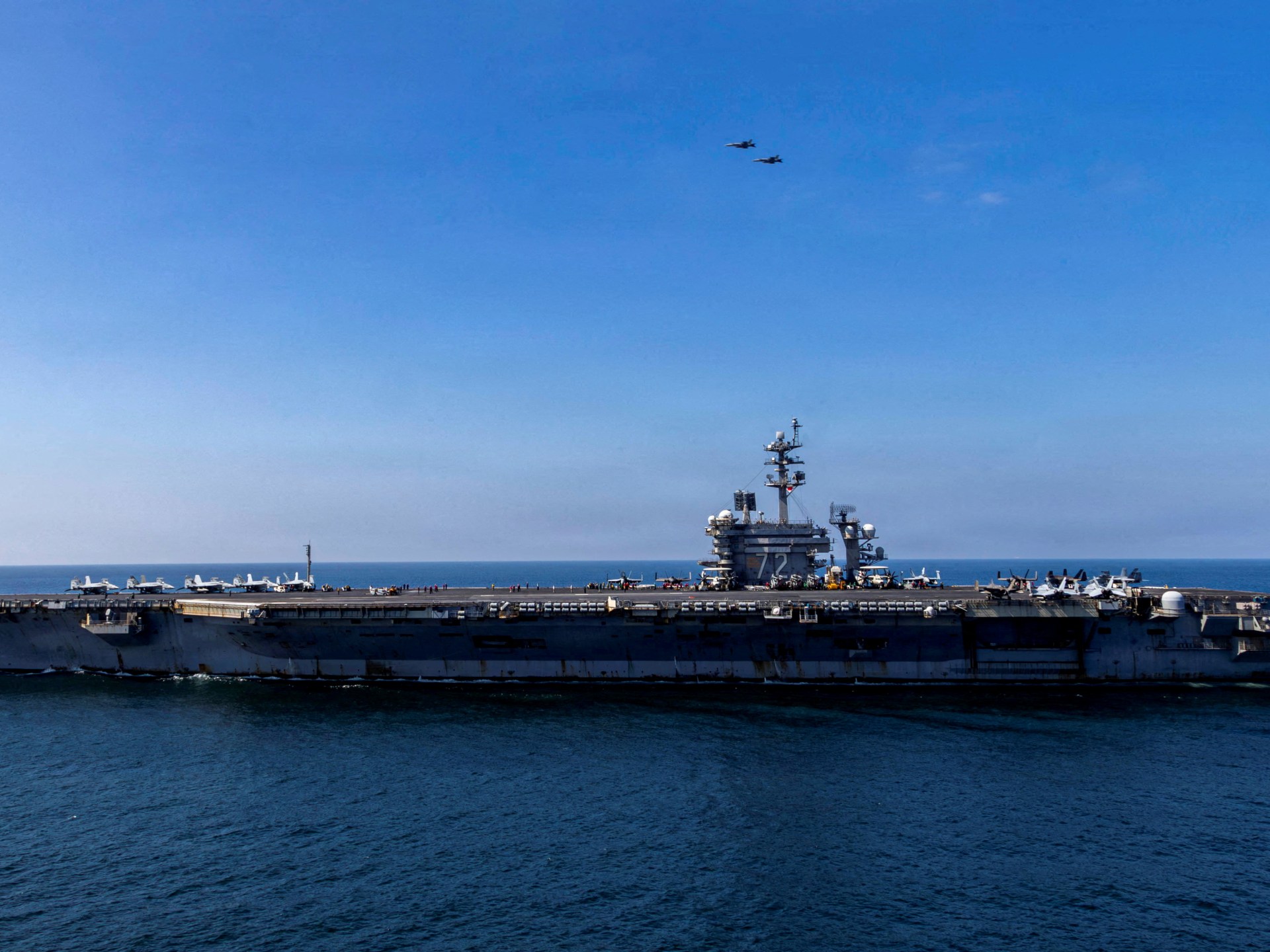
More than 5,000 staff members have been on board the flagship aircraft carrier, which has been conducting maritime security and blockade operations around the Strait of Hormuz. The vessel set sail on November 21, 2025, from its homeport of San Diego for what was initially planned as an extended deployment to the Asia-Pacific region and the Middle East. Since that departure, the ship has made just a single-day port stop at Naval Base Guam from December 11–12, a lack of shore leave that military experts describe as a major issue for a vessel of its size and complexity.
Extended Deployment and Crew Crisis on the USS Abraham Lincoln
Family members of military personnel on board told outlets including the Navy Times and Stars and Stripes that declining mental health, severe morale drops, and cases of suicidal ideation have plagued the crew. Annabelle Loma, the wife of a sailor on board, spoke on record with the Navy Times to describe her husband’s attempt to jump overboard during severe burnout. Beyond psychological strain, relatives reported food shortages, broken toilets, and faulty showers contributing to unsanitary conditions.
Political Fallout and Leadership Disagreements
The reports have generated urgent questions from lawmakers on both sides of the aisle regarding accountability and crew welfare. U.S. President Donald Trump and Defense Secretary Pete Hegseth have defended the open-ended mission, with Hegseth dismissing the mental health reports as completely misrepresented
. When asked by reporters whether the carrier had been at sea for too long, Trump answered, No, not nearly long enough.
He praised the crew’s service and asserted via social media that the ship maintains the lowest number of mental health-related cases among the Navy’s 11 active aircraft carriers.
The Lincoln’s mission, originally scheduled to conclude in May, has faced repeated extensions to support operations against Iran. Relief is finally approaching: another carrier, the USS George Washington, has been rerouted from the Pacific and is expected to arrive in the Gulf within a week to take over duties from the Lincoln, according to AP News.
Strategic Vacuum in the Western Pacific
While the absence of a carrier in the region may be temporary if the Navy deploys a replacement within months, analysts warn it signals a retreat from the Asia-Pacific focus.
Greg Poling, director of the Southeast Asia Program at the Center for Strategic and International Studies, noted that the administration previously declared the Pacific to be the nation’s most important strategic priority behind the Western Hemisphere, yet current operations are doing the exact opposite
by entrenching involvement in the Middle East. Poling added that regional allies feel unsettled by the administration’s unpredictability, while Beijing is quite happy with U.S. distraction, with the frustration of U.S. allies and partners.
Bryan Clark, a former Navy submariner and defense analyst at the Hudson Institute, observed that China views the U.S. military presence as an obstacle to its regional ambitions, particularly concerning Taiwan. Without a carrier present, Beijing has an opening to project strength.
They’re using this as part of the narrative to demonstrate to the Philippines, to Japan, to Indonesia and others that the U.S.
Bryan Clark, defense analyst at the Hudson Institute
Recent Chinese maneuvers include naval exercises with Indonesia, a guided-missile destroyer live-fire drill near Japan’s Okinotori island, and military drills near the contested Scarborough Shoal in the South China Sea.
Historical Context of Lengthy Carrier Deployments
The Lincoln’s uninterrupted span at sea of more than 240 days places it among the longest continuous modern deployments, though it falls short of the post-Vietnam record set by the USS Gerald R. Ford. That mission lasted 326 days, beginning in June 2025 and encompassing NATO Mediterranean exercises, operations supporting the capture of Venezuelan President Nicolás Maduro, and Red Sea blockades during the U.S.-Israel war on Iran. The Ford itself suffered technical hurdles during that stretch, including an onboard laundry fire that left hundreds of sailors without sleeping quarters and required a temporary return to the Mediterranean for repairs.
During the Vietnam War, Gulf of Tonkin deployments ran even longer under intense combat schedules: the USS Midway logged 332 days, the USS Coral Sea operated for 329 days, and the USS Saratoga logged 308 days. By comparison, international carriers have recorded shorter missions, such as Russia’s five-month deployment of the Admiral Kuznetsov in 2016 and the United Kingdom’s seven-month deployment of the HMS Queen Elizabeth in 2021, both of which faced significant technical and engineering breakdowns.

Trump Orders Pentagon to Scale Back S. Korea Military Drills
U.S. President Donald Trump ordered the Pentagon on Sunday to substantially reduce planned joint military exercises with South...

Hakainde Hichilema Leads Zambia Election Results for Second Term
Zambian President Hakainde Hichilema maintains a lead in national election results published on Sunday, August 16, 2026, putting...

Gaza Residents Dig by Hand as Heavy Machinery Scarcity Hinders Body Recovery
Operating two excavators in Gaza City, Samir Sabra and his son Uday struggle against soaring fuel costs and...

Operation Ubuntu Marches Across South African Cities to Demand End to Xenophobia
Hundreds of people took to the streets in cities across South Africa, including Johannesburg, Pretoria, Cape Town, Durban,...