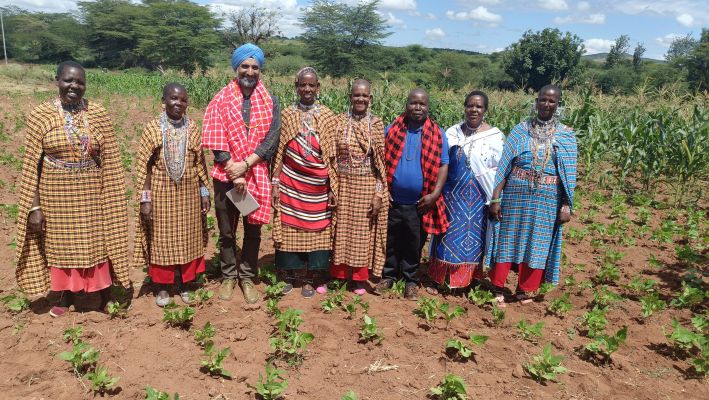
Inaarok Lukuny Comprehensive School in Kenya’s Kajiado County has seen its student enrollment more than double to more than 525 in a year, driven by a school farm initiative that addresses food insecurity and boosts education.
School Farms Transform Education and Nutrition
The initiative, part of a project led by the Kenya Agricultural and Livestock Research Organisation (KALRO) and partners, includes climate-smart practices like rainwater harvesting and drought-resistant crops. At Inaarok Lukuny, once-barren land now hosts a four-acre school farm. Today, the farm includes two acres of intercropped maize and beans, alongside plots of beans, green grams and African leafy vegetables, which supplement school meals and introduce students to new foods. “Most of us had never eaten cowpea, but I must confess it was very sweet,” said a student, while another noted, “The vegetables have improved the taste of our food.”
The farm has also strengthened community ties. Parents, many of whom are pastoralists, contribute labor and livestock manure, while the school’s feeding program encourages families to prioritize education. “Education is not always a priority, especially during droughts,” explained Mr. Mukiri, Chairman of the School Board. “However, the changes we have seen through the school farm and feeding programme have encouraged more families to send their children to school.”
The project is part of a broader effort to scale climate-smart agriculture. In May 2026, KALRO launched Kenya’s Community of Policy and Practice (CoPP) on school feeding and regenerative agriculture, aiming to share lessons from pilot farms across the country’s arid and semi-arid lands (ASALs). “CoPPs have become a catalyst for food system transformation across Africa because they create ‘agents of change’ who have a common vision,” said Dr. Samrat Singh of Imperial College London.
Research Highlights Innovation’s Impact
A study found that socio-technical innovation bundles (STIBs) significantly improve food security among smallholder farmers in Kenya’s drylands. Using data from 626 farmers in Makueni County, the research showed that technical innovations—such as drought-tolerant crops and water conservation techniques—reduced the likelihood of moderate or severe food insecurity by 3.4 percentage points. Awareness of STIBs is enhanced by education, participation in farmer groups, and access to climate information, the study noted.
The findings underscore the role of community networks in overcoming challenges like limited access to agricultural services and climate shocks. Adoption is more likely among older farmers and female-headed households, but constrained by larger household sizes and distance from roads, the report said. It recommended strengthening extension systems, improving rural infrastructure, and integrating credit with innovation support to maximize STIBs’ impact.
Drought Intensifies Challenges in Turkana
While the school farm initiative offers hope, the broader context of Kenya’s drylands remains dire. A report highlights the devastation of a drought that began in 2016. Atiir Lokwawi, a mother in Turkana County, described the crisis: The drought has become too harsh. Animals are dying in huge numbers. We restock, but before we stabilise, drought comes and takes away our investment.

The drought has pushed malnutrition rates in Turkana North sub-county to 30.7%, more than double the emergency threshold. With livestock losses and dwindling water supplies, education has become a sort of insurance policy, said Lokwawi, who sends only one of her seven children to school. Educating our children is also another way to earn money—animals alone cannot help us survive.
Christine Tukei, a teacher at a mobile school in Kalokutanyang, emphasized the need for adaptive education. “It needs to add value and incorporate their lifestyle,” she said, noting that classes now include lessons on early destocking, meat preservation, and health. We discuss the importance of investing in education and alternative businesses, she added.
Community Networks as a Lifeline
The Mashambani Women’s Group, a cooperative in Kajiado County, has adopted practices from the school farm, including tied ridges for water conservation and fruit tree grafting. “Group members have embraced dairy farming since they now understand how to produce silage,” said Grace Martine, Vice Chairperson of the Women’s Group. These innovations are spreading beyond the school, with local leaders like local chief Stephen Malei noting the broader impact.
However, challenges persist. Up to 3.5 million people were expected to need food assistance in August, up from 2.6 million in February. With droughts becoming more frequent, the success of initiatives like Inaarok Lukuny’s school farm offers a model for resilience—but only if scaled and supported.
Find more reporting in our News section.
Worth a look

Quntis Monitor Light Bar Glow Features RGB LEDs and Ultrawide Support
The Quntis Monitor Light Bar Glow introduces a 20.1-inch metallic gray lighting system featuring an 88-front LED task...

Police Hunt Roommate After Waitress Jovia Namuwulya Murdered in Bukoto
Police in Kampala are investigating the murder of 22-year-old waitress and TikTok content creator Jovia Namuwulya, whose body...
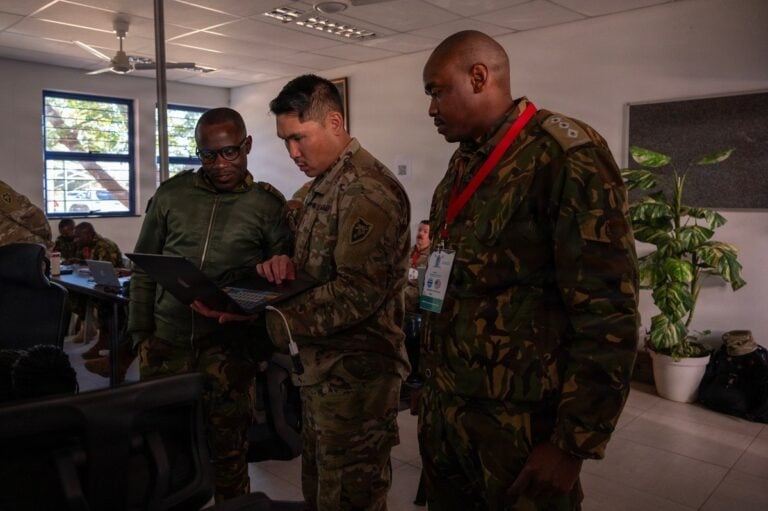
US and Botswana Forces Enhance Planning During Exercise Southern Accord 2026
Exercise Southern Accord 2026 concluded on August 15 at Gaborone Technical College in Botswana, uniting military personnel from...

China Recalls Millions of Teslas Over Flush Door Handles
Minimalist electronic door latches and flush exterior handles have defined the modern electric vehicle aesthetic since Tesla popularized...