
CRL to Operate Without Full-Day Maintenance for Three Years
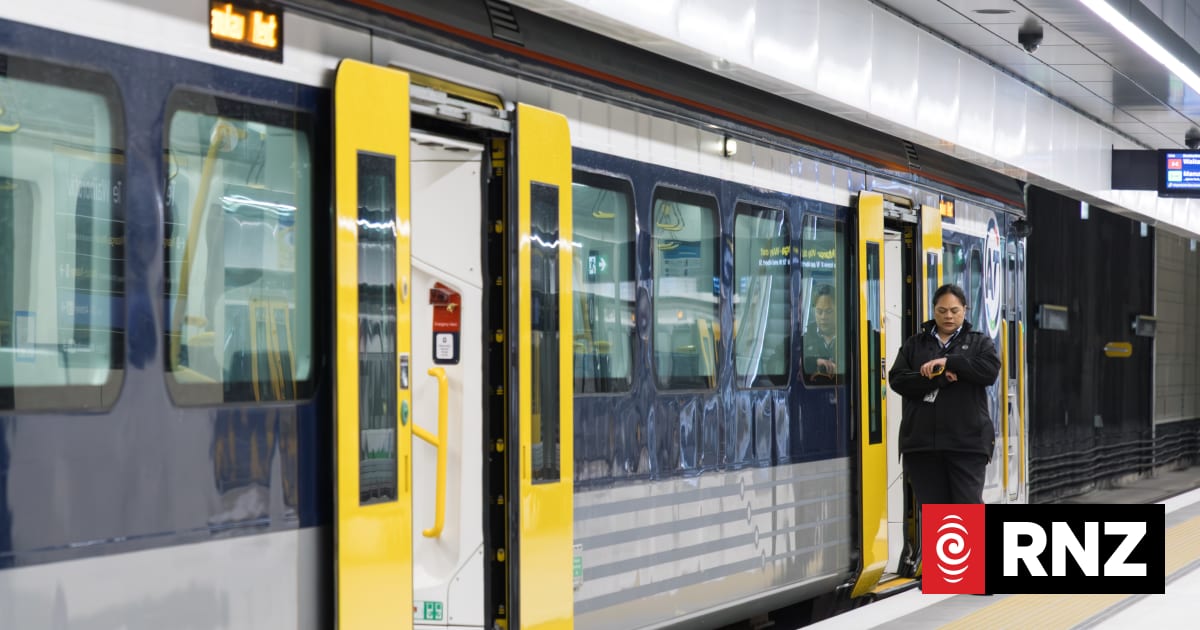
Transport officials have confirmed that Auckland’s $5.5 billion City Rail Link (CRL) will not require full-day maintenance closures for at least three years after its opening, according to statements from KiwiRail and Auckland Transport. KiwiRail chief metros officer Bevan Assink stated that the newly constructed track in the CRL is “in strong enough shape” to avoid major interventions for “something in the order of sort of three years.” Routine maintenance, including rail grinding and inspections, will continue, but no large-scale shutdowns are planned. Assink emphasized that the network’s design and recent upgrades make prolonged full-day closures unnecessary, noting, “There’s no reason that I can perceive for us to close it for maintenance” in 2026 or 2027, assuming no unforeseen issues arise.
Reduced Timetable to Transition to Full Service in Six Months

The CRL will open with a reduced “transitional” timetable, gradually scaling up to full service within six months. Auckland Transport chief executive Stacey van der Putten confirmed the phased approach, stating that the network will build toward full capacity as staff and systems “gain confidence.” The initial timetable, adjusted after congestion issues during January testing, will feature uneven frequencies across lines. Auckland One Rail operations director Louise Pengelly explained that the slower start aims to ensure safety and reliability before increasing train frequency. “Once we see that timetable working safely and reliably, we’ll increase the frequency,” Pengelly said. The full-service goal includes 14 trains per hour through the tunnel, with outer routes running once every ten minutes initially.
Final Testing and Matariki Closure as Last Major Hurdle
The CRL’s final major test—a full-scale dress rehearsal—closed the entire Auckland rail network to the public, simulating the new timetable, stations, and systems. This exercise, which occurred ahead of the four-day Matariki weekend closure, marked the last planned full-network shutdown before the CRL’s opening. Officials described the rehearsal as a critical step in validating safety and operational protocols. Auckland Transport’s van der Putten noted that the project is nearing completion of its emergency and safety testing program, which included scenarios such as tunnel train failures, fires, and evacuations. “We’re making good progress through our comprehensive emergency and safety testing programme,” said AT group manager for rail services Mark Lambert, who confirmed only a few exercises remained. The Matariki closure, scheduled for late July, will serve as the final preparatory step before the CRL opens.
Maintenance Shifts and Public Expectations
The CRL’s maintenance strategy reflects a shift from the frequent full-day and weekend track shutdowns that have plagued Auckland commuters for years. Assink acknowledged the public’s frustration but highlighted the network’s transformation from a 19th-century freight system to a modern metro infrastructure. “We’ve really had to lift the whole standard… to cope with a modern metro system,” he said. While small, routine closures will continue—such as nightly weekday work windows and larger Sunday maintenance slots—full-network shutdowns are now deemed obsolete. This change aligns with a February commitment by KiwiRail to end “full network shutdowns” after the five-year rail rebuild program. However, some maintenance will still occur during the Christmas holidays, though officials described disruptions as “really coming down” in the future.
Uncertain Opening Date, Final Steps Underway
Despite ongoing preparations, the exact opening date for the CRL remains unspecified. Officials expect it to launch in the second half of 2026, with the earliest feasible dates in mid-August. Van der Putten stated that a formal announcement will follow the completion of safety certifications involving the New Zealand Transport Agency (NZTA). “We’ll then provide a recommendation, there’ll be an announcement on opening, and that’ll give a six-week timeline for the doors to open to the general public,” she said. The project’s timeline hinges on final tests, including safety case approvals and emergency response drills. While no specific date was shared, van der Putten suggested the public would gain clarity “next week.” Until then, the Karanga-a-Hape station—home to New Zealand’s longest escalator—remains closed to commuters, awaiting its inaugural passengers.
Find more reporting in our News section.

Worth a look

Abiy Ahmed Sworn In as Prime Minister With Focus on Red Sea Access
Prime Minister Abiy Ahmed was sworn into a new five-year term on Monday, October 5, 2026, following his...
Pope Leo XIV Rejects Death Penalty as Attack on Human Dignity
Pope Leo XIV has rejected the death penalty as an attack on human dignity, posting on X that...

SpaceX Launches 21 U.S. Space Force Satellites After Delay
Following a five-day delay from an earlier countdown abort, a SpaceX Falcon 9 rocket successfully launched 21 data...

Queen Camilla Recalls Secret Teenage Reading of Lady Chatterley’s Lover
Queen Camilla has revealed she secretly read Lady Chatterley's Lover under her pillow by torchlight as a teenager...