An HIV-1-positive patient stable on dolutegravir for five years developed pruritic erythematous papules and target lesions on the face within three days of switching to atazanavir/ritonavir due to a supply chain issue, highlighting an uncommon adverse drug reaction.
When medication supply chain disruptions force a sudden antiretroviral substitution, clinicians must navigate a complex landscape of potential adverse events. For one patient with HIV-1, a routine regimen change introduced an unexpected dermatological complication that underscores the delicate balance of managing long-term viral suppression against unexpected pharmacological reactions.
Regimen Substitution and the Onset of Erythema Multiforme
The patient, a 40-year-old woman, had maintained sustained virologic suppression while receiving a stable antiretroviral regimen containing tenofovir, lamivudine, and dolutegravir over five years. Testing confirmed no hepatitis B or C co-infection and a baseline HIV-1 RNA viral load below 20 copies per milliliter. However, unforeseen medication supply issues interrupted her access to dolutegravir, prompting a substitution to atazanavir/ritonavir at a once-daily dose of 300 milligrams and 100 milligrams.
The clinical consequences appeared swiftly. Just three days after initiating the substitute protease inhibitor combination, the patient developed pruritic erythematous papules and plaques across her face, accompanied by sparse lesions on her extremities. Medical examination revealed characteristic target lesions in the left nasolabial fold and inferior to the left lower eyelid, alongside a hemorrhagic crust on her lower lip. She reported no history of fever, preceding illness, herpes labialis, or other clinical infections, and doctors observed no widespread epidermal detachment or ocular involvement.
Clinical Findings and Diagnostic Evaluation
Laboratory investigations conducted during the evaluation showed a white blood cell count of 4,500 per cubic millimeter, falling within the reference range of 4,000 to 11,000. Neutrophils registered at 56 percent, while platelets stood at 154 x 1,000 per cubic centimeter. Serum bilirubin, creatinine, and alanine aminotransferase levels remained entirely normal at 0.70 milligrams per deciliter, 0.8 milligrams per deciliter, and 35 units per liter, respectively. The only notable laboratory abnormality was mild eosinophilia at nine percent against a normal range of two to six percent.
Based on the clinical morphology, the appearance of distinct target lesions, and the tight temporal association with the drug switch, clinicians diagnosed erythema multiforme. The Naranjo probability score applied to the case indicated a probable adverse drug reaction. While atazanavir is generally well tolerated—with characteristic side effects typically limited to indirect hyperbilirubinemia, jaundice, and mild cutaneous rashes occurring in one to six percent of patients—clinically documented cases of erythema multiforme remain uncommon.
Cellular Proliferation and Long-Term Preadipocyte Effects
Ritonavir has long been linked to HIV-associated lipodystrophy through reductions in preadipocyte differentiation and adiponectin secretion, often inducing clinical metabolic complications. In contrast, atazanavir is typically associated with fewer short-term metabolic abnormalities and can improve lipid profiles in patients previously treated with other protease inhibitors.
Cellular research comparing the two agents reveals a more nuanced picture of long-term exposure. Laboratory studies on human primary subcutaneous preadipocytes demonstrate that atazanavir at therapeutic concentrations does not affect differentiation or adiponectin secretion. Nevertheless, experimental data show that atazanavir does exert inhibitory effects on preadipocyte proliferation. Because precursor cells must undergo clonal expansion before differentiation, suppressing replication introduces the potential for adverse effects during prolonged, chronic use.
Recognizing and Managing Cutaneous Adverse Reactions
The prescribing information for atazanavir explicitly lists severe cutaneous reactions, including erythema multiforme, Stevens-Johnson syndrome, and toxic epidermal necrolysis, among its known risks. Although the patient presented without systemic symptoms or epidermal detachment, the emergence of a hemorrhagic crust on her lower lip signaled limited mucocutaneous involvement.
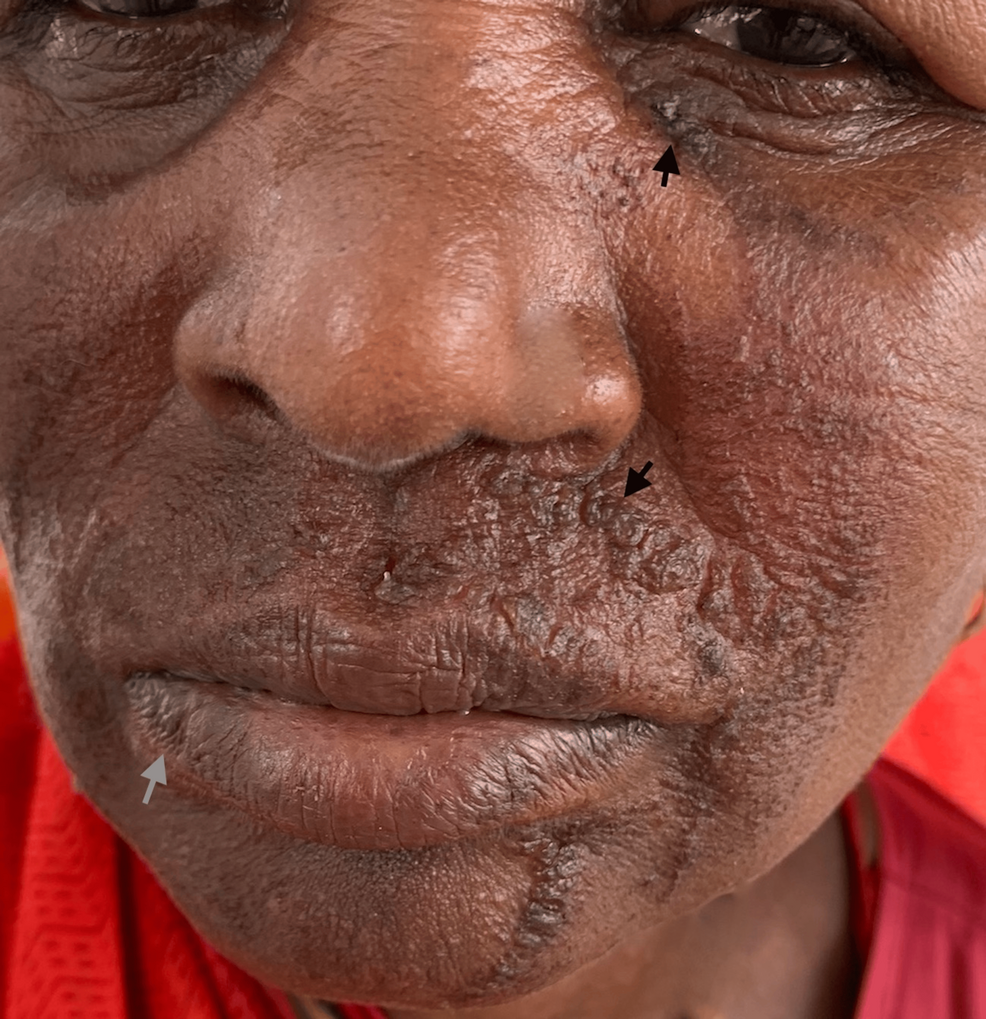
Early discontinuation remains the primary intervention to prevent progression toward severe cutaneous complications, reinforcing the necessity of close clinical monitoring whenever supply chain disruptions necessitate sudden antiretroviral substitutions.
Related reading

Fur Seal Death Marks First Australian Mainland Mammal Fatality From H5 Bird Flu
A long-nosed fur seal found dead at Beachport has become Australia's first confirmed mainland mammal fatality from the...

Congo Receives First Shipment of Ebola Vaccine Amid Outbreak
Congo received 16,250 doses of the Ervebo Ebola vaccine at Kinshasa's N’djili International Airport late Friday, marking the...

Chinese Neurosurgeon Zhang Shijun Performs Hundreds of Operations in Eritrea
During a one-year medical mission in Eritrea running from July 2025 to July 2026, Chinese neurosurgeon Zhang Shijun...

Prince Harry and Meghan Moving Back to U.K
Prince Harry and Meghan are moving back to the United Kingdom with their children, Prince Archie and Princess...