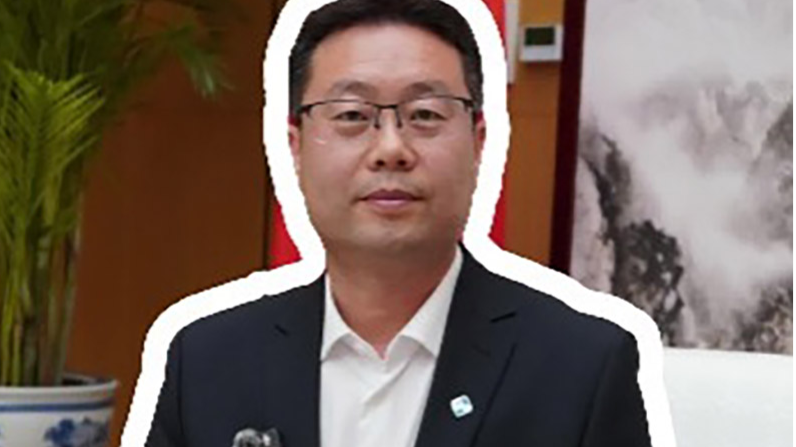
During a one-year medical mission in Eritrea running from July 2025 to July 2026, Chinese neurosurgeon Zhang Shijun used manual instruments and handheld drills at Orotta National Referral Hospital, illustrating the broader efforts of China’s six-decade medical aid program across Africa.
Surgical Realities in Asmara: Hand drills and Malfunctioning Bipolar Units
For much of Zhang Shijun’s year at the Orotta National Referral Hospital in the capital city of Asmara, his most vital instrument was not an advanced craniotomy system, but a simple, handheld skull drill. Zhang served as deputy director of the neurosurgery department at Yellow River Sanmenxia Hospital in Henan province and acted as deputy head of the 18th Chinese medical aid team to Eritrea, which consisted of 18 medical experts specializing in fields including surgery, radiology, traditional Chinese medicine, and anesthesiology.
Back in my home hospital, we’re used to having a high-powered electronic drill spinning within seconds just by releasing the foot pedal,
Zhang recalled in an interview ahead of China’s ninth Doctors’ Day. In Eritrea, we could only rely on manual equipment most of the time, putting our wrist and shoulder strength into turning the drill over and over again.
Those resource constraints defined his daily caseload. While he was accustomed to high-stakes neurosurgery, the lack of modern infrastructure turned routine procedures into physical endurance tests. One of his most memorable cases involved a man in his 20s transferred from a remote area three days after falling into a coma due to a spontaneous intracerebral hemorrhage, a delay driven by long travel distances and inconvenient transportation.
“His one pupil was already blown and there was no movement in any limb. His brain was herniating and he could die at any moment. As an emergency head CT showed a hematoma in the brain, we decided to perform emergency surgery to clear the clot.”
Zhang Shijun, deputy head of the 18th Chinese medical aid team to Eritrea, via Chinadailyasia
The operation tested every limit of the operating room. There was no scrub nurse, so we picked our own instruments and used them ourselves. There was no surgical microscope or other advanced equipment. We had just one hand drill, and the bit wasn’t very sharp,
Zhang said. After drilling four holes in his skull, I was drenched in sweat, and my wrist was sore and shaking.
When the bipolar coagulator used to control bleeding malfunctioned mid-surgery, Zhang had to apply manual pressure with a gelatin sponge while swapping out three separate units before the device resumed working. The three-hour procedure concluded successfully when the patient gradually woke up and his limbs regained movement.
Decades of Medical Cooperation across African Nations
The mission in Eritrea forms part of a much larger six-decade medical cooperation framework. Since dispatching its first medical team to Algeria in 1963, China has sent roughly 30,000 medical workers across 76 countries and regions, providing care to about 290 million patients, predominantly in Africa.
That footprint continues to expand under the Forum on China-Africa Cooperation Beijing Action Plan (2025–2027), which schedules the deployment of 2,000 additional medical personnel and public health experts, the establishment of joint medical and traditional medicine centers, and continued support for the Africa Center for Disease Control and Prevention headquarters and its sub-regional centers.
The work carries severe personal risks for participating personnel. In June 2025, Zhang Junqiao, an anesthesiologist and leader of the 27th Chinese medical team in Tanzania, drowned off a beach in Dar es Salaam after diving into the water to rescue a drowning woman, handing her his own life jacket before she made it safely ashore. Across six decades of the program, more than 50 members of China’s overseas medical teams have died far from home.
Scale of Patient Care and Local Capacity Building
During their rotation in Eritrea, the 18-member Henan-based medical team engaged extensively with local institutions, receiving more than 35,600 patient visits, performing or guiding over 4,100 surgeries, administering traditional Chinese medicine therapies to nearly 20,000 patients, conducting 9,000 CT and ultrasound examinations, and training about 180 local medical workers.
Tewelde Yohannes, medical director of Orotta hospital, praised the team’s contributions. They are always available, always willing, very cooperative, smiling, humble and ready to work at any time around the clock,
Yohannes said in an interview with local television station Eri-TV. We are very thankful and grateful for the support they give us, and we want it to continue.
Parallel efforts have unfolded in Tanzania and Ethiopia, focusing heavily on technology transfer and specialized training. At the Chinese-built Jakaya Kikwete Cardiac Institute in Dar es Salaam, pediatric heart procedures utilize minimally invasive techniques to avoid open-heart surgery or radiation. A training session on that technology drew about 50 Tanzanian cardiologists, addressing a landscape where roughly one in 100 newborns has a congenital heart defect.
Empowering Local Specialists in Emergency Response
A core mandate of the decades-long medical aid initiative is ensuring that local physicians gain the independence to manage critical emergencies without relying entirely on outside specialists. That capacity building was demonstrated at Abdulla Mzee Hospital on Pemba Island, where a two-year-old boy was rushed in after swallowing a coin more than 48 hours earlier.
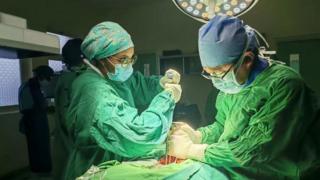
Local doctor Harun Maisara Mahkum, 30, successfully extracted the coin himself for the first time under the guidance of He Zhilong, an otolaryngologist from the 35th Chinese medical team. I was nervous,
Mahkum recalled. But Doctor He trusted me to lead.
Having worked alongside Chinese medical teams for eight years, Mahkum noted that prior cooperation, local doctors depended on outside specialists for such interventions.
The institutional footprint expanded further with the July 27 launch of the China-Africa partnership on minimally invasive medicine in Addis Ababa, where new Ethiopian centers for robot-assisted surgery training and laparoscopic techniques were inaugurated. These two training centers are only a starting point,
said Liu Longfei, vice president of Xiangya Hospital of Central South University, which leads the program.
Worth a look

Diet Drinks Equal Water for Weight Loss, SWITCH Trial Finds
A 104-week clinical trial published in the British Journal of Nutrition reveals that non-nutritive sweetened soft drinks perform...
UK Research and Innovation Launches £80m Dementia Challenge for NHS
UK Research and Innovation has launched an up-to-£80 million Dementia Challenge to test nine medical technologies within the...
Stanford Researchers Develop Urine Test to Accurately Diagnose Bladder Cancer
Researchers at Stanford Medicine and the VA Palo Alto Health Care System have developed a non-invasive urine test...

King’s College London and ZOE Seek 250,000 Volunteers for Bowel Cancer Study
Researchers at King’s College London and ZOE are recruiting 250,000 UK volunteers for the PROSPECT-UK study to investigate...