
The Democratic Republic of Congo has granted Mota-Engil a 30-year concession to rehabilitate and operate the Dilolo-Sakania railway. Backed by U.S. financing and signed in Kinshasa, the $1.25 billion project aims to speed critical mineral exports from the Copperbelt to the Atlantic port of Lobito.
The government of the Democratic Republic of Congo has signed a 30-year concession agreement with Mota-Engil Africa to operate a key copper and cobalt railway. The agreement covers the rehabilitation, modernization, extension, operation, and maintenance of the Dilolo-Sakania railway, marking a major milestone for the Congolese section of the Lobito Corridor.
Concession Terms, Financial Structure, and the Lobito Route
The public-private partnership provides for a $1.25 billion investment to overhaul 1,004.5 kilometers of track. The public-private partnership was endorsed by Congo’s government after minutes from a ministerial meeting outlined plans to revive the dilapidated route. Under the terms of the agreement, the Congolese government will hold at least a 10% stake in the project company alongside a royalty equal to 7.5% of its annual gross revenue.
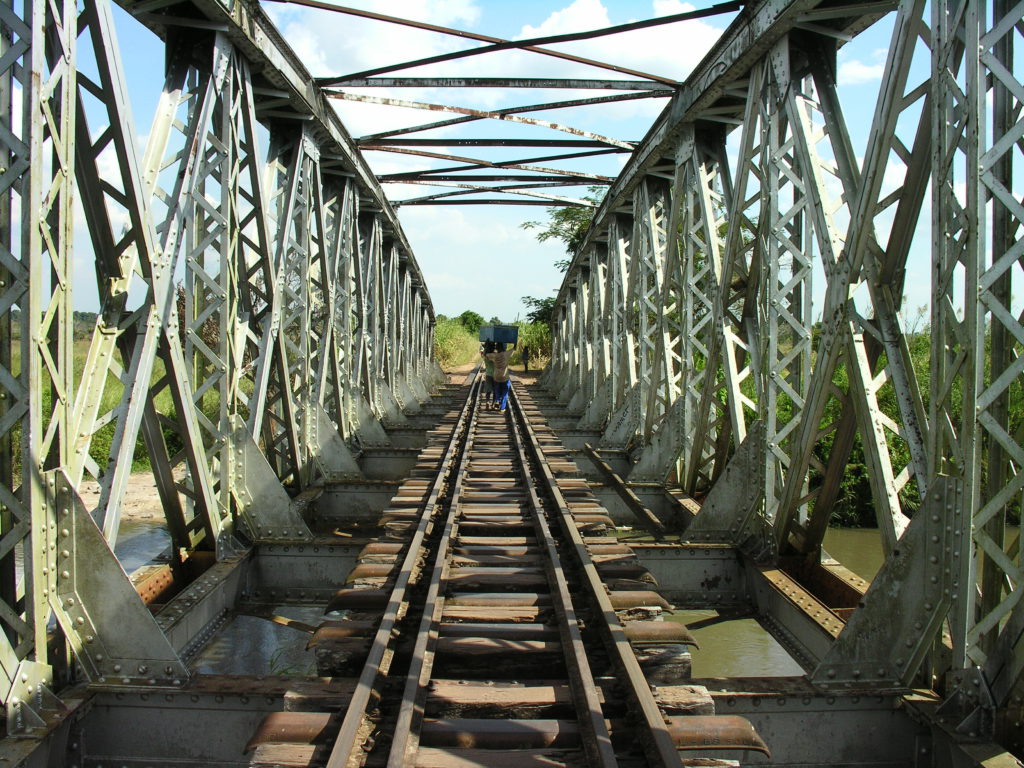
Mota-Engil is already part of the consortium operating the connecting rail line in neighboring Angola that runs to a port on the Atlantic Ocean coast, allowing for cross-border continuity. The project passes through the major mining hubs of Kolwezi, Tenke, and Lubumbashi, connecting southeastern DRC directly to Angola’s railway network and the Port of Lobito on the Atlantic coast.
Mota-Engil operates on the Angolan section of the corridor through Lobito Atlantic Railway (LAR), which operates as a consortium with Trafigura and Vecturis. Mota-Engil SGPS SA is Portugal’s biggest construction company. Congo’s government and Mota-Engil signed the agreement in the African nation’s capital, Kinshasa. The firm’s venture with Trafigura Group on the Angolan side has an existing track access agreement with Congo’s state rail company. Minutes of a Congolese ministerial meeting held last month revealed that the parties were working on a public-private partnership intended to revive the dilapidated 1,000-kilometer (620-mile) railway, which passes through the mining hubs of Kolwezi, Tenke and Lubumbashi. The Congolese part of the Lobito Corridor underwent a complete rehabilitation through a public-private partnership endorsed by Congo’s government on July 10, according to minutes of a cabinet meeting read out the same day on state television.
U.S. Strategic Backing and Mineral Supply Chains
The infrastructure project aims to increase exports of critical minerals to Western markets. The Angolan section of the Lobito Corridor has received financial backing from the U.S. International Development Finance Corp. In December, the DFC signed a letter of interest for up to $1 billion with the Portuguese company to help repair and manage the rail line.
President Donald Trump’s administration has supported Mota-Engil’s efforts as American interest in Central African natural resources intensifies. Congo is the world’s second-biggest copper producer and top source of battery metal cobalt.

The corridor has attracted more than $10 billion in public and private investment commitments, with support from the United States, the European Union and the African Development Bank (AfDB). US interest in the country’s natural resources has intensified since Trump returned to the White House as he seeks to reduce dependence on Beijing for a wide range of mineral products. While the US and Congo concluded a partnership in December granting American investors preferential access to some metal deposits, Chinese miners like CMOC Group and Zijin Mining Group currently account for most of the African nation’s copper and cobalt output. There’s also a separate project to connect Zambia – Africa’s No. 2 copper producer – to the Lobito Corridor. At the same time, Chinese firms are progressing with a $1.4-billion overhaul of an export railway that can move minerals from Zambia to the Indian Ocean port of Dar es Salaam.
Logistics Transformation and Regional Interoperability Challenges
Once operational, the upgraded corridor aims to slash transport times and expenses. Freight shipments from Tenke or Kolwezi to the Port of Lobito could take five to eight days, compared with about 25 days on routes through Durban, South Africa, while logistics costs are expected to fall by as much as 30%.
At the corridor level, infrastructure upgrades should reduce the time needed to move minerals to international markets. Shipments to Europe and North America could reach their destinations in about 20 days, compared with several dozen days on some competing overland routes. The upgraded link could cut freight transit times between Tenke or Kolwezi and Lobito from about 25 days via Durban, while reducing logistics costs by as much as 30%.

Yet the project faces significant hurdles. Rail interoperability between the Congolese and Angolan networks—particularly the harmonization of track gauges—remains a major issue that authorities must resolve to prevent transshipment delays. Furthermore, because several mining companies in southeastern DRC already maintain logistics agreements with operators linked to Chinese interests, Mota-Engil must offer a competitive and reliable service to capture mineral flows. At the same time, China is advancing a $1.4-billion overhaul of a rival export railway moving minerals from Zambia to the Indian Ocean port of Dar es Salaam in Tanzania.
The project will face several challenges before it can deliver its expected benefits. Rail interoperability between the Congolese and Angolan networks represents one of the main issues, particularly regarding cross-border operations and technical alignment between the systems.
Keep reading

FCA Expands Misconduct Rules to 40,000 British Financial Firms
Nearly 40,000 financial firms are racing to overhaul internal reporting frameworks before a September expansion by the Financial...
Big Tobacco Drives Nicotine Pouches as Cigarette Sales Decline
Nicotine pouches have quickly become one of Big Tobacco's most significant bets on a future beyond traditional cigarettes,...
East African Health Leaders Push to Position Region as Medical Tourism Hub
East African countries are actively seeking to position the region as a medical tourism destination by linking healthcare...
IJM Construction Secures RM909.5M Industrial Projects
IJM Construction has secured two fast-track semiconductor and medical technology projects worth RM909.5 million for the financial year...