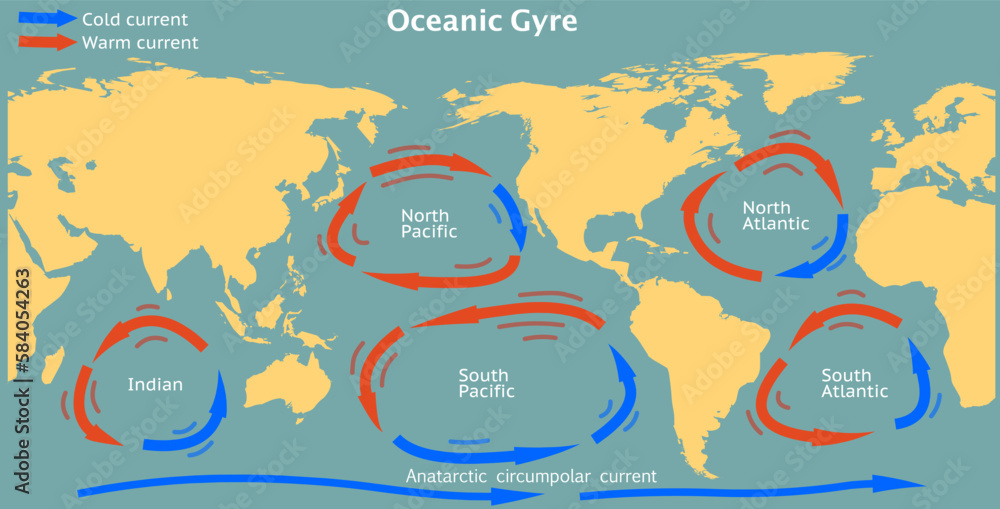
Global warming is breaking the long-standing climatic connection between the Pacific and Indian oceans. According to a study published in Nature Communications, rising greenhouse gas emissions are overwhelming the Pacific’s natural influence on tropical Indian Ocean temperatures, reversing a relationship that has largely held steady for centuries.
What happens in one ocean does not stay there. For centuries, changes across the tropical Pacific traveled through the atmosphere to influence temperatures in the Indian Ocean thousands of kilometers away, functioning like a long-distance climate conversation between two massive bodies of water, according to the source articles. That relationship matters directly for land, as Indian Ocean temperatures influence rainfall and other climate conditions across densely populated parts of Africa, Asia, and Australia, while stable relationships help scientists predict climate conditions from seasons to years ahead.
How the Pacific Walker Circulation Drives Ocean Links
An important player in this teleconnection is the Pacific Walker circulation, a vast system of moving air above the tropical Pacific, according to the source articles. Differences in ocean temperatures help move air across the Pacific, where warm air rises over warmer waters, travels through the atmosphere, sinks elsewhere, and helps drive winds near the surface. During events such as El Niño, this circulation weakens, influencing temperatures across the Indian Ocean through an atmospheric bridge.
Historically, when the Pacific system changed, the Indian Ocean’s basin-wide temperature pattern—known as the Indian Ocean Basin Mode—tended to change with it. But since the 1950s, the tropical Indian Ocean has warmed by about 0.1 degrees Celsius per decade, driven by changes associated with rising greenhouse gas concentrations, while the Pacific Walker circulation has strengthened since the 1980s, according to the source articles.
Human Emissions Overwhelm Natural Climate Signals
The resulting shift is striking. The sign of the relationship between the two oceans has reversed in recent decades, meaning a key part of the Indian Ocean climate system no longer follows the Pacific’s lead as reliably as it once did.
To determine if this modern shift was truly unusual, lead author Shawn Wang, now at the University of Colorado Boulder, and colleagues combined modern observations and climate models with natural climate archives, analyzing 35 coral records, three tree-ring records, and one stalagmite record to reconstruct Indo-Pacific climate patterns from 1631 to 1990, according to the source articles.
Comparing Modern Disruption to 19th-Century Volcanic Eruptions
For most of those four centuries, the Pacific and Indian Ocean systems largely moved together, with one major exception. Between roughly 1810 and 1850, their relationship weakened considerably during a period that coincided with several enormous tropical volcanic eruptions, including Indonesia’s Mount Tambora eruption in 1815, according to the source articles.
Large volcanic eruptions send sulfur-containing gases high into the atmosphere to form aerosols that reduce incoming sunlight and temporarily cool Earth’s surface. Because that cooling is not uniform, it alters ocean temperatures and winds, temporarily disrupting the usual connection between the Pacific and Indian Oceans, according to simulations cited in the source articles.
However, researchers noted a crucial difference between past disruptions and today’s shift. While the 19th-century disruption was associated with powerful volcanic eruptions, today’s shift occurs alongside sustained human-caused warming, according to the source articles. When comparing the modern 1945–2025 relationship with equivalent 80-year periods in simulations and reconstructions spanning the past millennium, the modern correlation fell outside the 95 percent ranges represented by both, even outstripping periods of intense volcanic activity.
Broader Impacts and Unbroken Regional Systems
This breakdown does not mean every connection between the two major oceans has collapsed. Another relationship involving the Indian Ocean Walker circulation did not undergo the same significant modern shift, according to the source articles. Nonetheless, the change researchers detected could carry consequences far beyond the marine environment, threatening the predictability of rainfall and climate conditions across vulnerable land regions.

UK Makes Plug-in Solar Legal
Plug-in solar panels became legal to buy and use across Great Britain on August 27, 2026, offering households...
SpaceX to Launch NASA’s Roman Space Telescope on August 30, 2026
NASA's Nancy Grace Roman Space Telescope is scheduled to launch aboard a SpaceX Falcon Heavy rocket on August...

Washington State University Researchers Develop 3D-Printed Electronic Skin
Researchers at Washington State University have developed a 3D-printed electronic skin that senses pressure and temperature at ten...

JWST Finds Planet Formation Is a Race Against Time in 72 Young Star Systems
Using the James Webb Space Telescope (JWST), astronomers have studied 72 young, sun-like stars to investigate how protoplanetary...