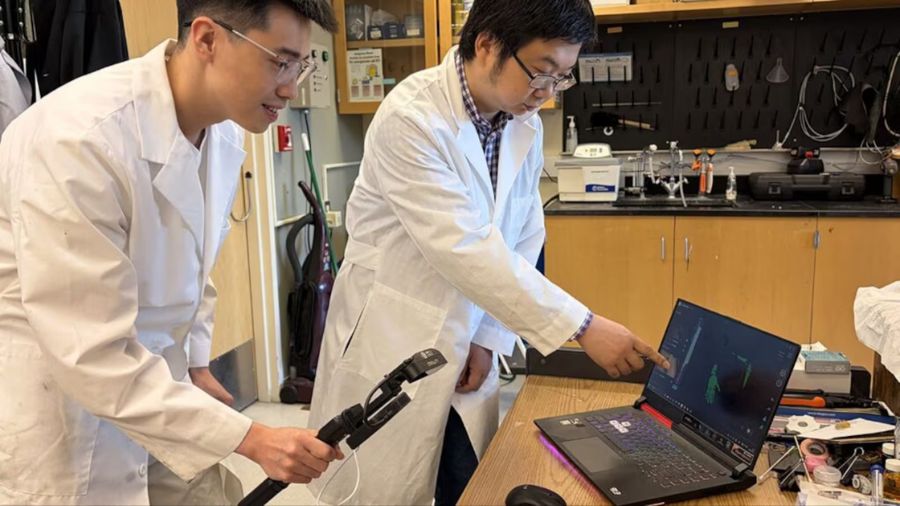
Researchers at Washington State University have developed a 3D-printed electronic skin that senses pressure and temperature at ten times the resolution of current commercial glove sensors. The customizable modular system, detailed in a recent study, lays a foundation for bionic prosthetics that can respond naturally to touch.
Overcoming the Resolution and Customization Barrier in Prosthetic Skin
Across the United States, approximately 1.9 million people live without a limb, a figure projected to double by 2050 due to the increasing frequency of diabetes, according to data cited from the National Library of Medicine. While advanced prosthetic limbs have improved in strength and dexterity, restoring the sense of touch has remained a stubborn engineering challenge. Without tactile feedback, users rely entirely on sight to gauge grip strength or detect slipping objects.
Existing electronic skins force a difficult compromise between comfort, mechanical reliability, and sensing performance. High-density sensor arrays are typically manufactured on flat surfaces using expensive clean-room processes, making them difficult to adapt to the complex curves of a hand or arm. When traditional e-skins are custom-shaped for an individual user, their sensing performance frequently degrades. Furthermore, the massive volume of data generated by dense sensor arrays often creates processing lags, preventing real-time use.
A research team at Washington State University addressed these limitations by engineering a customizable multimodal sensing system that conforms to the freeform geometry of limbs while maintaining high resolution. Published in the journal Cell Reports Physical Science, the work introduces sensor modules that operate at roughly ten times the spatial resolution of commercial glove-based sensors.
Scan-Model-Print Fabrication and Modular Assembly
To achieve seamless coverage over irregular surfaces without sacrificing data fidelity, the WSU researchers devised a scan-model-print manufacturing method. The process begins by scanning a prosthetic with a structured-light 3D scanner. Software then maps sensor layouts directly onto the geometry of that specific scan.
Following the digital mapping phase, custom structural layers are produced using stereolithography 3D printing. Laser-cut flexible electrical layers are then assembled into individual sensor modules that measure less than two millimeters thick. Each module functions as a multilayer sandwich incorporating pressure-sensing matrices made from piezoresistive film alongside temperature sensors based on miniature thermistors.
Rather than relying on permanent adhesives, the individual sensor modules snap together like Lego blocks. This modular architecture makes the system easier to assemble, repair, or reconfigure, while keeping production costs low by using copper, plastic polymers, and accessible 3D-printing and laser-cutting techniques.
Multimodal Sensing and Neural Network Processing
A prototype finger and palm assembly built by the team incorporates 170 pressure-sensing pixels and 14 temperature sensors, achieving roughly six pressure sensors per square centimeter. Because the stacked design allows both pressure and temperature sensing elements to occupy nearly the same physical area without interfering with one another, the e-skin can collect diverse physical information simultaneously.
Beyond measuring static force, the electronic skin can distinguish surface textures by monitoring tiny vibrations generated as a finger slides across an object. Temperature sensing adds another analytical layer, allowing the system to differentiate materials based on thermal conductivity.
Managing the dense stream of data from closely spaced sensors required a specialized data-processing approach.
“This approach democratizes the production of medical-grade e-skins, making advanced tactile feedback viable for widespread clinical adoption. This work lays a crucial foundation for a full bionic skin with both sensing and haptic stimulation functions on prosthetics.”
Next Steps: Non-Invasive Nerve Stimulation and Clinical Goals
While the current electronic skin successfully gathers and processes environmental data, it does not yet transmit tactile sensations directly to an amputee. It represents the sensing half of a complete bionic skin system. To bridge that gap, the research team is actively developing a non-invasive stimulator device designed to interface with the remaining skin on an amputee’s limb stump.
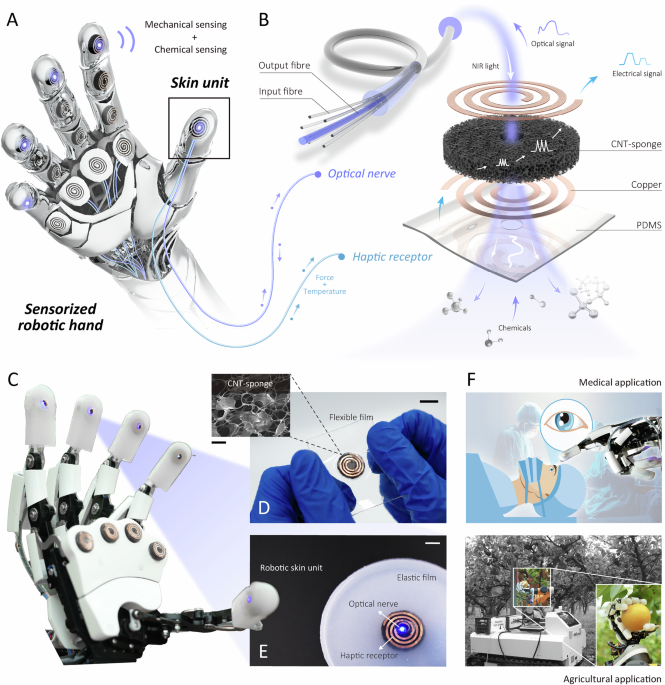
According to project leads, the stimulating component will require no surgery or brain implants. It will apply directly to the skin of the remaining limb to stimulate underlying nerves, allowing users to perceive sensations in their brains. The team has been working on the stimulator prototype for six months and expects to have a working prototype ready within the next three to six months. In the interim, the team has submitted an invention disclosure for a provisional patent through the Washington State University Office of Research Innovation and Entrepreneurship.
Worth a look

CHIME Telescope Detects Early Universe Hydrogen Signal Independently
Using only its own data, the Canadian Hydrogen Intensity Mapping Experiment (CHIME) telescope in British Columbia detected a...

NASA’s Perseverance Rover Breaks Opportunity’s Mars Mileage Record
NASA’s Perseverance rover has set a new off-world driving record on Mars, surpassing the mileage of its predecessor...
NASA and SpaceX to Launch Cargo and Solar Arrays to Space Station
NASA and SpaceX are targeting Tuesday, October 13, for the launch of the 35th commercial resupply mission to...

ESA’s Hera Spacecraft Spots Target Asteroid Didymos
Two years after launch, the European Space Agency’s Hera spacecraft has successfully spotted its target binary asteroid system...