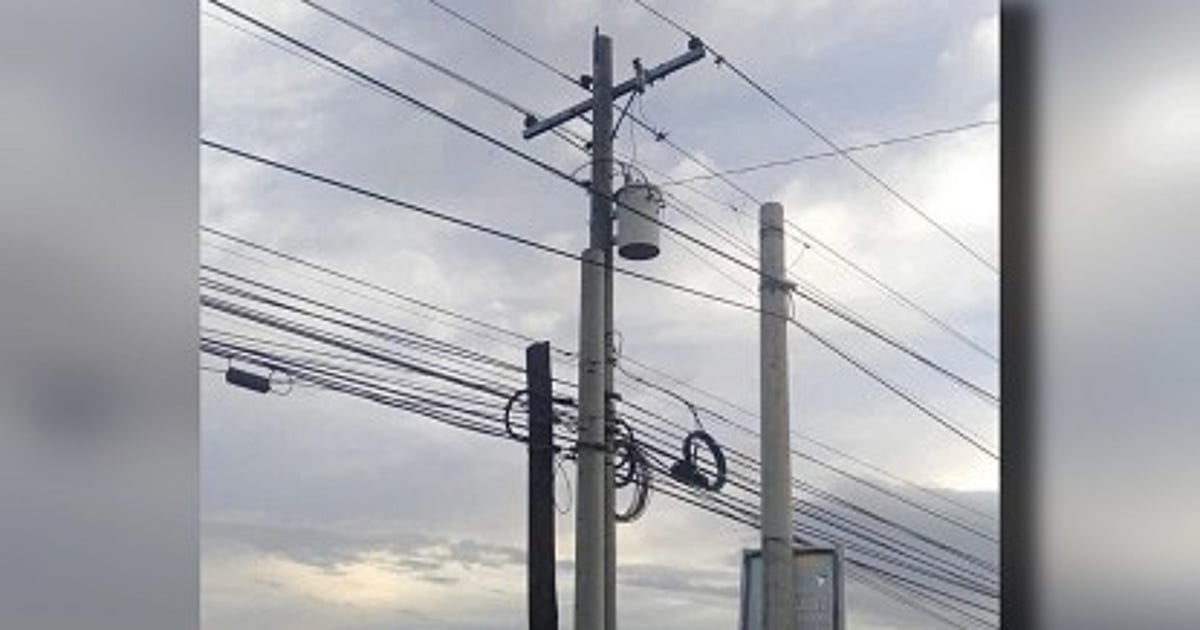
Consumer advocates in Cebu are demanding an immediate congressional audit after recurring power plant shutdowns pushed the Visayas grid to the brink of collapse. The Cebu Electricity Rights Advocates warned that simultaneous forced outages across multiple multibillion-peso facilities left the region facing severe power deficits this week.
Visayas Grid Plunges Into Prolonged Alert Statuses
The energy crisis in the Visayas is no longer a matter of isolated technical hiccups. According to reporting from Cebu Electricity Rights Advocates, the local power grid has already endured roughly 73 consecutive days marked by yellow and red alerts. Quoting data from the National Grid Corporation of the Philippines, the group noted that the strain reached a sharp peak when available power fell far short of total consumer demand.
Data from the National Grid Corporation of the Philippines showed that available capacity for the day settled at 2,124 megawatts, while system peak demand climbed to 2,555 megawatts. On Wednesday, September 9, that imbalance created an immediate 431-megawatt shortfall, forcing the grid under a red alert from 1 p.m. to 10 p.m., followed immediately by a yellow alert extending from 10 p.m. to 11 p.m.
Simultaneous Plant Failures and Forced Outages
The underlying driver behind the persistent alerts involves a wave of sudden shutdowns at major baseload facilities across the region. Regional consumer advocates point directly to the unexpected downtime at coal-fired power plants, including Therma Visayas Inc. (TVI) Unit 1 and Panay Energy Development Corporation (PEDC) Unit 3, as well as the outage of TVI Unit 2 and limited power imports from the Mindanao grid. Cera added that 25 to 30 power generation units in the Visayas have faced forced outages or operated at severely reduced capacity at various times.
In an advisory, the National Grid Corp. of the Philippines noted that 11 power plants were on forced outage as of September. Four plants had been on forced outage since August 2026, one since July, two since June, seven since May, three since 2025, two since 2024, two since 2023, and one since 2021. Moreover, 13 power plants were operating at derated capacities. In total, around 982.6 megawatts of power capacity remained unavailable to the grid.
Nathaniel Chua, lead convenor of the Cebu Electricity Rights Advocates
It is completely unacceptable that our major power plants are suddenly ‘conking out’ at the exact same time, plunging Cebu’s households and businesses into deep uncertainty,
Nathaniel Chua, lead convenor of the Cebu Electricity Rights Advocates (CERA), said.
“We are demanding an immediate congressional inquiry and a strict audit by the Department of Energy (DOE) and the Energy Regulatory Commission (ERC). Consumers deserve to know why these multibillion-peso facilities are failing when we need them the most. Are these genuine technical failures, or is there a lack of proper maintenance and foresight by the generation companies?” he added.
Transmission Bottlenecks and Interconnection Disparities
Beyond generation woes, consumer advocates emphasize that the regional crisis is heavily exacerbated by physical bottlenecks in the country’s transmission network that connect the country’s main islands. Currently, the Mindanao-Visayas Interconnection Project allows up to 450 MW of power sharing between the two regions, while the Luzon-Visayas high-voltage direct current connection transfers 440 MW. The NGCP is working to upgrade the Luzon-Visayas link to double its capacity to 880 MW. Cera wants this upgrade fast-tracked and expanded even further so extra electricity from Luzon can easily reach the Visayas during power shortages.
This structural limitation creates a striking regional disparity. While the Visayas grid faces frequent red alerts, the Luzon grid generally maintains plenty of extra power reserves, exposing a major weakness in the transmission network.
Nathaniel Chua, lead convenor of the Cebu Electricity Rights Advocates
This is a tragic irony and a massive inequity,
Nathaniel Chua said, explaining that limited transmission links stop Luzon’s extra power from helping the Visayas. Cera insists that a congressional investigation and government audits of power plants are necessary to address the power gap.
Pushed to the Brink of Collapse
The compounding failures in both generation and transmission have left local economies, remote workers, and families vulnerable to constant disruption, with extended power outages potentially impacting the whole community and the economy. Cera warns that ongoing power problems threaten families and businesses while demanding answers from power companies and government regulators.
Worth a look

PHD Aotearoa Appoints Three Senior Leaders to Boost Digital Capabilities
PHD Aotearoa announced three senior appointments on September 10, 2026, naming Sarah Wilson as Head of Digital Enablement,...
President Marcos Jr. Declares Special Non-Working Day in Ilocos Norte
President Ferdinand Marcos Jr.

Metropolitan Police Launch Criminal Investigation Into Reform UK Donations
The Metropolitan Police has confirmed the launch of a criminal investigation into Reform UK following allegations that the...

Police Detain Second Pilot in Klang Valley Over Drug Money Trail
Police have detained a second pilot in the Klang Valley as an international drug trafficking investigation widens.