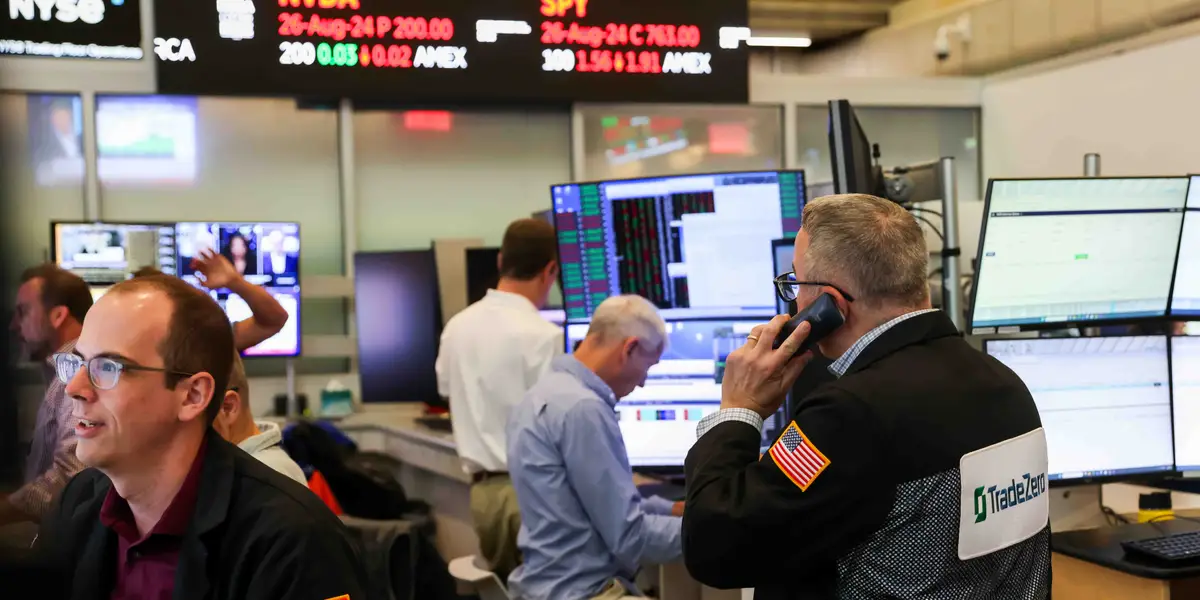
U.S. stocks slipped on Tuesday as the 10-year Treasury yield climbed past 5% to reach its highest level since 2007, while Brent crude oil climbed to $109.35 a barrel amid ongoing fears about inflation, the Federal Reserve’s anticipated rate hikes, and geopolitical tensions.
Treasury Yields Cross the 5% Threshold as Wall Street Faces Borrowing Pressure
The U.S. bond market pushed borrowing costs higher on Tuesday as the yield on the 10-year Treasury climbed to 5.01% from 4.97% late Monday, briefly touching 5.04% overnight, according to reporting from AP News.
Higher yields increase the cost of borrowing for governments, households, and businesses alike, slowing economic activity. They also make equities less attractive to investors who can secure safer returns in the bond market. The result is a market that must work harder to generate earnings growth just as investors become less willing to pay premium valuations for that growth,
according to Darrell Cronk, president of Wells Fargo Investment Institute.
Crude Oil Prices Surge Above $106 as Conflict Disrupts Persian Gulf Shipping
Fueling investor anxiety over persistent inflation, energy markets saw continued upward pressure throughout the week. The international benchmark, Brent crude, climbed 3.5% to $109.35 a barrel, remaining well above its $72 level from early July. Meanwhile, U.S. crude traded above $106 a barrel on Tuesday afternoon. The ongoing conflict with Iran, which began in February, continues to cast doubt on whether oil tankers can freely navigate out of the Persian Gulf through the Strait of Hormuz.
These elevated energy costs have layered atop longstanding concerns regarding the U.S. government’s massive debt level and weak demand for government bonds due to fiscal health worries. Analysts warn that these intersecting pressures are creating a challenging macroeconomic environment characterized by multiple compression and tighter financial conditions.
Market Strategists Issue Target Revisions and Drawdown Warnings
Major financial institutions responded to the mounting market pressure by adjusting their year-end outlooks for the S&P 500. Wells Fargo trimmed its year-end price target for the index to 7,700 from 7,950, flagging the risk of a 5% to 10% drawdown in stocks this year before any potential resumption of a rally. We’re entering late innings of the cycle, arguing for multiple compression,
the bank stated.
Strategists noted that about half of the bank’s bear market signposts have been triggered as the market enters a seasonally weak late-summer to early-fall period.
Morgan Stanley flagged the risks of a near-term correction driven by an unexpected inflation shock,
though a team led by Mike Wilson suggested that such an adjustment could serve as the finishing move for the quality transition that began several months ago.
Equities Slip Across Sectors as Investors Await Federal Reserve Decision
U.S. indexes fell on Tuesday following the yield spike and oil price gains. The S&P 500 dropped 0.4%, the Nasdaq composite fell 0.8%, and the Dow Jones Industrial Average shed 406 points, or 0.8%, by mid-afternoon. Consumer discretionary and retail stocks endured sharp losses: Chipotle Mexican Grill dropped 6.3%, United Airlines lost 2.2%, Dollar Tree fell 4.2%, and Dave & Buster’s Entertainment tumbled 19.7% after reporting weaker-than-expected quarterly results.
In contrast, several artificial intelligence stocks held steadier following a wider slide the previous day, which had been triggered by industry leaders calling for a development slowdown to address safety issues. Nvidia rose 0.5%, recovering slightly from a 3.4% drop, while Advanced Micro Devices climbed 2.2%.
All eyes now turn to Wednesday, when the Federal Reserve is widely expected to announce an interest rate hike for the first time in three years. Traders are monitoring whether central bank officials will signal a pause or commit to further tightening as they release updated interest rate forecasts for the coming years.
Top 20 Private Equity Firms Rank Fifth Globally for Greenhouse Gas Emissions
The energy portfolios of 20 major private equity firms produce 1.5 gigatons of greenhouse gas emissions annually, placing...

CBA Workers Sign Petition Demanding Better Pay Amid Record Profit
Thousands of Commonwealth Bank of Australia workers have signed a petition demanding better pay and conditions, calling the...
England And Wales Pubs And Shops Permit Digital ID Apps For Age Verification
Pubs and shops across England and Wales can now accept government-approved digital ID apps for age verification under...

Register of British Slave Traders Details 10,500 Investors
New research from a three-year specialist project has published the Register of British Slave Traders, documenting biographical details...