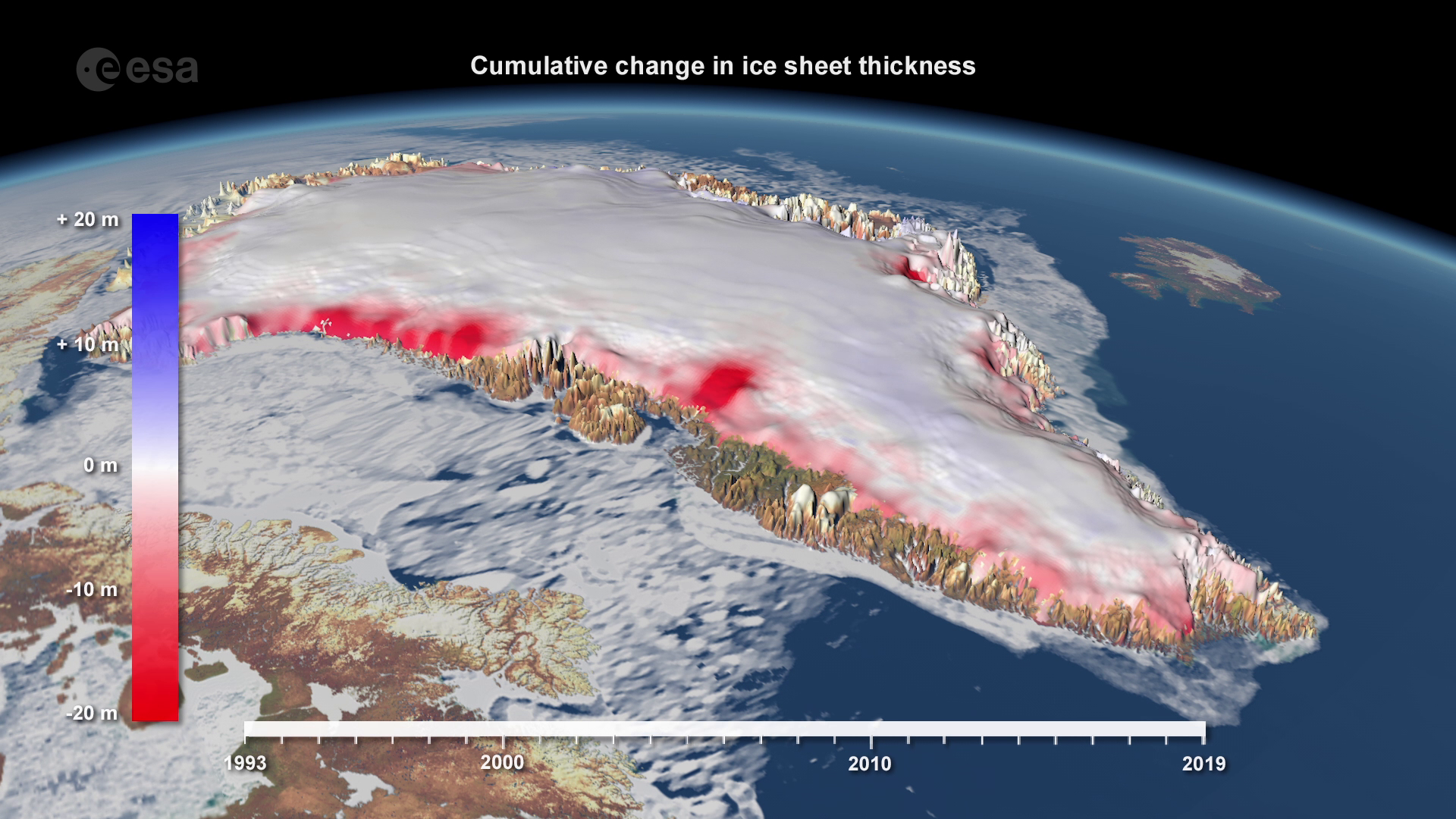
Satellite observations reveal that Greenland and Antarctica have shed massive amounts of ice since 1979. This polar melting drives a global sea-level rise that now threatens coastal populations worldwide, according to a major polar assessment.
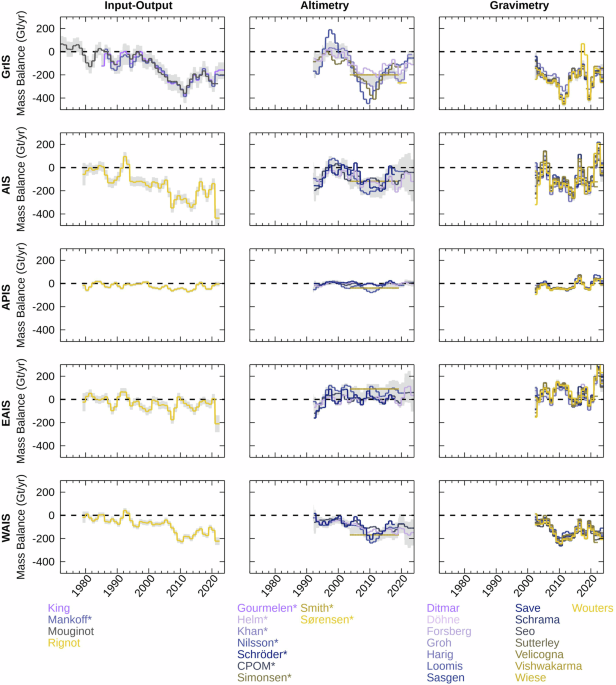
Earth’s major ice sheets are losing mass at an accelerating pace, driven primarily by warm ocean waters eating away at glaciers from below and along their sides. An international collaboration of polar scientists, headed by the European Space Agency, integrated NASA satellite data with European records to chart ice volumes in Antarctica back to 1979 and in Greenland back to 1972.
The findings indicate that about 12.5 trillion tons (11.3 trillion metric tons) of ice have melted from glaciers in Greenland and Antarctica over the 47-year span. That volume of frozen water is heavy and vast enough to stack ice five feet deep across the entire continental United States.
Decades of Stability Followed by Rapid Melting in the 2010s
The data show that through the 1970s, 1980s, and into the 1990s, the polar ice sheets remained relatively stable. Major melting began to pick up speed during the 2010s.
According to Ines Otosaka, an ice scientist at Northumbria University in England and lead author of the study published in the journal Earth Syst. Sci. Data
, the changes are closely tied to climate warming.
“There is a clear trend that the ice sheets are losing more mass and it has been increasing from decade to decade, especially if you look at the ice being discharged to the ocean. And that’s quite clear that there’s a link to climate change.”
Although satellite measurements recorded a brief three-year pause in the accelerating numbers between 2020 and 2023, researchers clarified that this plateau reflected short-term weather variations rather than a long-term shift. Otosaka noted that post-2023 measurements show the acceleration has already resumed.
Warm Waters and Dynamic Processes Fueling Ocean Rise
While warming air plays a role, five-sixths of the melt stems from warmer waters eroding ice sheets from beneath and along their flanks. This dynamic discharge forces glaciers to flow rapidly into the oceans.
In Greenland, the Jakobshavn glacier has retreated at rates reaching up to 164 feet per day. The latest Ice Sheet Mass Balance Intercomparison Exercise (IMBIE) assessment highlights that polar ice loss has increased fivefold since the 1990s and now accounts for a quarter of all global sea-level rise.
Between 1992 and 2020, Greenland and Antarctica lost 7,560 billion tonnes of ice. This overall melt produced a 21-millimeter global sea-level rise over that timeframe, with Greenland responsible for almost two-thirds (13.5 mm) and Antarctica accounting for the remaining third (7.4 mm). Across the entire satellite record, the polar ice sheets have lost mass every single year, with the seven highest melting years occurring in the past decade.
Global Impacts and the Threat of Ice Sheet Instability
All the ice lost over the 47-year study period converted into nearly 3 quadrillion gallons (11.3 quadrillion liters) of water, pushing global ocean levels up by about an inch (3.1 centimeters). Researchers emphasize that even incremental increases carry heavy human consequences.
For every third of an inch of sea level rise, another two to three million people experience coastal flooding at least once a year. David Holland, an ice scientist at New York University who was not involved in the study, expressed concern over abrupt dynamic processes that risk triggering runaway tipping points.
“The use of relatively independent methods gives me greater confidence in the result.”
Expectations for Future Decades and Unyielding Trends
For years, Antarctica maintained a degree of overall mass stability because record snowfall in East Antarctica compensated for rapid melting in the more vulnerable West Antarctic Ice Sheet. However, the sheer volume of ice discharged into the ocean signals that changes are tracking decades behind global atmospheric warming.
Andrew Shepherd, an ice scientist at Northumbria University and co-author of the research, warned that humanity must prepare for continued impacts. That’s something to be concerned about as it shows that the changes are tracking decades behind global warming, which means we can expect them to continue for decades more — even if we are able to stop heating the planet,
Shepherd said.
Keep reading
Hubble Telescope Discovers Massive Decagon Wave at Saturn’s South Pole
Astronomers using the Hubble Space Telescope have discovered a massive, 10-sided atmospheric wave pattern encircling Saturn’s south pole.

Antarctic Krill Discovered Feeding at Deep-Sea Hydrothermal Vents
In a first for scientific history, researchers have discovered Antarctic krill utilizing deep-sea hydrothermal vents as a habitat,...

Fossilized Dinosaur Poop Provides Clues on Why Some Birds Survived Asteroid
Unearthed in Montana's Hell Creek Formation, a fossilized dinosaur dropping preserved an exquisite feather belonging to a prehistoric...
International Observe the Moon Night 2026 Returns on September 19
International Observe the Moon Night returns on Saturday, September 19, 2026, bringing together astronomy enthusiasts, local communities, and...