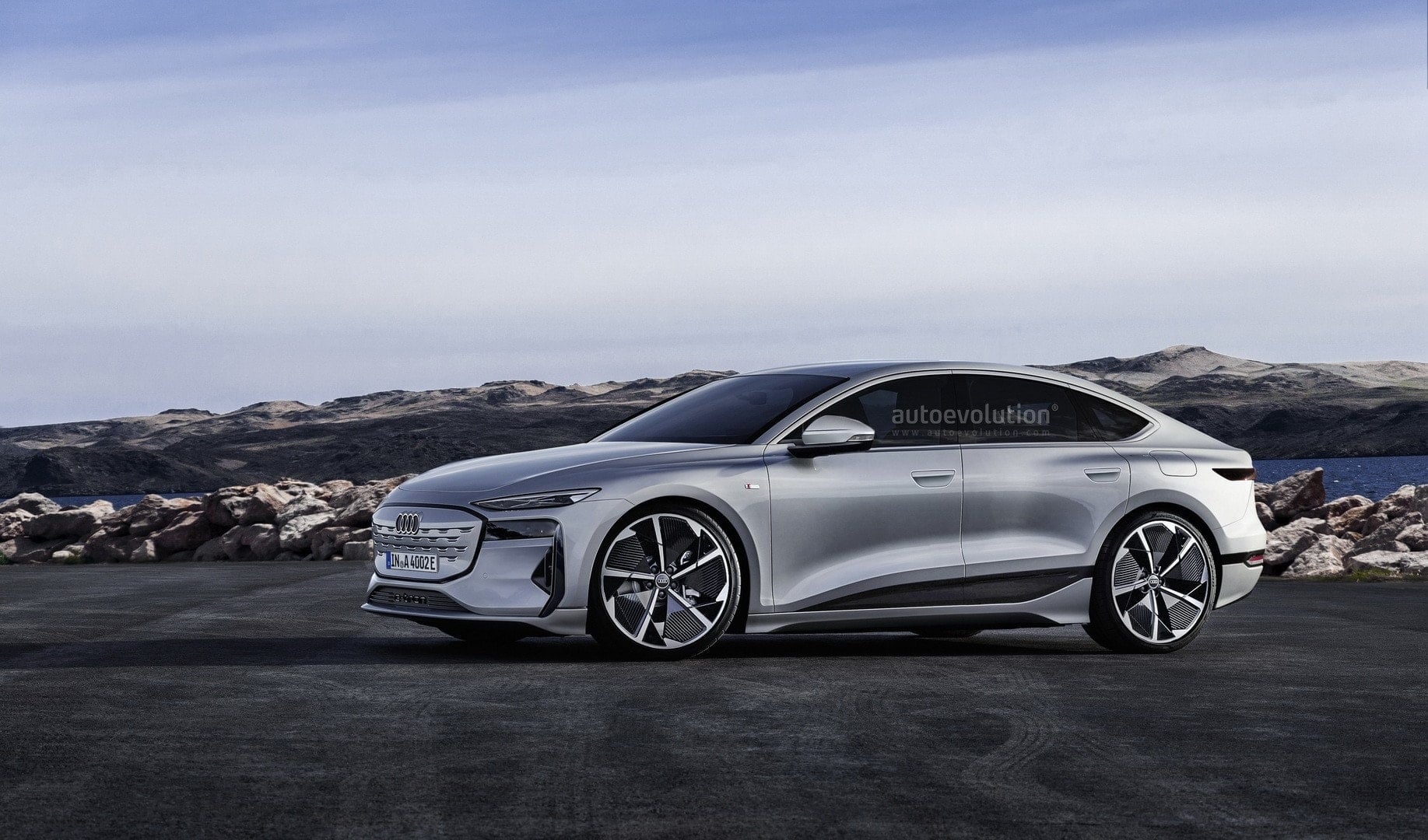
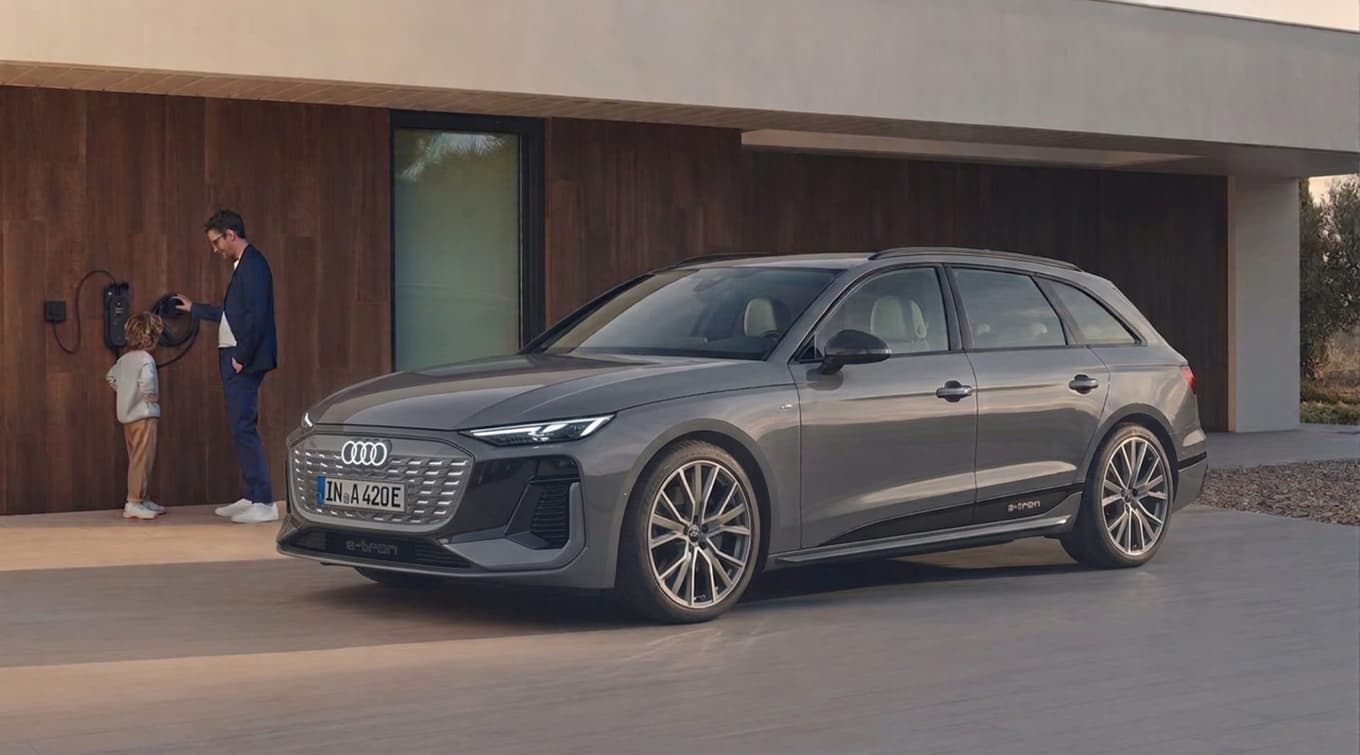
Audi has delayed its upcoming Audi A4 e-tron to at least March 2029 due to technical adjustments and a late electrical architecture shift. The postponement leaves a multi-year gap in the luxury brand’s lineup while rivals Mercedes-Benz and BMW advance with competing electric sedans.
The Volkswagen Group is overhauling its software and platform strategies, pushing back some of its most critical electric vehicle rollouts. At Audi, the high-profile A4 e-tron has slipped to the end of the decade amid a complex engineering overhaul directed from the top.
The 48-Volt Architecture Shift Behind the Delay
The technical catalyst for the delay centers on a late-stage electrical redesign ordered by Gernot Dollner. Rather than sticking with the traditional 12-volt electrical systems historically used by Volkswagen, Dollner pushed for the next-generation Scalable Systems Platform to operate on a 48-volt network.
While the higher voltage allows for more powerful onboard computers and thinner, lighter wiring—an approach Tesla utilized on the Cybertruck beginning in 2023—making the decision after development was already underway triggered a cascade of engineering hurdles. European suppliers largely carried 12-volt components on their shelves, forcing widespread hardware redesigns. Furthermore, the zonal electronic architecture developed through Volkswagen’s multi-billion-dollar partnership with Rivian required heavy adaptation.
Because Volkswagen’s new SDV 1.0 software was initially written for 12-volt systems, the entire codebase required a rewrite to support the 48-volt network. Handelsblatt first reported that these integrations have pushed the platform roughly three years behind its original schedule.
Trimming the Scalable Systems Platform
The Scalable Systems Platform was originally conceived under former executive Herbert Diess in July 2021 as a unified electric architecture intended to replace both the MEB platform used on the Q4 e-tron and the 800-volt PPE architecture utilized by the A6 and Q6 e-tron. Initial plans targeted a 2026 launch beginning with Volkswagen’s Trinity project. That vehicle timeline slipped repeatedly, and the automaker now describes SSP-based models as arriving from the end of the decade
.
To manage rising costs and developmental complexity, Volkswagen has scaled back the planned SSP lineup. The program was trimmed from eight planned variants down to just four, relying on a much higher percentage of shared components across the group’s various brands. Handelsblatt sources indicate that other core volume models have also been affected, with the electric Golf and the successor to the ID.4 now slated for 2029, and an electric T-Roc pushed back to 2030.
A Multi-Year Runway for BMW and Mercedes-Benz
Audi’s delayed entry leaves a striking vacuum in its product lineup. Because the internal combustion engine version of the A4 was phased out in 2024, the brand faces a five-year stretch without an active model in that critical segment, relying instead on the larger A6 e-tron or the combustion-powered A5.
- Mercedes-Benz already offers its electric C-Class across European markets.
- BMW has commenced production of its Neue Klasse i3 in Munich, with autumn deliveries underway.
Expected Specifications and Design Language
Although official final specifications remain unconfirmed by Audi, industry expectations point to styling influenced by the Concept C show car, introducing the brand’s new Radical Next design language to a mainstream volume vehicle. The model is anticipated to offer both rear-wheel and all-wheel-drive configurations.
Relying on an 800-volt electrical setup, the A4 e-tron is expected to support standard ultra-fast direct current charging speeds of 270 kW, though exact battery capacities have not yet been disclosed.
Financial Restructuring Amid Group-Wide Cuts
The platform delays coincide with a sweeping corporate cost-cutting campaign across the Volkswagen Group. Volume brands are tasked with extracting €14.6 billion out of development, while the premium group anchored by Audi must carve out another €11 billion in the upcoming planning cycle. These savings efforts come on top of a €16 billion restructuring bill booked by the wider corporate group.
Internal discussions reported by Handelsblatt also point to leadership debates over establishing a centralized group-wide chief technology officer role, an office that could pull development authority back to corporate headquarters. As suppliers continue negotiating component contracts tied to the revised 2029 timeline, the precise launch window remains sensitive to any further slippage in the 48-volt component supply chain.
Worth a look
Apple iOS 27 Update Lets Users Hide Messages Dictation Button
Apple’s iOS 27 update introduces a small layout change that lets iPhone users hide the Messages dictation button,...

LPG Aadhaar Authentication Mandatory for Subsidised Refills by Oct 1, 2026
Domestic liquefied petroleum gas consumers across India must complete Biometric Aadhaar Authentication by October 1, 2026 to continue...

The Blood of Dawnwalker Crosses One Million Sales on $40 Million Budget
Rebel Wolves' dark role-playing game The Blood of Dawnwalker has surpassed one million copies sold following its launch.

NIST Scientists Bake Model Scrolls to Test Lead-Based Ink Scans
Researchers studying the 2,000-year-old Herculaneum papyri have tested a new method for reading carbonized scrolls by looking for...