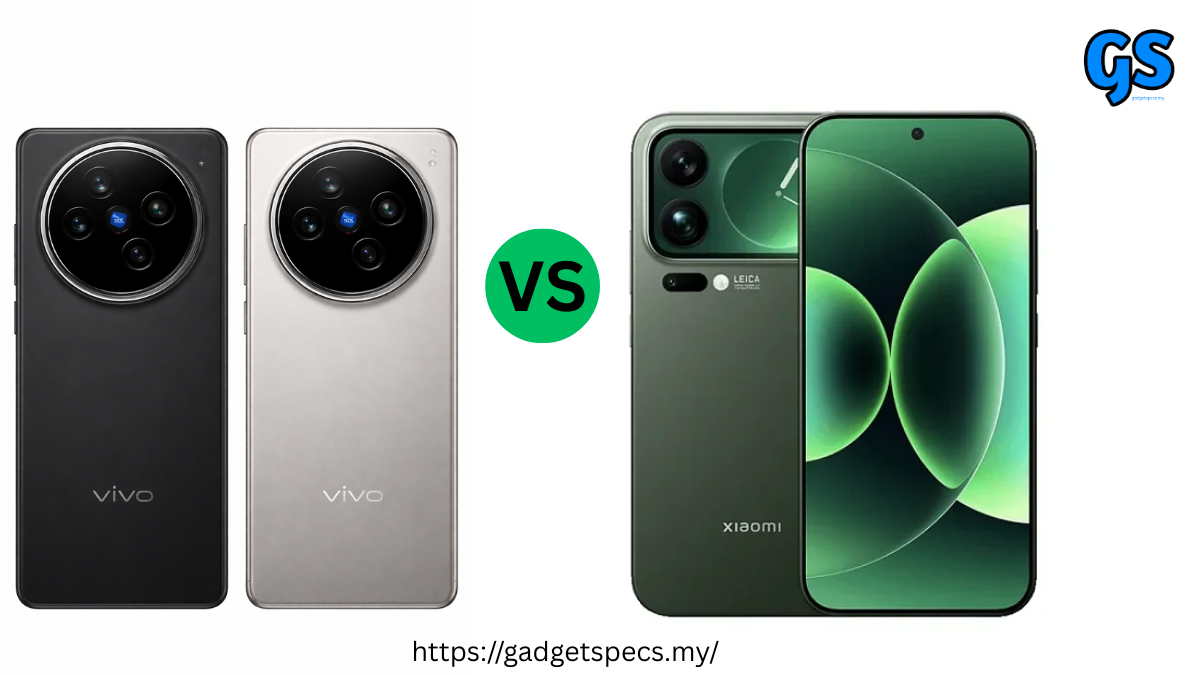
Xiaomi and vivo launched their flagship smartphones at an identical starting price. Despite matching price tags for their base models, the Xiaomi 18 Pro Max and vivo X500 Pro Max embody entirely different design and camera philosophies, trading blows across battery capacity, screen resolution, and zoom performance.
Pricing Strategies and Identical Base Costs
When Xiaomi and vivo launched flagships at the exact same starting price, down to the last yuan, it broke the mold of standard flagship showdowns.
However, that pricing parity breaks apart at higher capacities. For 16GB of RAM and 512GB of storage, vivo charges $1,266 (¥8,499), whereas Xiaomi lists its model at $1,341 (¥8,999). Xiaomi also offers a striking Transparent Edition priced at $1,639 (¥10,999).
Design, Durability, and Build Differences
The physical build reveals a clear split in engineering priorities. Measuring 163.4 x 77.6 x 8.4mm, the Xiaomi 18 Pro Max weighs 235g in its fiberglass finish and 240g in glass. The vivo X500 Pro Max measures 163.3 x 76.8 x 8.1mm and weighs between 225g and 229g. Both devices use an aluminum frame and carry IP68 protection, but vivo layers an IP69 rating on top. Memeburn notes that IP69 certification means the phone survives high-pressure, high-temperature water jets, a feature well-suited for outdoor work or kitchen environments. Xiaomi absorbs extra weight to accommodate a rear display and a larger battery.

Display Metrics and Unique Hardware Extras
Both handsets utilize LTPO OLED panels capable of dropping refresh rates to conserve power during static images, and both reach exceptional peak brightness levels. Xiaomi lists a 4,000 nits peak for its 6.9-inch main screen, which runs at a 1.2K resolution of 2624 x 1208 pixels (about 418 pixels per inch) with a 120Hz refresh rate. Meanwhile, vivo equips its 6.85-inch screen with a sharper 2K resolution of 3168 x 1440 (about 507 pixels per inch) and a 144Hz refresh rate, alongside a listed 4,400 nits peak and 2,000 nits in high-brightness mode.
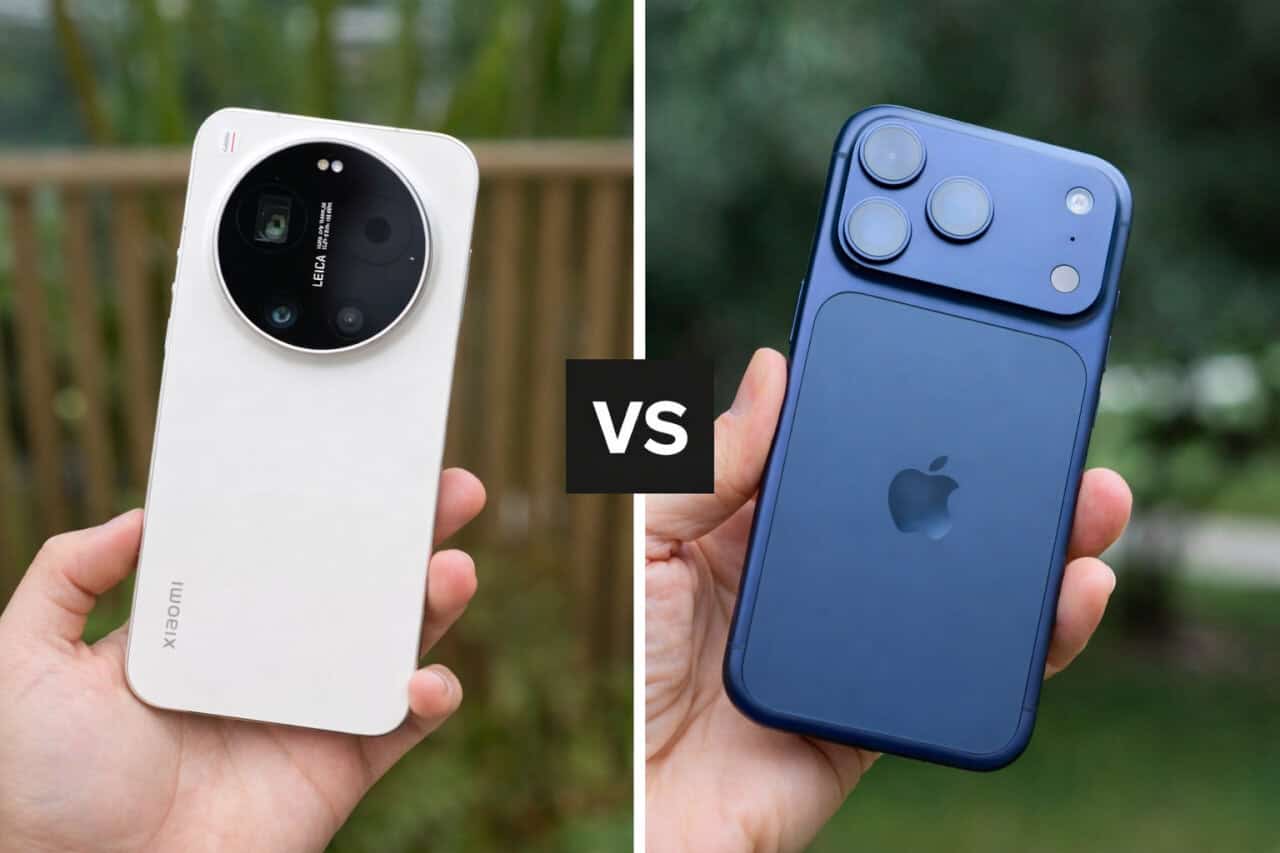
Despite vivo winning on main screen sharpness, Xiaomi fields distinct hardware features absent on its rival: a 2.9-inch rear display and a hardware privacy mode designed to block side-angle snooping without degrading image quality for the user.
Camera Layouts and Tuning Philosophies
German camera and lens partnerships define the imaging systems, with Leica tuning Xiaomi and Zeiss partnering with vivo. The fundamental sensor split dictates real-world use cases. Xiaomi’s main 200-megapixel camera features a 1/1.28-inch sensor with an f/1.67 aperture and a 23mm focal length. Vivo employs a 50-megapixel LYTIA 910 main sensor at the same physical 1/1.28-inch size, utilizing an f/1.57 aperture and a 24mm focal length coupled with LOFIC (lateral overflow integration capacitor) technology. Vivo claims this setup achieves 17 stops of dynamic range by allowing pixels to hold extra light.
For zoom tasks, vivo deploys a larger 1/1.4-inch periscope telephoto sensor reaching 85mm (3.5x), whereas Xiaomi uses a smaller 1/1.56-inch periscope sensor at 75mm (3.2x) that supports macro focusing from 12cm. Memeburn points out that buyers focused on portraits, concert clips, and 7x to 10x travel zoom will find vivo’s layout more capable, while those shooting mostly at 1x and 2x who prefer cropping later will benefit from Xiaomi’s high-resolution main sensor.
Keep reading
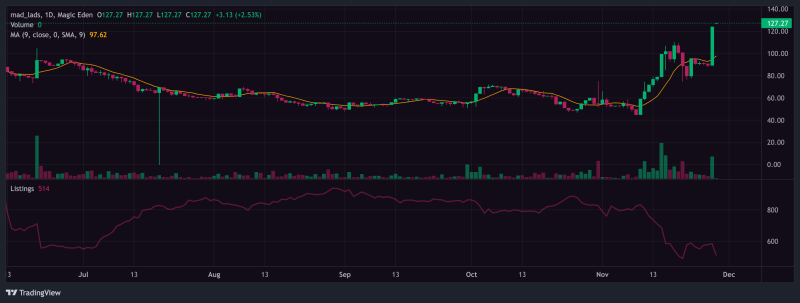
Mad Lads NFT Floor Price Reaches $1,538 With Strong Solana Volume
Mad Lads (MLADS) trades at a price floor of $1,538.29 with a 24-hour sales volume of 970.65 SOL.

Datadog Shares Rise 5.9% on Wall Street Broker Initiation and AI Observability Demand
Datadog Inc shares rose 5.9 percent on September 25, 2026, driven by a fresh Wall Street brokerage initiation...

Square Enix Releases Dragon Quest XI S for Nintendo Switch 2 With Upgrades
Square Enix released Dragon Quest XI S for the Nintendo Switch 2 on September 24, 2026, offering graphical...

Pope Leo XIV Begins Four-Day Apostolic Journey to France
Pope Leo XIV begins a four-day apostolic journey to France on Friday, September 25, 2026, touching down in...