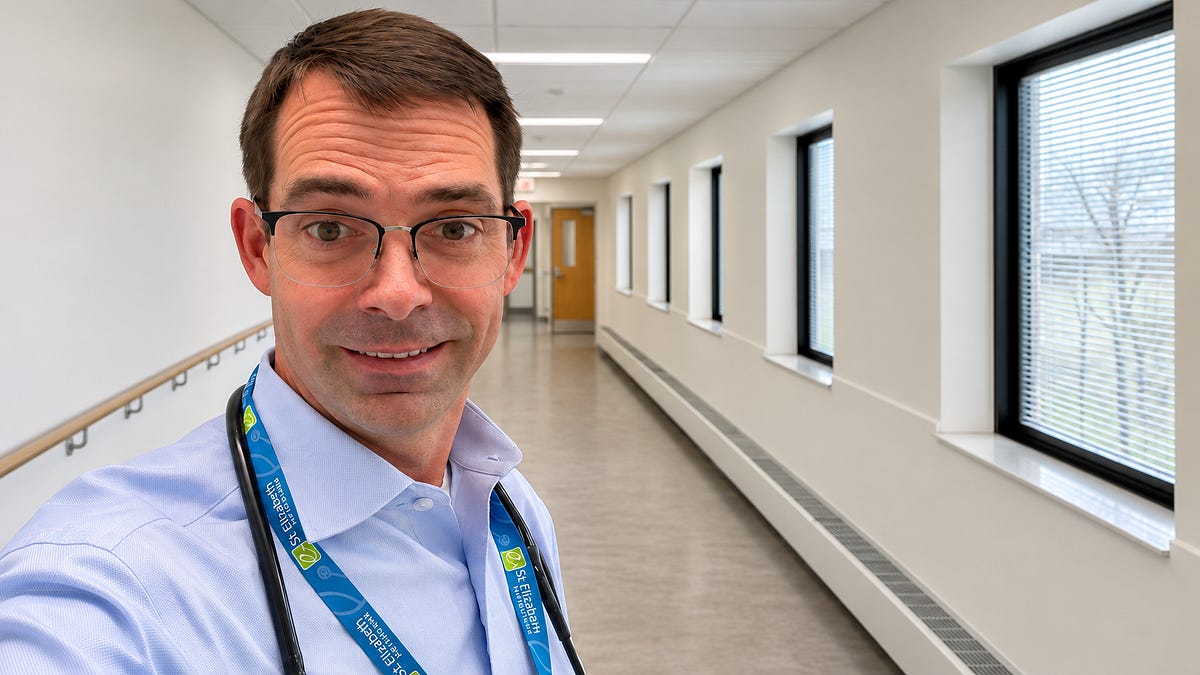
A Kentucky Oncologist’s Day Reveals the Hidden Architecture of Modern Cancer Care
The stakes are high. His day isn't just about seeing patients; it's about working within a system that blends cutting-edge science with deeply personal human moments. This isn't the story of a single doctor, but a window into how community cancer centers across the country are evolving to meet the overwhelming needs of their patients.
The Morning Tumor Board: Where Care is Planned Before Patients Arrive
This "tumor board" is a critical, behind-the-scenes ritual where about ten specialists from different fields gather to review five or six new patients. They pore over pathology slides and imaging, asking questions and debating the best course of action. It’s a collaborative process designed to eliminate blind spots, ensuring a plan is made with the collective wisdom of radiologists, pathologists, and other oncologists.
The nurse navigator meticulously documents these recommendations in the patient’s chart, making the entire discussion transparent for the care team. This early morning meeting is a cornerstone of modern, evidence-based medicine, but it’s an unseen part of the journey for most people walking into a clinic. It’s the quiet foundation upon which the rest of the day is built.
The Art of the Difficult Conversation: Preparation and Partnership
A typical morning sees him seeing six to eight patients, a mix of straightforward follow-ups and complex, high-stakes consultations. For a patient doing well on immunotherapy, the visit is routine. But for others, he might be delivering news that a CT scan shows the cancer has grown.
These difficult conversations are not improvised. “Before I walk into the room, I’ve already reviewed the chart and looked at the scans myself. I may have called the radiologist to talk through something I didn’t understand,” he shares. This preparation is crucial. He enters the room not with a verdict, but with a clear plan and a set of options. The goal is a partnership. “Most importantly, I also need to hear what the patient is thinking. What are they hoping for? How does the treatment I’m recommending fit with what they want for their life?” The plan, he notes, often changes in that room, shaped by the patient’s goals and fears.
Technology is changing these interactions for the better. He also uses a large glass whiteboard to draw out complex medical details, a simple but powerful tool that empowers patients to leave with a visual record of their conversation to share with family.
The Unseen Ecosystem: A Team Behind Every Exam Door
Nurse practitioners stop by between visits multiple times an hour, “excellent” colleagues with “a tremendous amount of oncology knowledge” who help work through questions. Someone from the research team might ask for help determining if a patient qualifies for a clinical trial.
The support system is vast. Nurse navigators track patients through their entire treatment journey. Dietitians, social workers, financial navigators, a chaplain, and a palliative care team are all integrated into the practice, often able to see a patient the same day a need is identified. There’s even an integrative oncology center with a demo teaching kitchen, mind-body studio, massage, acupuncture, and spaces for music and art therapy. For patients struggling financially, there’s a “Nourish” food clinic.
The Long Shadow: The Work That Follows the Last Patient
The day doesn’t end when the last patient leaves. After the final appointment, the real administrative work begins: catching up on results and scan reports, finishing charts, signing treatment orders for the next day, and reviewing research paperwork. While he has protected administrative time during the week, it’s rarely enough.
“Most community oncologists have protected administrative time during the week for some of this work… I have a full day off, which helps a great deal. Even so, my charts aren’t always finished on time and some evenings I sit down after dinner to complete a few notes,” he admits. The work often bleeds into his personal life. His thirty-minute drive home from Cincinnati sometimes doubles as a time for a sensitive patient call—a conversation too complex or important to wait.
It’s a snapshot of a profession defined by its dedication and its deep, human complexity.
Related reading

Bomb Threats Disrupt at Least 25 European Passenger Flights
At least 25 passenger flights across Europe were forced to make emergency landings, undergo security inspections, or receive...

Dodge County Executive Committee recommended to advance EMS Collaboration plan
Dodge County Unanimously Backs Countywide EMS Collaboration Plan A new collaborative framework for emergency medical services moved closer...
Tal Moore, Kyle Ray: On the Brink of Failure and Resilience
Entrepreneurs operate on a financial razor's edge, where a single decision can mean the difference between survival and...

Wyoming Infrared Observatory holds annual open house
A Wyoming Observatory, Reborn, Lets the Public Gaze at the Stars The Milky Way trailed overhead and the...